Free visual inspection and a written scope of work before any mitigation begins - photos, moisture readings, and drying logs go in your claim file
The scope we write is the scope we bill. Anything new gets shown to you, in writing, before we touch it.
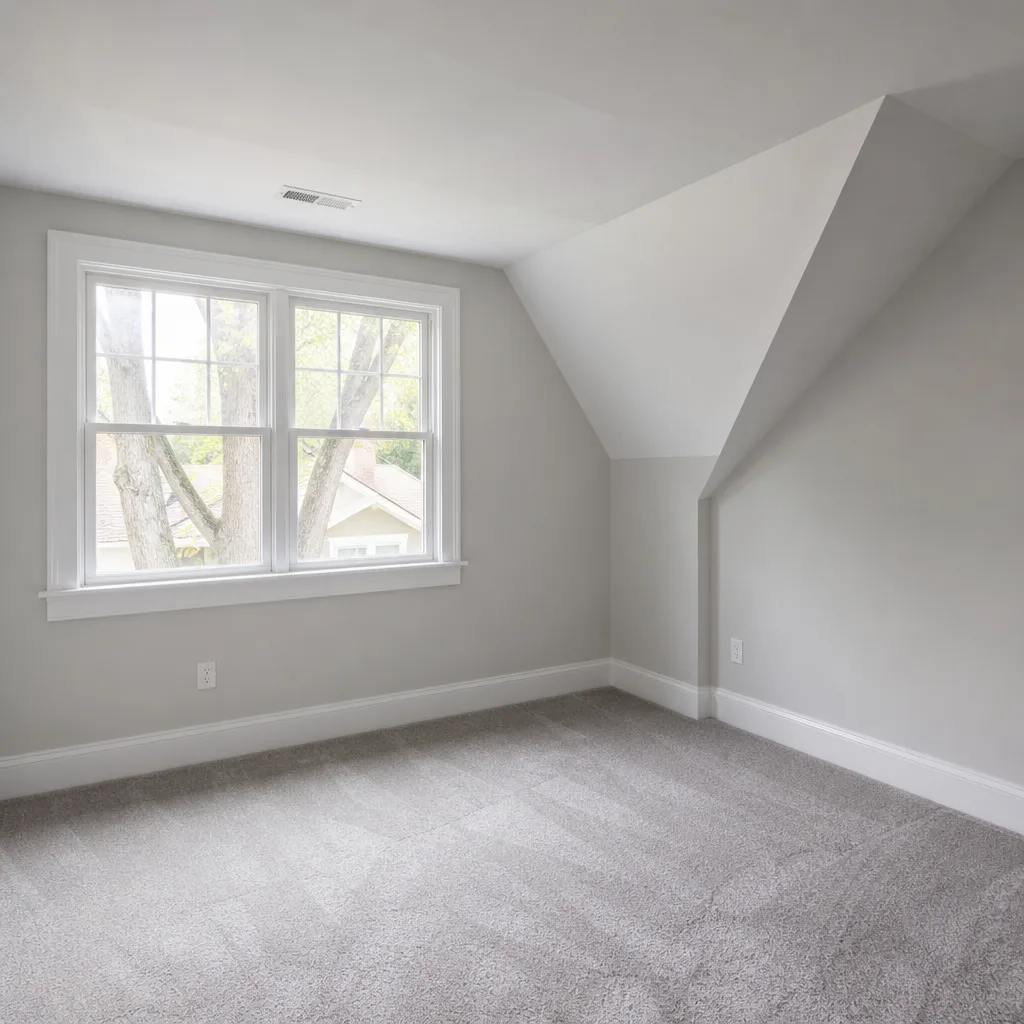
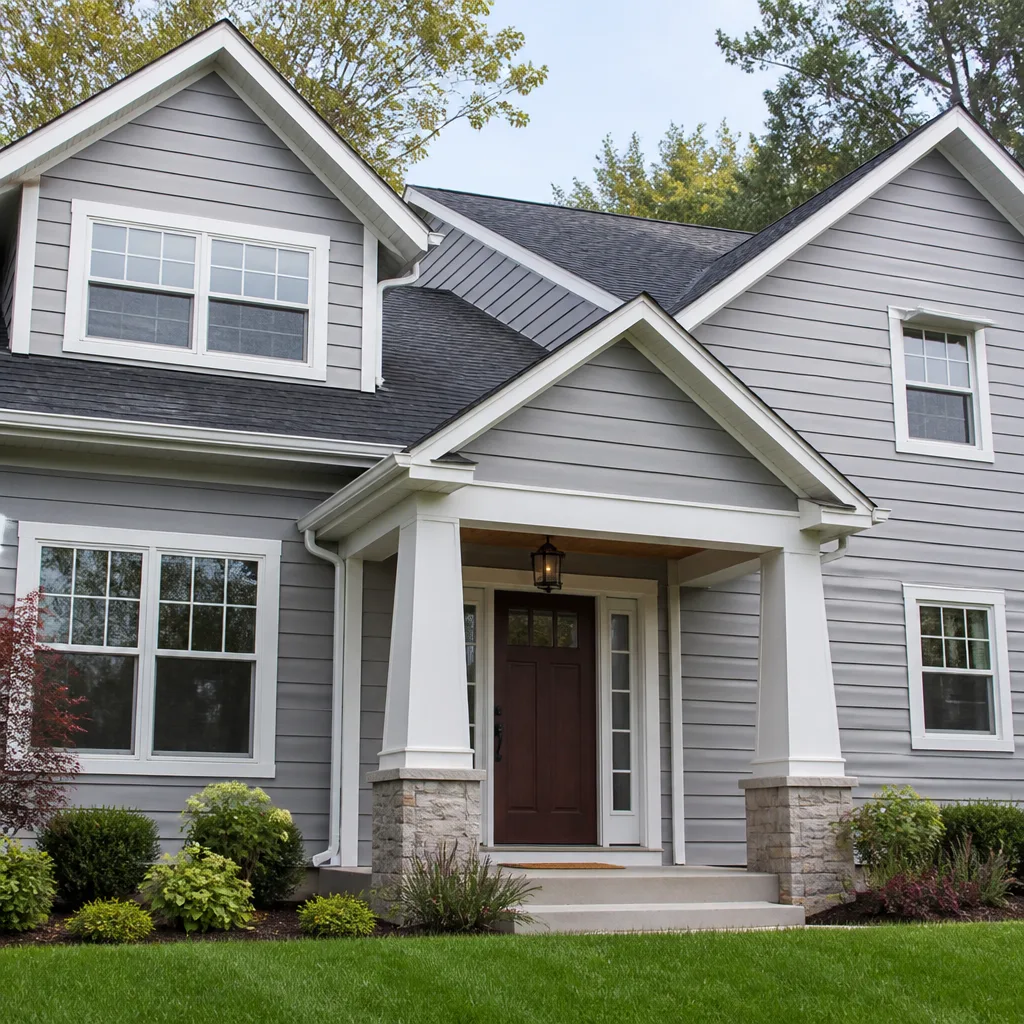
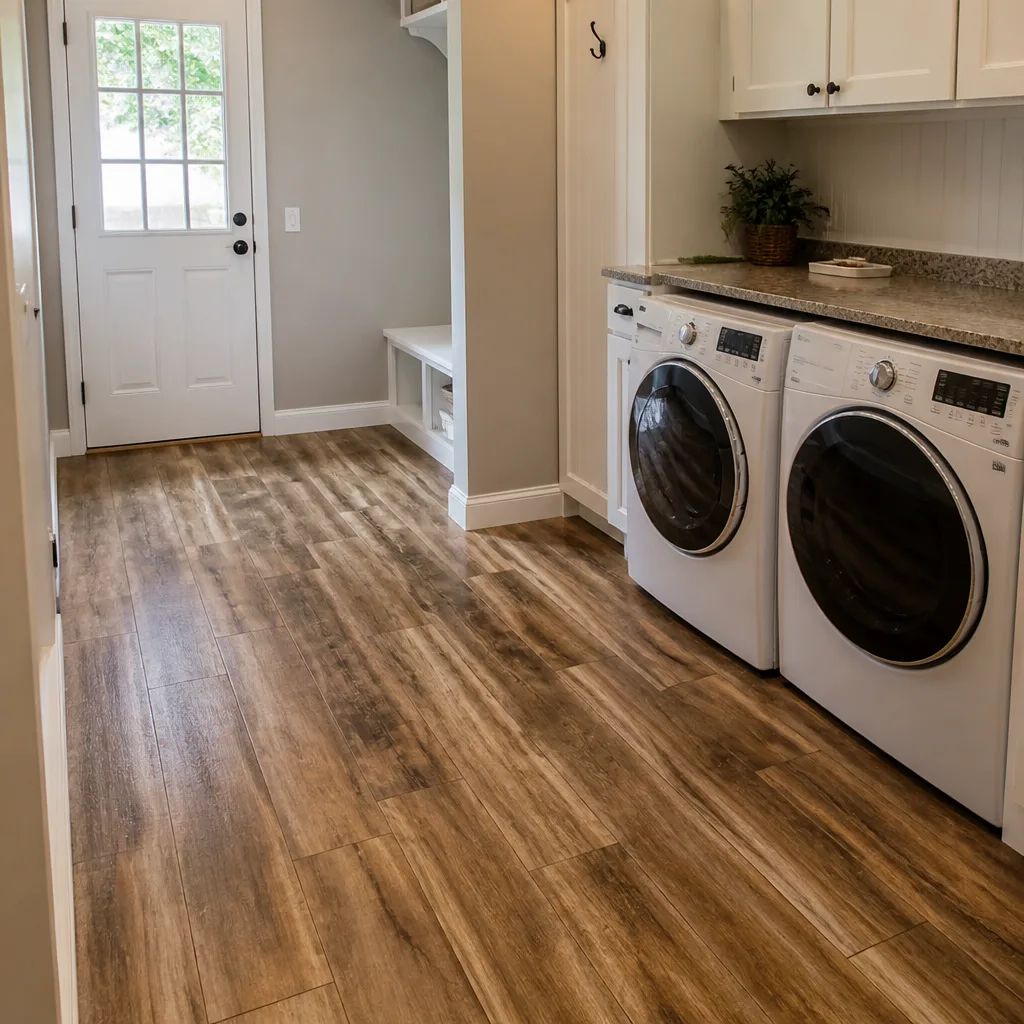
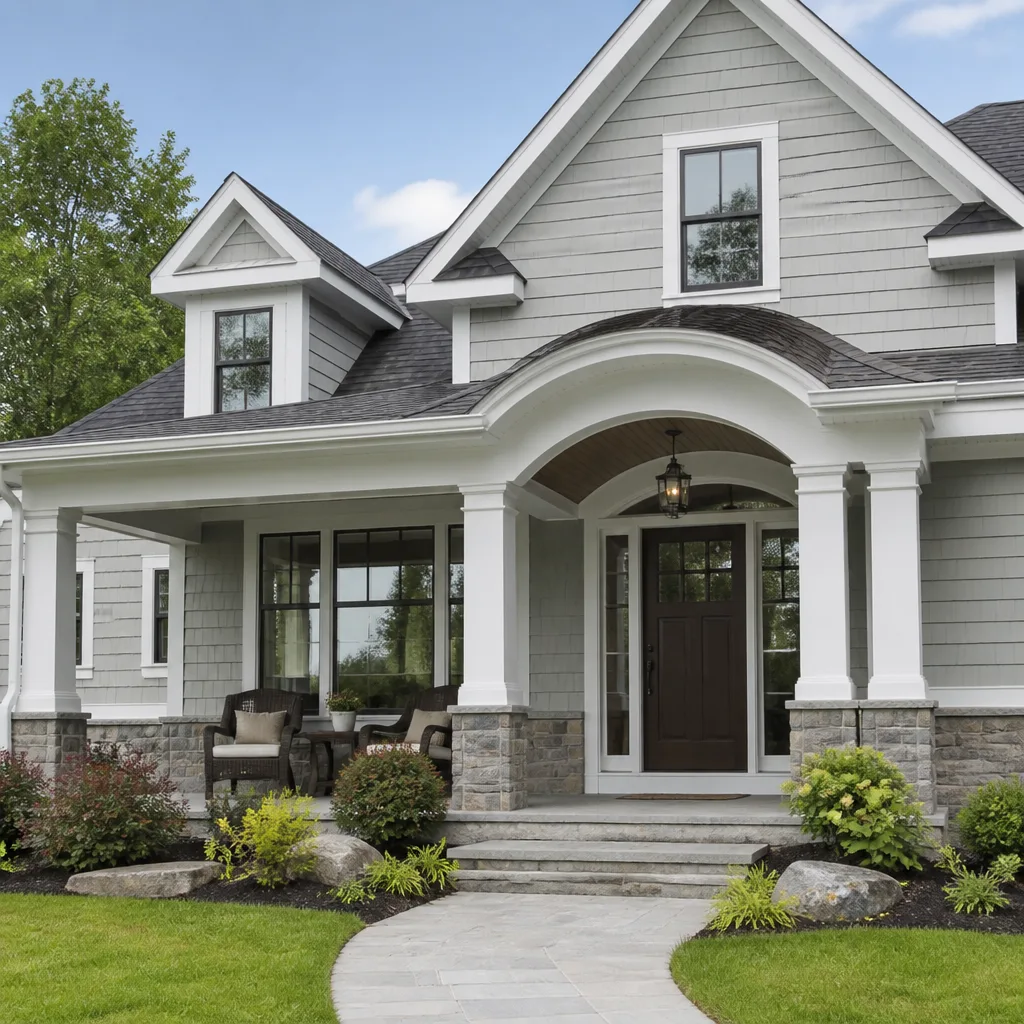
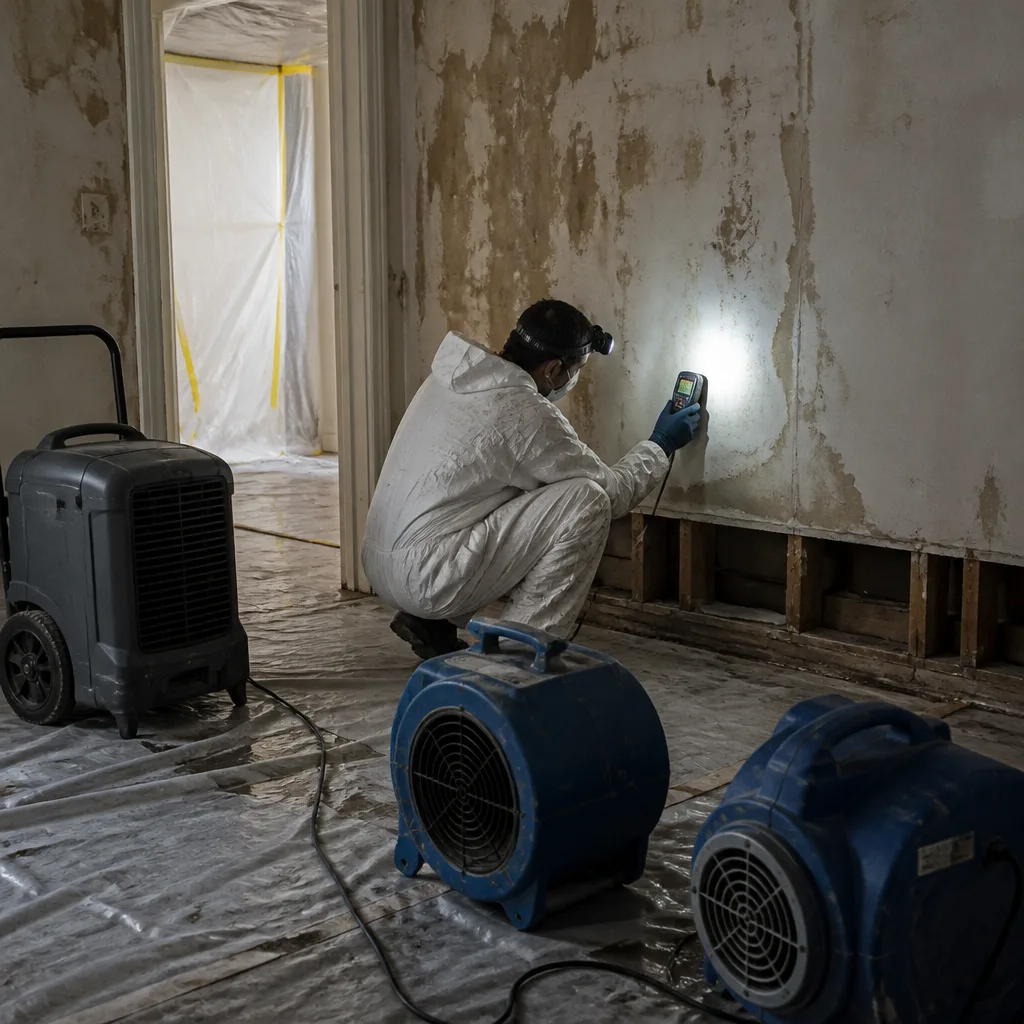 Before
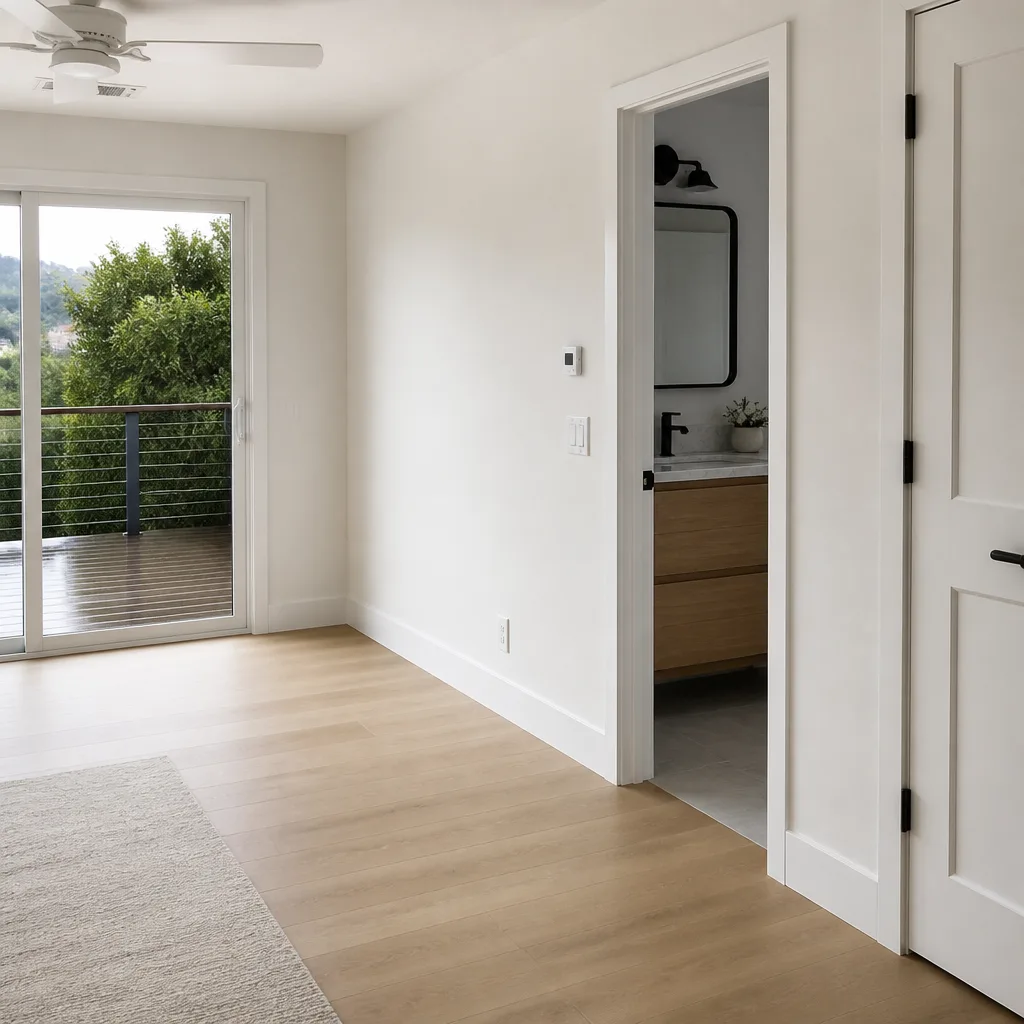 After
After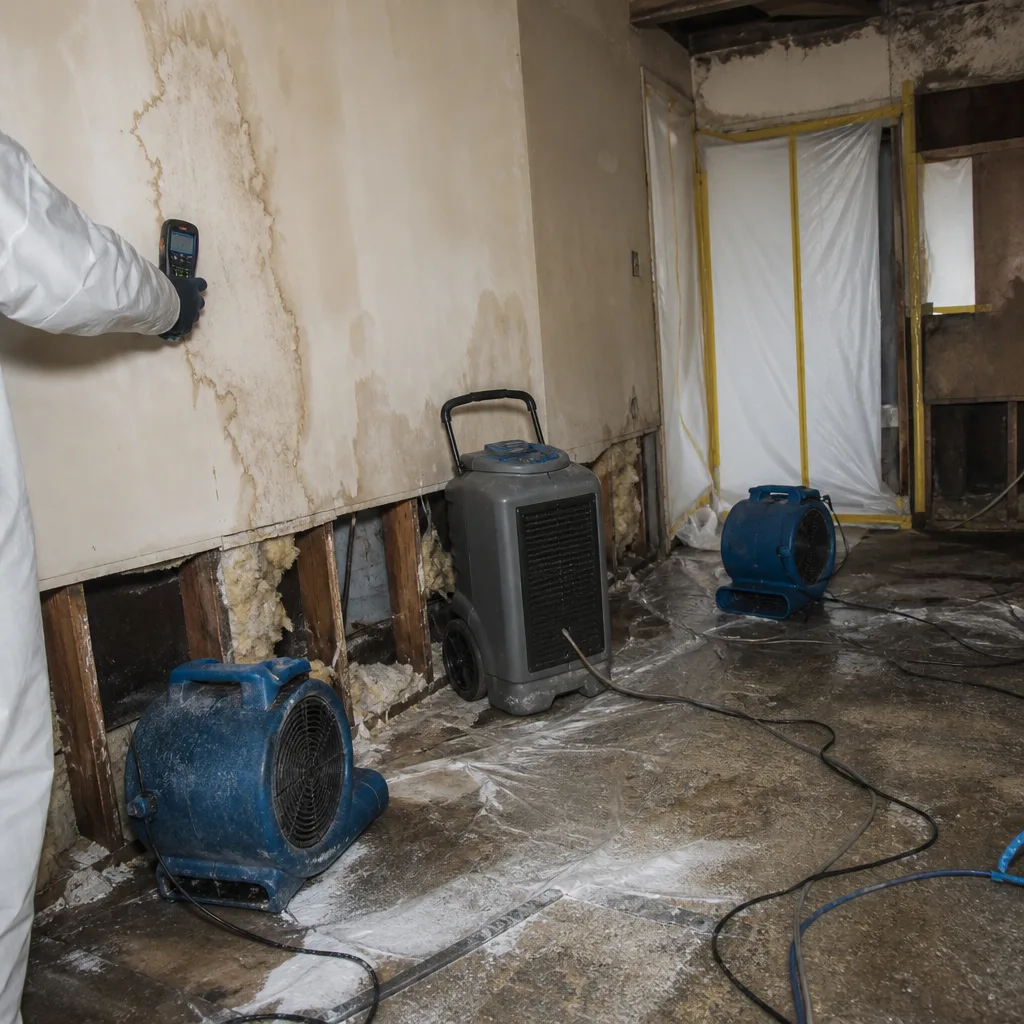 Before
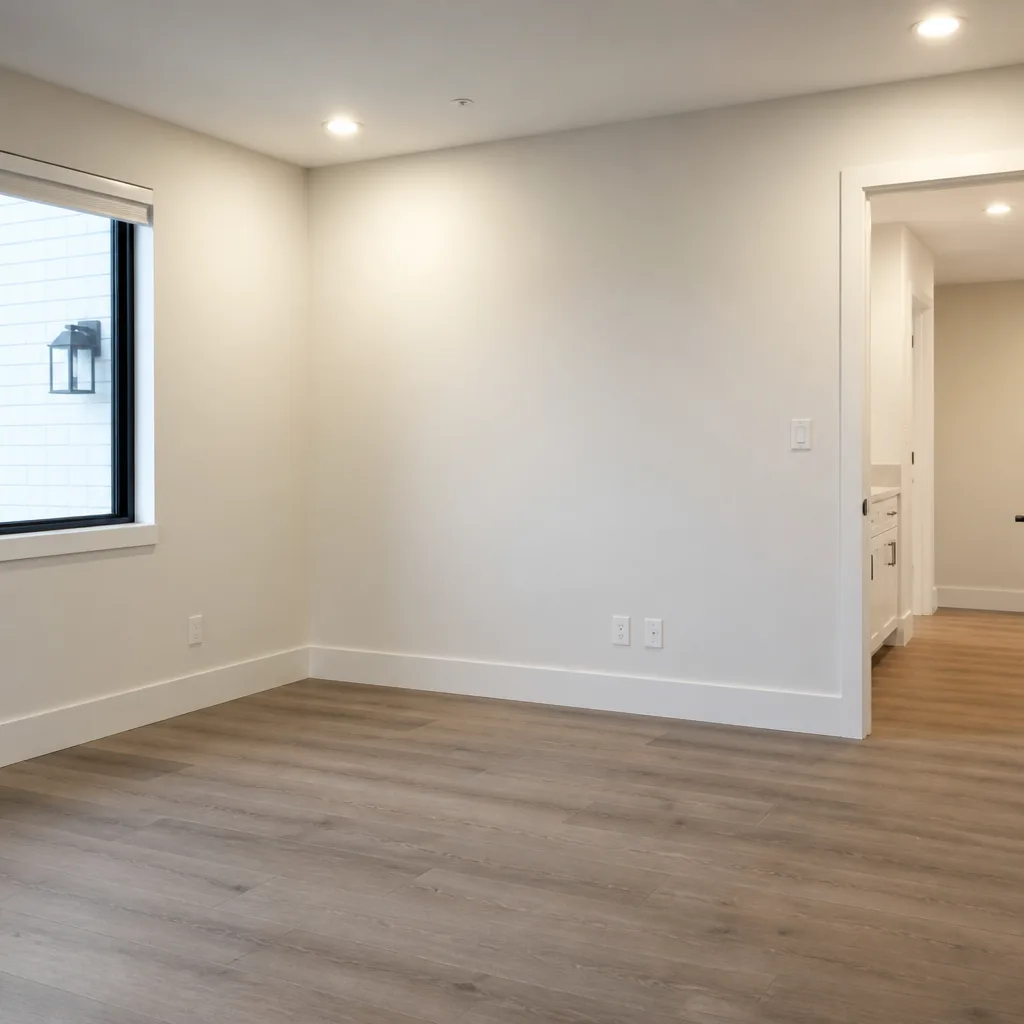 After
After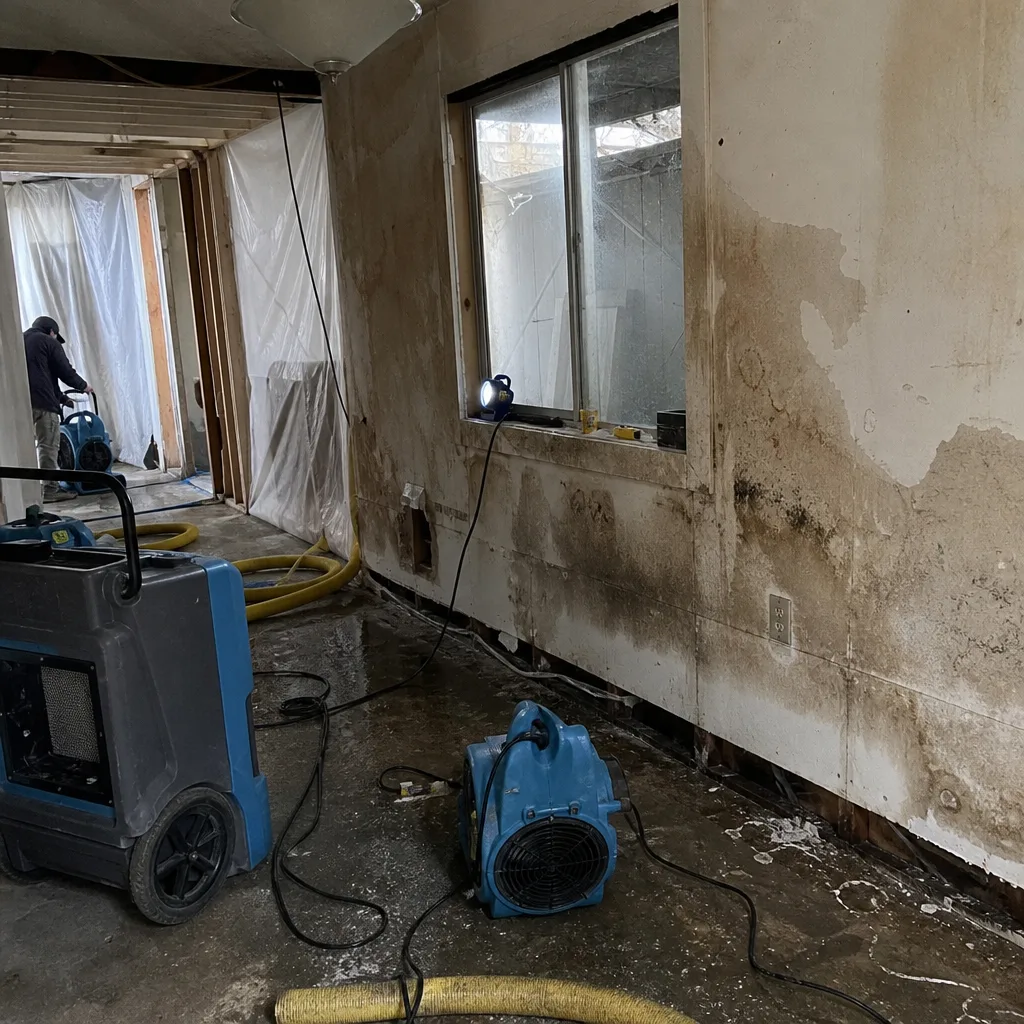 Before
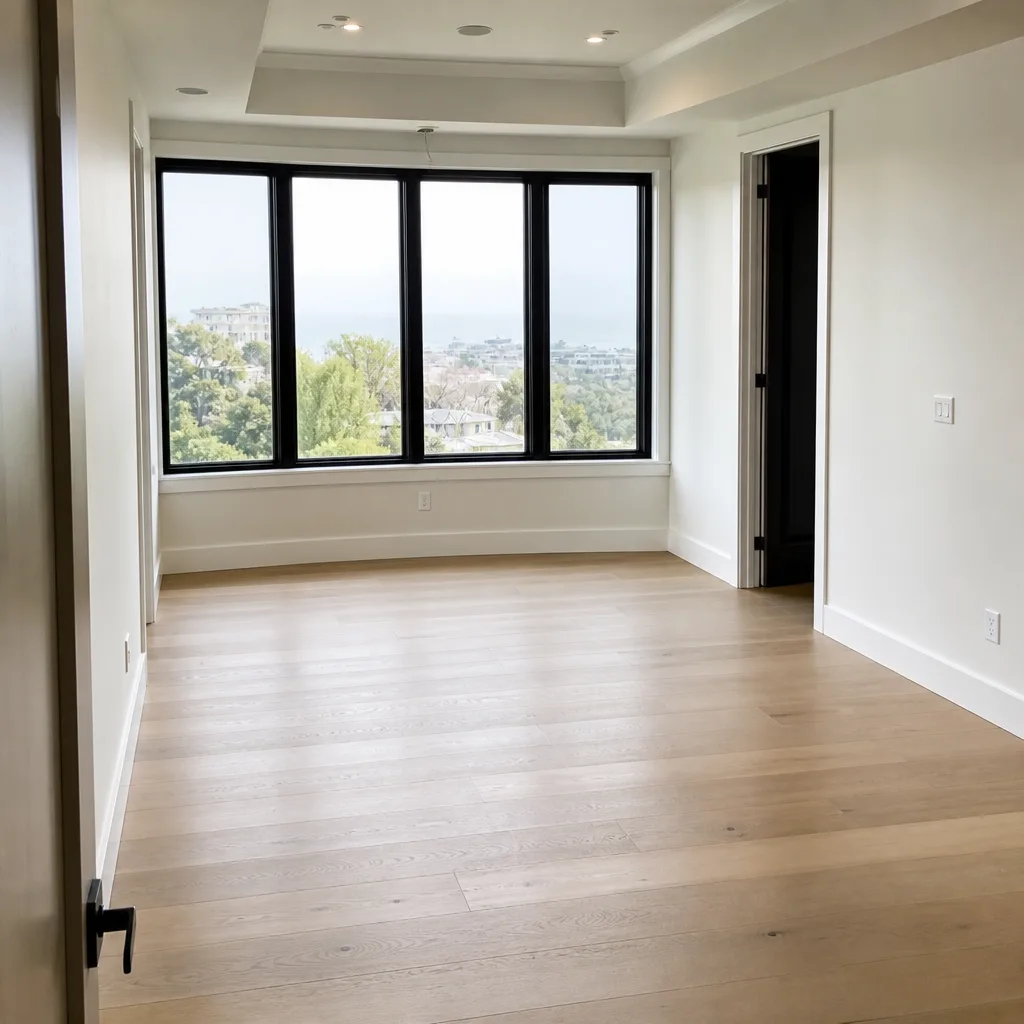 After
After24/7 Emergency Mold Remediation in Santa Monica
Mold remediation in Santa Monica typically costs $2,800-$7,500 for contained residential jobs and $8,000-$18,000 for whole-unit or multi-party losses in pre-1979 apartment buildings, with most projects starting same day once a written scope is signed. Our crews answer live at (424) 365-9728, 24 hours a day, 7 days a week - no voicemail, no callback queues. We dispatch to Santa Monica from our Los Angeles office and can usually have a technician on-site within 45 minutes for active water-intrusion events. The first hour matters because Santa Monica’s marine layer keeps indoor relative humidity at 75-85% most mornings, so mold colonizes water-damaged framing within 24-48 hours of a leak - half the drying margin you’d get inland in the San Fernando Valley. We offer a free visual inspection and written price before any work begins, every time, per Haven Standard, Clause 1.
Understanding Mold Remediation Severity in Santa Monica Properties
Mold losses in Santa Monica fall into three practical categories based on what we find behind the walls. Category A is surface growth on drywall or paint from a single, recent water event - usually contained to one room, remediable in 2-4 days with HEPA-contained removal and air scrubbing. Category B involves hidden colonization in wall cavities, subfloors, or crawl spaces from chronic moisture - the pattern we see constantly in Santa Monica’s 1920s-1960s Spanish Colonial bungalows and mid-century dingbat walk-ups with original galvanized plumbing. Category C is structural compromise: rot in framing members, widespread contamination across multiple units, or toxigenic species like Stachybotrys in long-saturated cellulose.
We classify water source by IICRC standards - Category 1 (clean supply line), Category 2 (gray water with chemical or biological load), Category 3 (black water, including sewage backflow from Santa Monica’s storm-drain system during winter atmospheric rivers). The category determines containment level, PPE, and disposal protocol. In Santa Monica’s rent-controlled pre-1979 stock, we almost never find Category 1; the pinhole leaks have been running long enough to pick up environmental contaminants. Psychrometric data - temperature, relative humidity, vapor pressure differential - drives our drying strategy, not calendar days. Manufacturer specs for Dri-Eaz and Phoenix dehumidifiers assume 50% ambient RH; Santa Monica’s coastal reality means we run equipment 40-60% longer to hit target moisture content, and we document that override on every drying log.
Why Santa Monica Property Owners Choose DryMark Restoration Pacific Palisades
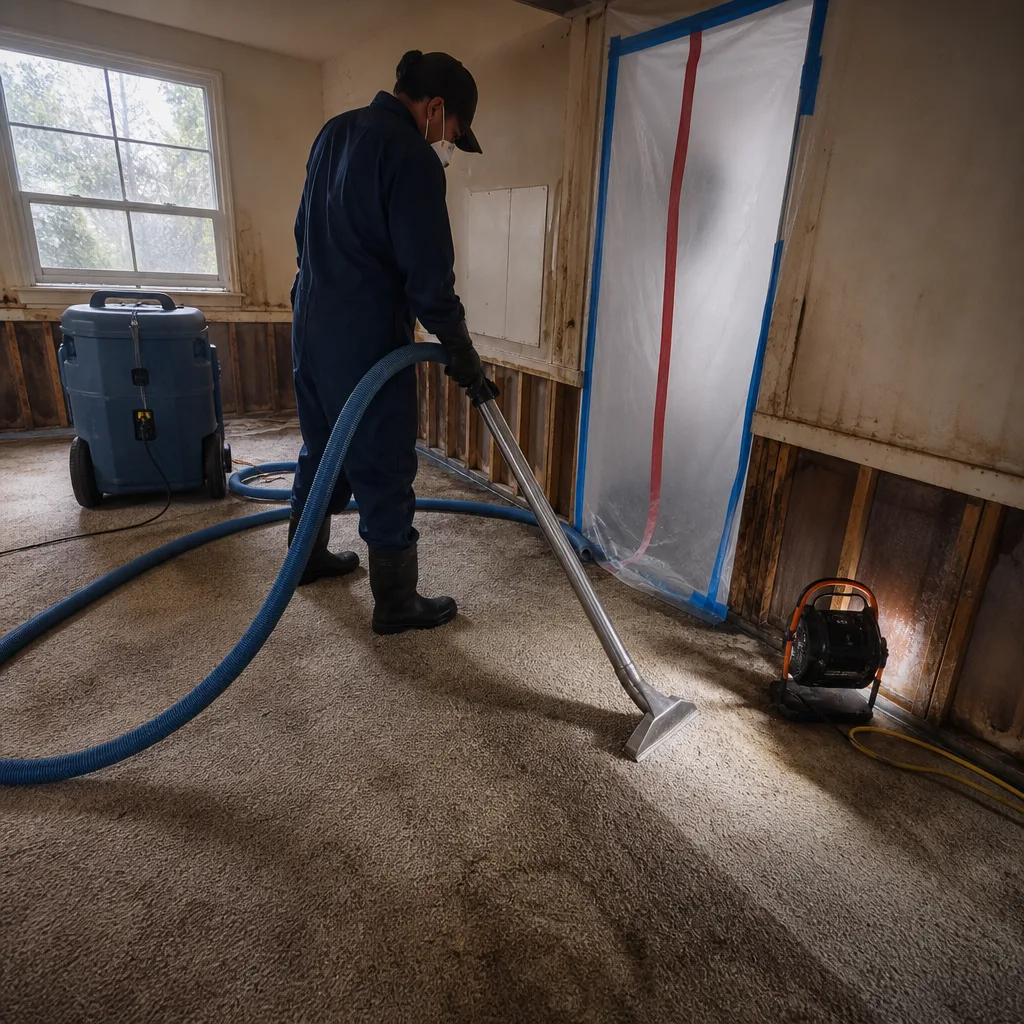
- 45-minute response commitment to active water-intrusion calls in Santa Monica, with crews staged from our Los Angeles office.
- 24/7 live answer - a real person picks up every call, never an automated system or voicemail tree, because mold doesn’t wait for business hours.
- IICRC-certified crews holding WRT (Water Damage Restoration Technician) and AMRT (Applied Microbial Remediation Technician) credentials, with license numbers provided on request.
- Free visual inspection with moisture mapping and thermal imaging, followed by a written price before any work starts.
- Direct insurance billing with photo-documented drying logs that adjusters pay without dispute - we speak their language because our founder was one.
- One team from containment to reconstruction, including navigation of Santa Monica’s separate Building & Safety and Coastal Commission permitting tracks.
 Before
 After
AfterOur Mold Remediation Process
1. Inspection & Assessment
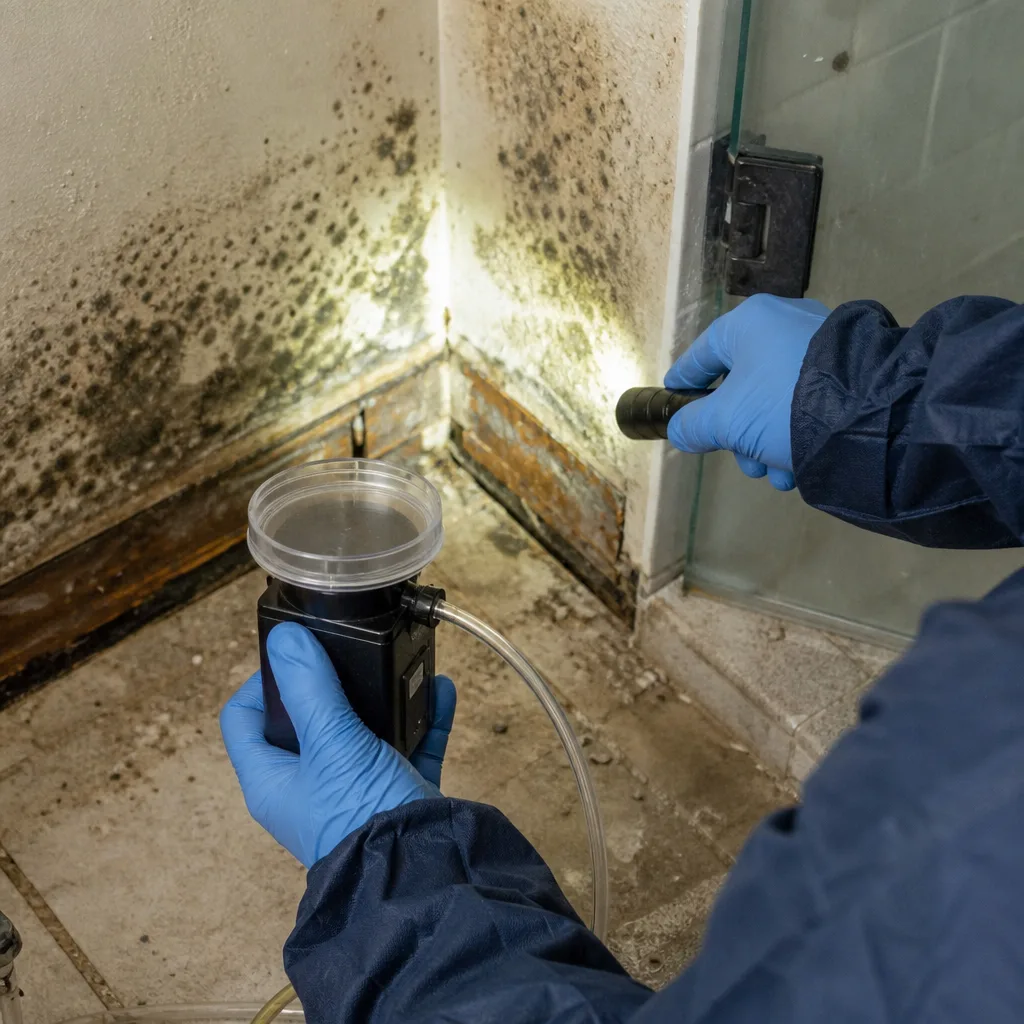
We start with thermal imaging and moisture mapping to find what Santa Monica’s stucco and lath-and-plaster walls hide. Our techs document moisture readings on every stud, joist, and subfloor section, then build a written scope with line-item pricing before any containment goes up.
2. Containment & Air Filtration
We establish negative-pressure containment with 6-mil poly barriers and run HEPA air scrubbers at 4-6 air changes per hour to prevent cross-contamination. In Santa Monica’s dense multi-family buildings, this step protects adjacent units with shared HVAC or wall cavities.
3. Moisture Control & Drying
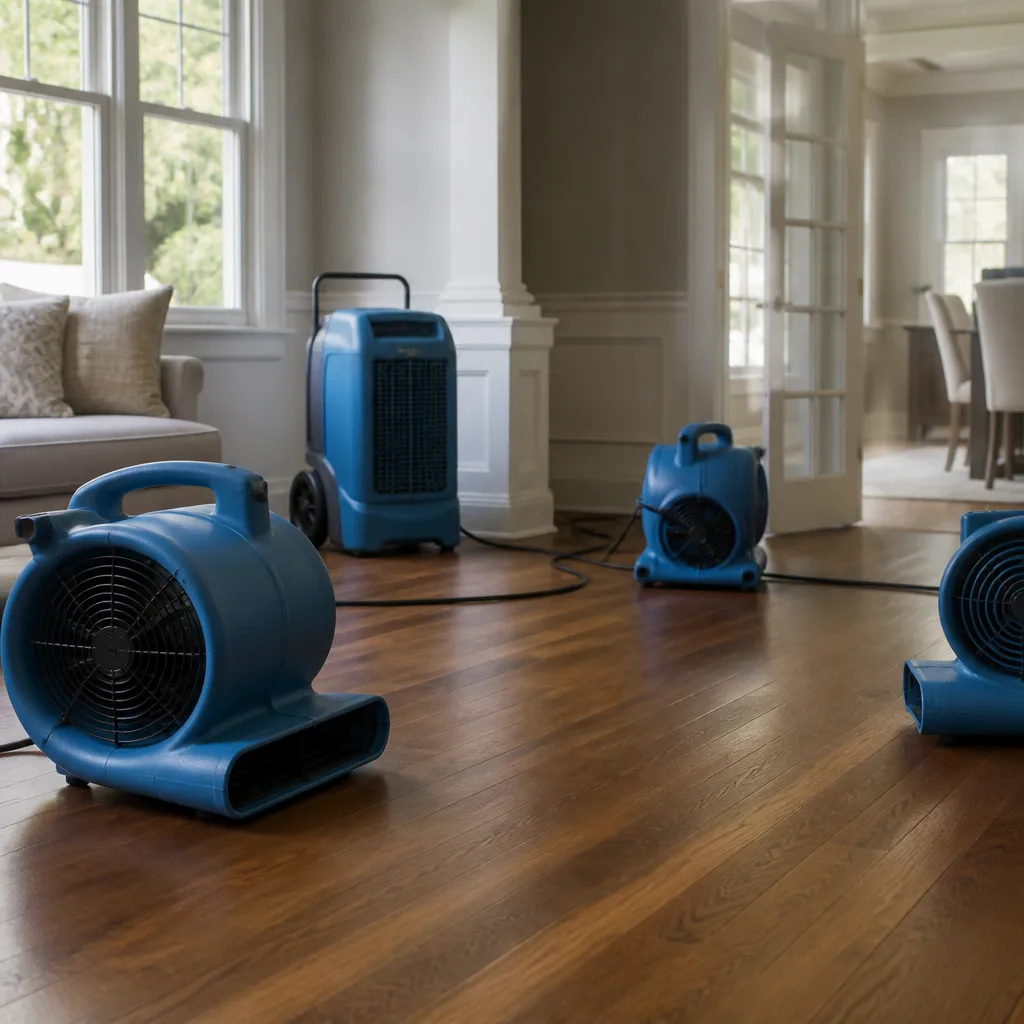
We deploy Dri-Eaz and Phoenix LGR dehumidifiers plus XPOWER air movers, calibrated to Santa Monica’s coastal psychrometrics - not inland specs. Drying continues until wood framing hits 12-16% moisture content, documented on daily logs with readings, equipment serial numbers, and technician signatures.
4. Mold Removal & Cleaning
HEPA vacuuming, abrasive cleaning on non-porous surfaces, and controlled removal of contaminated porous materials. We bag and dispose per California mold regulations, with chain-of-custody documentation for insurance.
5. Antimicrobial Treatment & Clearance
EPA-registered antimicrobial application on cleaned framing, followed by independent third-party air and surface sampling to verify clearance. We don’t self-certify; your insurer and Santa Monica Building & Safety get the lab report.
6. Repairs & Reconstruction
Our reconstruction team rebuilds to pre-loss condition, handling Santa Monica’s dual-track permitting when exterior or structural work in the Coastal Zone requires California Coastal Commission sign-off. We don’t hand you off to a contractor who doesn’t know the local process.
Need Emergency Mold Remediation in Santa Monica Now?
Crews minutes away, answering live 24 hours a day. The sooner we start, the less it costs.
Working With Your Insurance Company
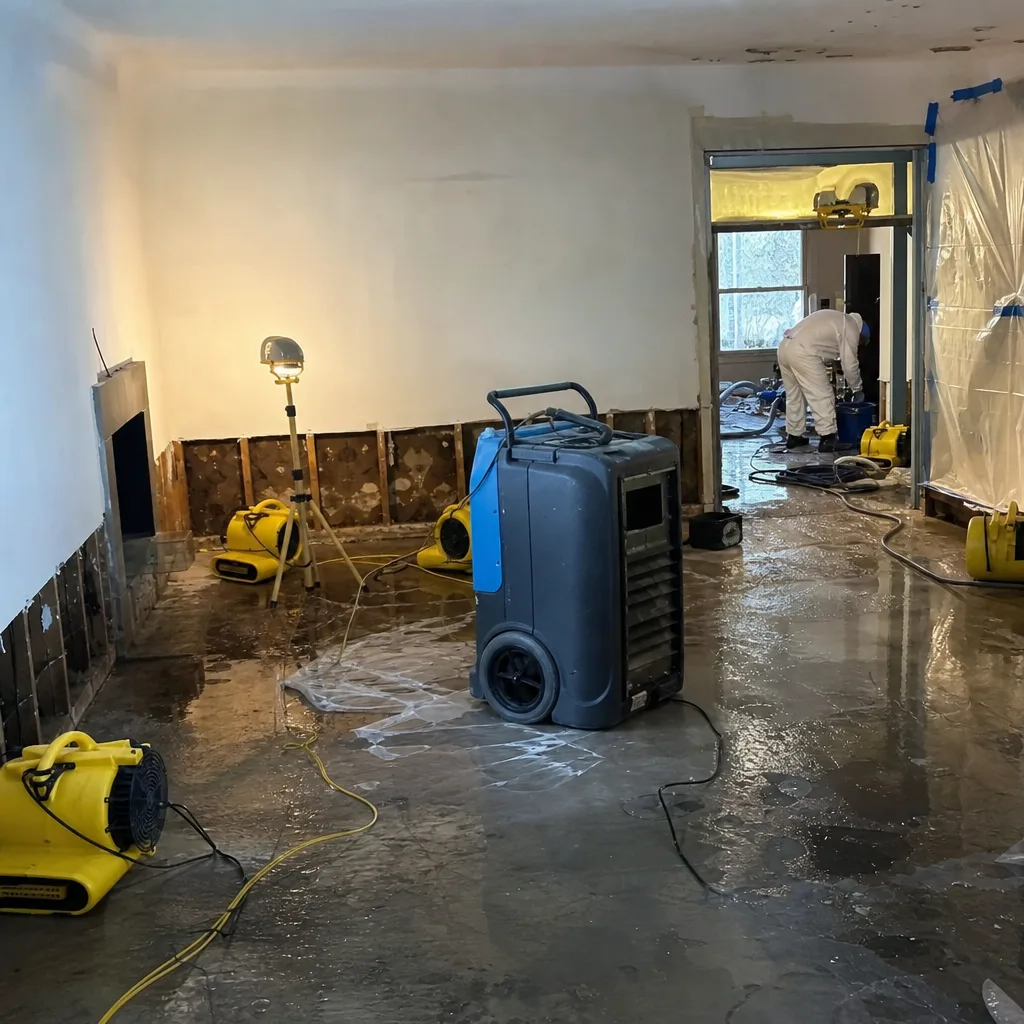
Insurance claims for mold in Santa Monica fail for two predictable reasons: incomplete documentation of the moisture source, and no proof that drying reached completion before reconstruction closed the cavity. We solve both from hour one. Our technician photographs every affected surface, records moisture readings on a room-by-room grid, and maintains daily drying logs that show psychrometric progress - the exact evidence adjusters need to approve line items.
We write industry-standard estimates and coordinate directly with your carrier’s adjuster, including photo documentation and direct billing where your policy allows. For multi-unit losses in Santa Monica’s apartment courts, we document each unit’s damage separately and identify liability allocation between building and tenant policies. Our founder built this company in 2011 after seeing how sloppy documentation cost homeowners their claims; we don’t repeat that mistake.
What We Provide Your Insurer
- Thorough documentation of the loss origin, including water category classification and moisture source identification
- Photos of all damage, room by room, with date/time stamps and technician identification
- Moisture readings and drying logs with equipment serial numbers, daily psychrometric data, and target-achievement verification
- A detailed, line-item scope of work with written price before any work begins, per Haven Standard, Clause 1
- Direct coordination with your carrier’s adjuster, including clearance lab reports and permit documentation for Santa Monica’s Building & Safety division
Built for Santa Monica’s Loss Calendar
January through March brings atmospheric river storms that overwhelm Santa Monica’s storm-drain system, discharging into Santa Monica Bay and causing backflow flooding in ground-floor units and below-grade spaces in Ocean Park and near the Palisades bluff base. These events saturate wall cavities with Category 3 water and create mold blooms within 72 hours if not properly dried. April through June, the marine layer thickens - morning fog penetrates building envelopes with failed weatherproofing, especially on flat-roofed mid-century multi-family buildings where membrane fatigue shows up as wide-area ceiling stains.
July through October is wildfire season inland, but Santa Monica’s concern is secondary: residents run evaporative coolers and window units harder, creating condensation on cool stucco surfaces and inside wall cavities with poor insulation. November through December, the first winter rains reveal roof leaks that have been developing since summer. Year-round, the constant 75-85% morning RH means any water intrusion event has less drying margin than anywhere inland in Greater LA. Our crews plan for this; our equipment runs longer, and our drying logs prove it.
Mold Remediation Across Santa Monica’s Neighborhoods
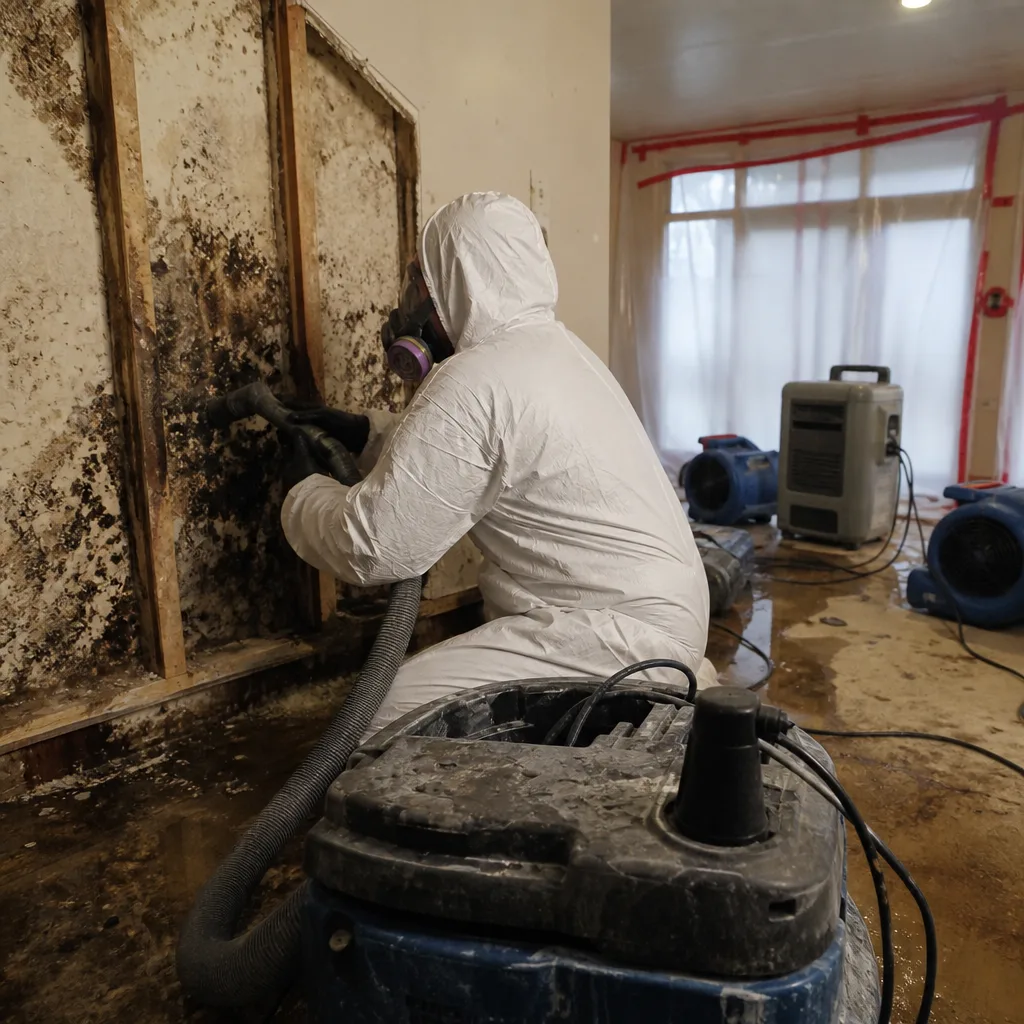
In Ocean Park, we respond to ground-floor flooding from storm-drain backflow and find chronic moisture in crawl spaces beneath 1920s bungalows raised on short piers. The soil stays saturated for weeks after storms, and vapor migration through unsealed crawl spaces keeps subfloors above safe moisture content without active dehumidification.
Wilshire Montana‘s density of pre-1979 rent-controlled apartment courts means we routinely handle multi-unit losses where a single pinhole leak in original galvanized plumbing affects three or four units vertically. Insurance coordination gets complex fast; we document each unit separately and identify where building policy ends and tenant HO-6 policies begin.
The North of Montana estate district has larger single-family homes from the 1920s-1940s with original clay tile roofs, plaster walls, and minimal attic ventilation. Mold here often follows roof leaks that travel laterally through multiple rooms before showing as ceiling stains, meaning the visible patch is never the whole story.
Along Montana Avenue and the commercial corridors, mixed-use buildings with residential above retail present containment challenges: we can’t shut down a ground-floor business for a week, so we work after-hours and seal vertical chases aggressively to protect occupied spaces below and above.
Specialized Mold Remediation Services We Offer in Santa Monica
Mold Inspection & Testing
We don’t guess. Our inspections combine thermal imaging, moisture mapping, and air sampling to locate hidden colonization in Santa Monica’s stucco-and-lath construction. When visible mold is present, testing identifies species and informs remediation protocol; when occupants report symptoms without visible growth, we sample to establish whether remediation is warranted or if the source is elsewhere.
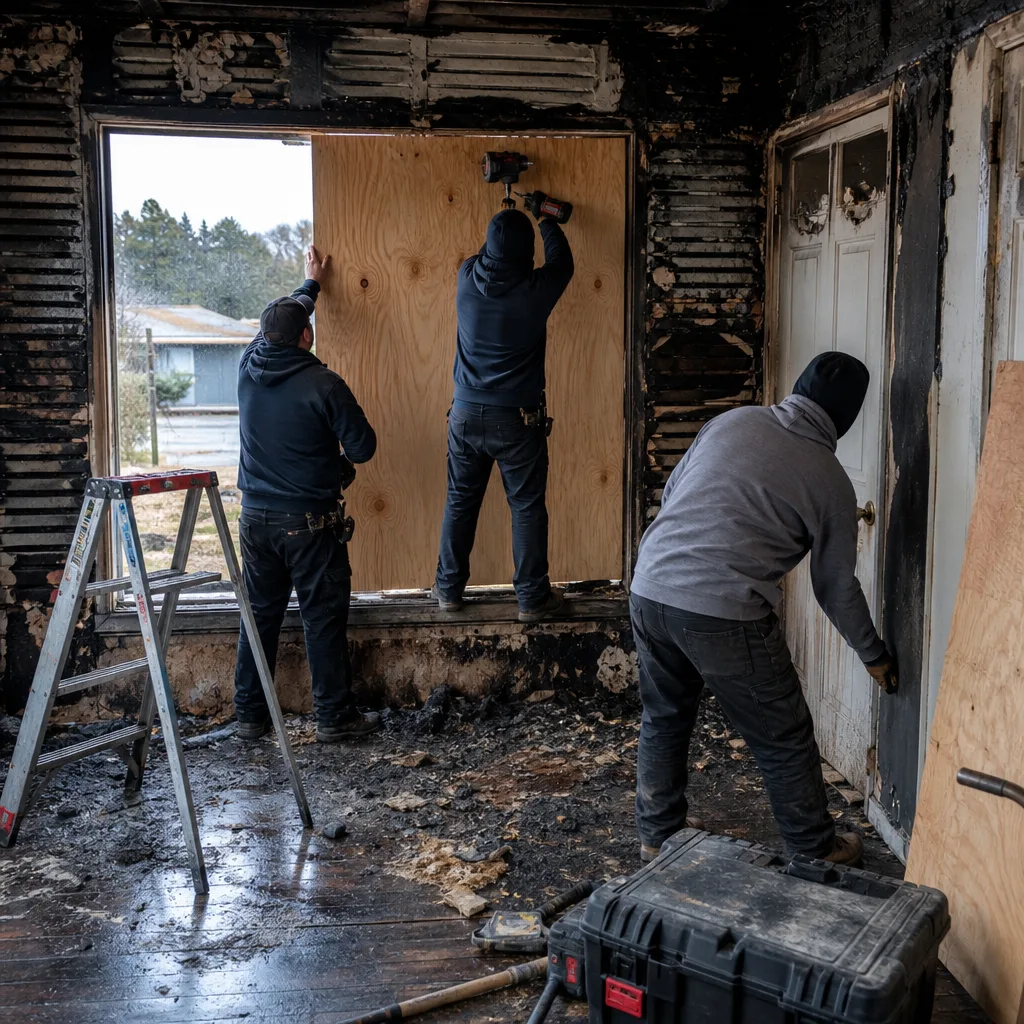
Mold Removal
Contained HEPA removal of affected materials, with negative-pressure isolation and air scrubbing. In Santa Monica’s multi-family buildings, we coordinate with property management to protect common areas and document tenant notification per local requirements.
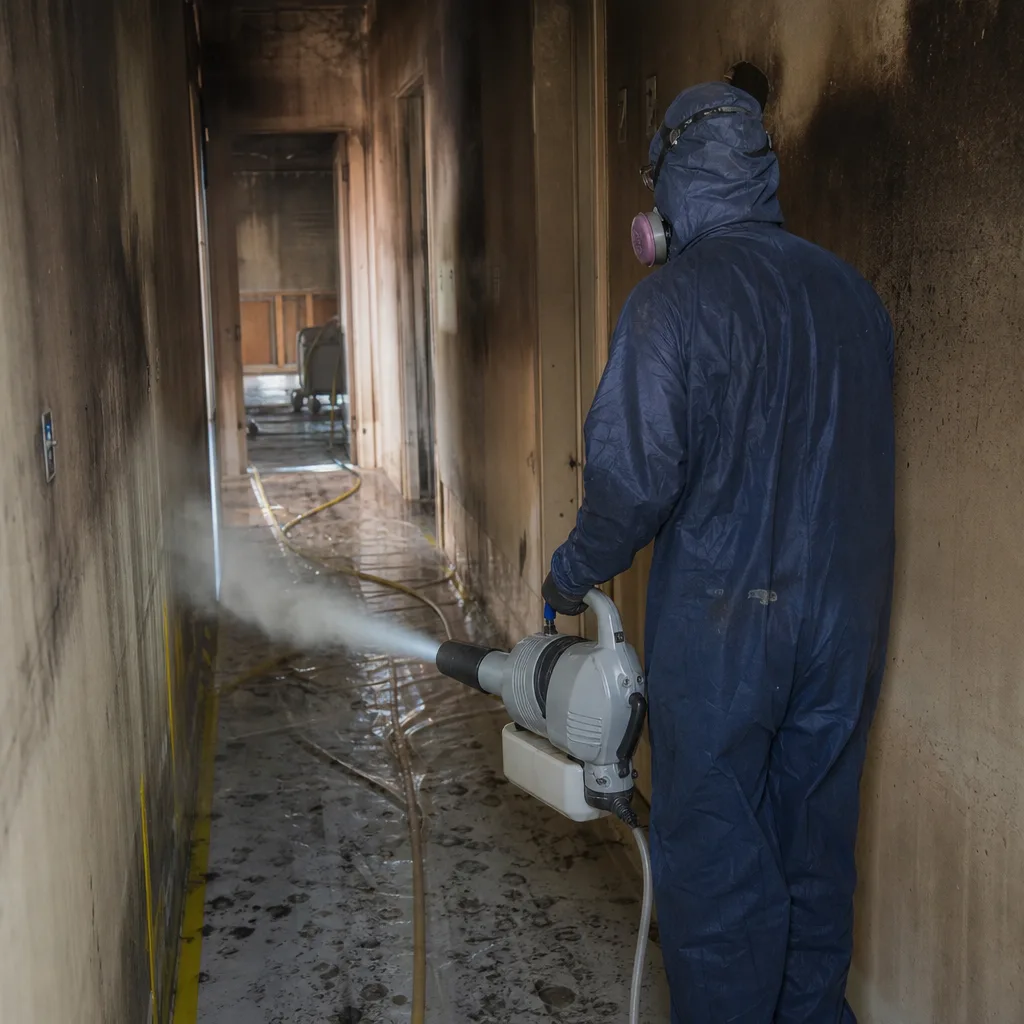
Black Mold Remediation
Stachybotrys chartarum and other toxigenic species require enhanced PPE, stricter containment, and specialized disposal. We don’t use scare tactics - we test, identify, and remediate to clearance with independent verification.
Air Quality Restoration
Post-remediation, we verify air quality through third-party lab analysis before containment comes down. In Santa Monica’s tight apartment courts with shared ventilation, this step protects adjacent units and satisfies insurer requirements.
Crawl Space Treatment
Santa Monica’s older bungalows and hillside homes have crawl spaces that trap marine-layer moisture year-round. We install vapor barriers, active dehumidification, and ventilation improvements to prevent recurrence after remediation.
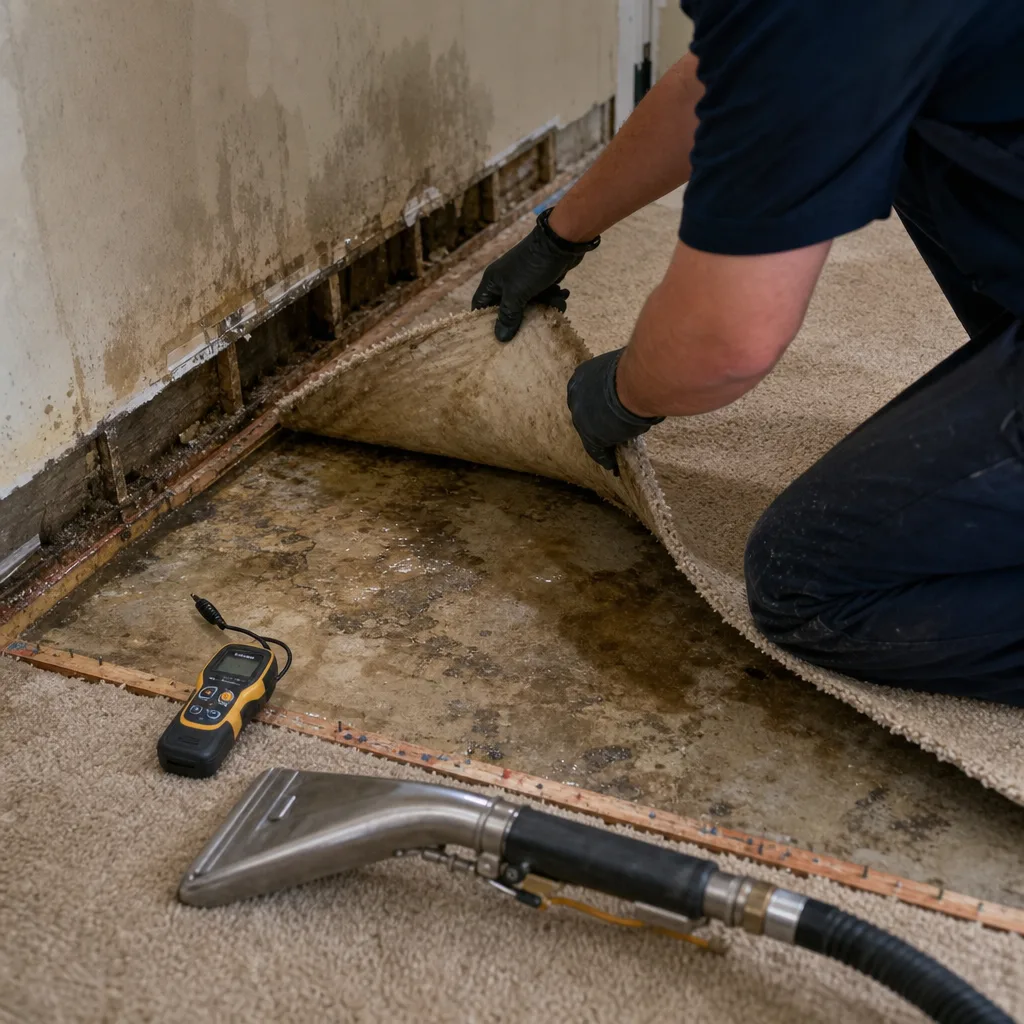
Moisture & Humidity Control
The sub-service that prevents callback. We analyze Santa Monica’s specific humidity patterns - not generic California data - and specify equipment and ventilation strategies that maintain safe moisture content in framing and subfloors.
What happens when you call
- 1
A real person answersNo phone trees - you reach a local pro.
- 2
You get an upfront price rangeHonest numbers before anyone is dispatched.
- 3
A background-checked tech heads outLicensed & insured, dispatched right away.
- 4
You approve before work beginsNothing starts until you say go.
Mold Remediation Costs in Santa Monica, CA
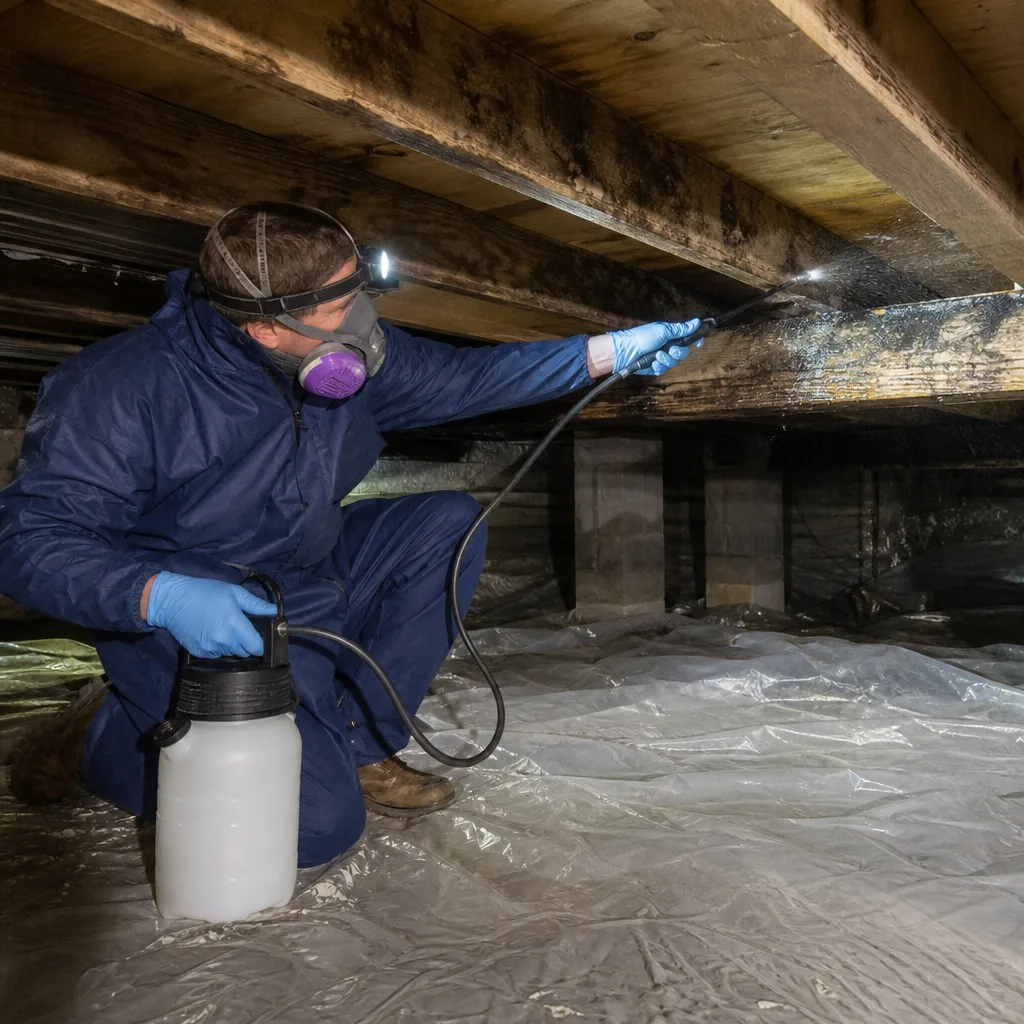
Here’s what mold remediation actually costs in Santa Monica’s market, based on jobs we’ve completed with written prices delivered before work started:
| Service | Typical Range in Santa Monica |
|---|---|
| Contained single-room remediation (surface growth, recent leak) | $2,800 - $4,500 |
| Hidden cavity remediation with drywall removal (chronic pinhole leak) | $4,500 - $7,500 |
| Multi-room or whole-unit remediation (pre-1979 apartment, widespread) | $8,000 - $15,000 |
| Full reconstruction with permit coordination (Coastal Zone) | $12,000 - $18,000+ |
| Independent clearance testing (third-party lab) | $400 - $800 |
| Crawl space treatment with vapor barrier and dehumidification | $3,500 - $6,500 |
What moves the price: the extent of hidden damage behind stucco or plaster, the water category (Category 3 requires more protective measures), whether Coastal Commission permitting adds timeline and documentation cost, and whether multiple units or insurance parties are involved. Insurance typically covers mold remediation when it’s secondary to a covered water loss; it rarely covers mold from long-term maintenance neglect. We provide a free visual inspection and written scope so you know exactly what’s covered and what isn’t before any work begins. Call (424) 365-9728 for your exact quote - estimates are free.
We Also Serve Cities Near Santa Monica
Our crews respond throughout the coastal corridor: Venice with its canal-adjacent properties and tidal flooding risk; Pacific Palisades where hillside drainage creates unique moisture patterns; Marina del Rey and its marina-adjacent condominiums with salt-air corrosion; and Playa del Rey with its low-lying wetlands proximity and groundwater issues. Each has distinct mold drivers; we adjust our drying protocols accordingly.
Serving Santa Monica, CA - Our Local Coverage Area
We’re based in the Santa Monica area and know this community well. Use the map below to see our service coverage - if you’re nearby, we can almost certainly help.
Santa Monica Mold Remediation Questions, Answered
How does Santa Monica’s marine layer affect mold remediation timelines compared to inland LA?
Drying takes 40-60% longer in Santa Monica because the marine layer keeps indoor relative humidity at 75-85% most mornings, while manufacturer specs for Dri-Eaz and Phoenix equipment assume roughly 50% ambient RH. We run dehumidification and air movement until wood framing hits 12-16% moisture content, documented on daily logs, regardless of how long manufacturer tables suggest. Inland crews who follow spec-time alone often leave cavities above target, and mold rebounds within weeks. Our field data from Santa Monica jobs goes to every drying log we submit to insurers. Call (424) 365-9728 for a free inspection with moisture mapping.
My Ocean Park ground-floor unit flooded during a winter storm - how fast does mold start?
In Santa Monica’s humid coastal environment, mold colonization begins on water-damaged framing within 24-48 hours of saturation - faster than the 48-72 hours typical inland. After storm-drain backflow flooding, we prioritize same-day extraction and establish drying within hours, not days. The first 24 hours are critical; after 72 hours without active drying, we shift from water mitigation to full microbial remediation protocol. Call (424) 365-9728 for immediate dispatch to Ocean Park.
Why do Santa Monica mold jobs often uncover damage that’s years old?
Santa Monica’s rent-controlled pre-1979 apartment courts protect tenants from eviction but create deferred-maintenance incentives for landlords, so original galvanized or early copper plumbing corrodes in the salt air and pinhole-leaks for months or years before any visible event. Our moisture mapping routinely finds studs at 30-40% moisture content behind apparently intact stucco, with multiple generations of mold growth indicating long-term chronic exposure. We document the full extent, including hidden damage, in our written scope before any work begins. Call (424) 365-9728 for a free second opinion on any competitor’s estimate.
Do I need a Coastal Commission permit for mold remediation in Santa Monica?
Not for interior remediation alone. But if reconstruction involves structural repair, exterior stucco replacement, or any work in Santa Monica’s Coastal Zone - which covers most of the city - you may need California Coastal Commission sign-off in addition to City of Santa Monica Building & Safety permits. This dual-track process can add weeks to reconstruction timelines and catches out-of-area contractors off guard. We navigate both tracks as part of our reconstruction service, with permit status documented in your job file. Call (424) 365-9728 to discuss your specific property location.
How do you know when to test versus just remediate a Santa Monica mold issue?
We test when the water source is unclear, when occupants have health symptoms without visible growth, when insurance requires species identification, or when prior remediation failed and we need to verify whether toxigenic species are present. For obvious, recent, contained growth from a known clean-water source, we may proceed directly to remediation with clearance testing after. The decision is documented in your written scope with rationale, never upsold. Call (424) 365-9728 for a free visual inspection and testing recommendation.
Will my insurance cover mold remediation in Santa Monica?
Insurance covers mold remediation when it’s secondary to a sudden, covered water loss - burst pipe, appliance failure, storm damage - and when documentation proves the mold resulted from that event, not long-term neglect. It typically does not cover mold from deferred maintenance, which is the pattern we often find in Santa Monica’s pre-1979 rent-controlled stock. We document moisture source, water category, and drying completion to establish the covered loss sequence, and we coordinate directly with your adjuster. Call (424) 365-9728 for a free inspection and insurance review.
How long does mold remediation take in Santa Monica?
Contained single-room remediation: 2-4 days of active work plus 48-72 hours for clearance testing results. Hidden cavity or multi-room jobs: 5-10 days of remediation, with drying extended by coastal humidity. Reconstruction adds 1-4 weeks depending on Santa Monica Building & Safety and potential Coastal Commission permitting. We provide a written timeline with your scope, updated daily, and we don’t start reconstruction until independent clearance confirms the space is safe. Call (424) 365-9728 for a timeline specific to your property.
Can my family stay in the home during mold remediation?
For contained Category A surface growth in a single room with negative-pressure isolation, often yes - with the work area sealed and HVAC isolated. For Category B or C hidden colonization, multi-room contamination, or toxigenic species, we recommend temporary relocation until clearance testing is complete. We specify occupancy status in your written scope before work begins, with no surprises once containment is up. Call (424) 365-9728 to discuss your specific situation.
Our Mold Remediation team has handled Santa Monica’s unique coastal conditions since 2011. We serve Santa Monica and surrounding coastal communities with the documentation-first approach that turns restoration invoices into paid claims.
Back to Dry Restoration, led by Alicia Brennan, has completed 12,000+ homes since 2011 - every one with a written price before work started and a documented record when the crew left. Our 365-Day Done Right Promise under The Haven Standard means if it’s not done right, we make it right. Free second opinions on any competitor’s written estimate. Call (424) 365-9728 for a free inspection and written scope.
Written by Alicia Brennan, Owner at Back to Dry Restoration, serving Santa Monica since 2011.
Mold Remediation in Nearby Areas