
Free visual inspection and a written scope of work before any mitigation begins - photos, moisture readings, and drying logs go in your claim file
The scope we write is the scope we bill. Anything new gets shown to you, in writing, before we touch it.
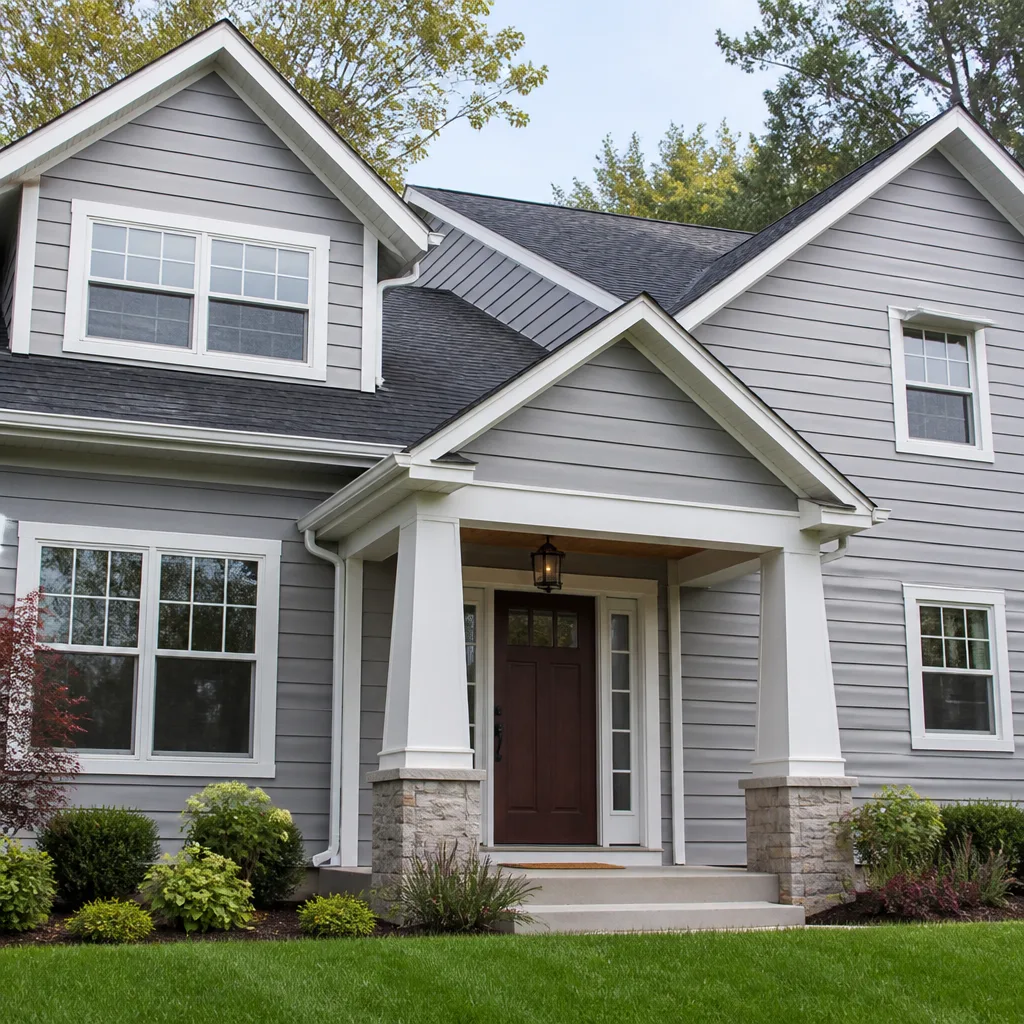
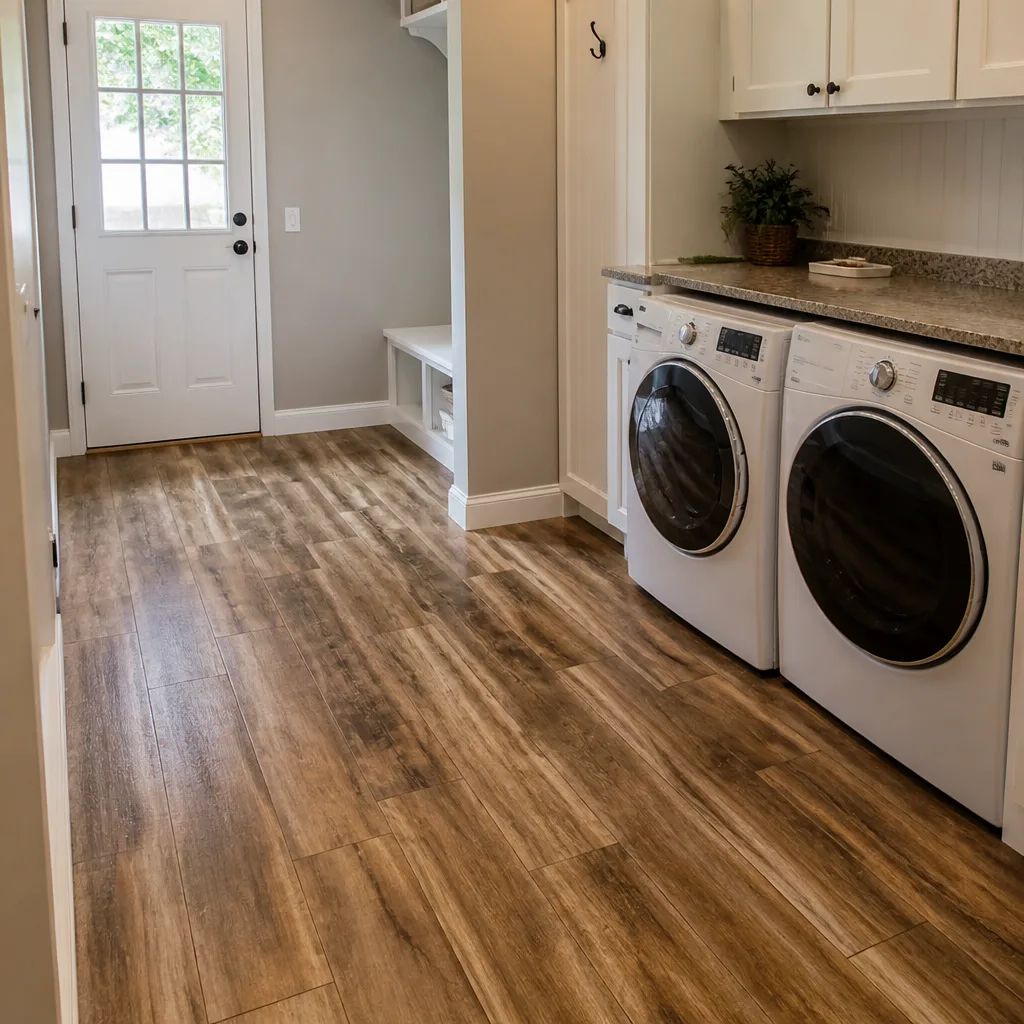
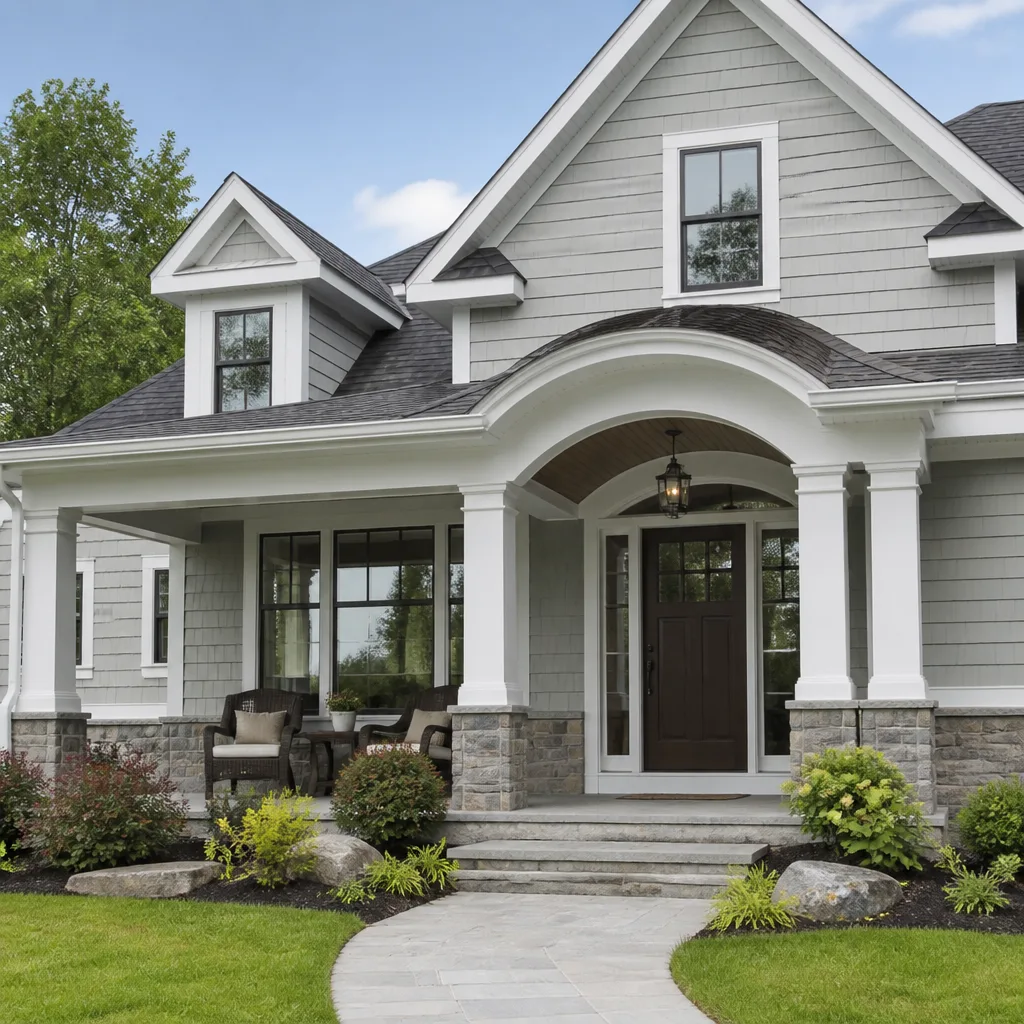
 Before
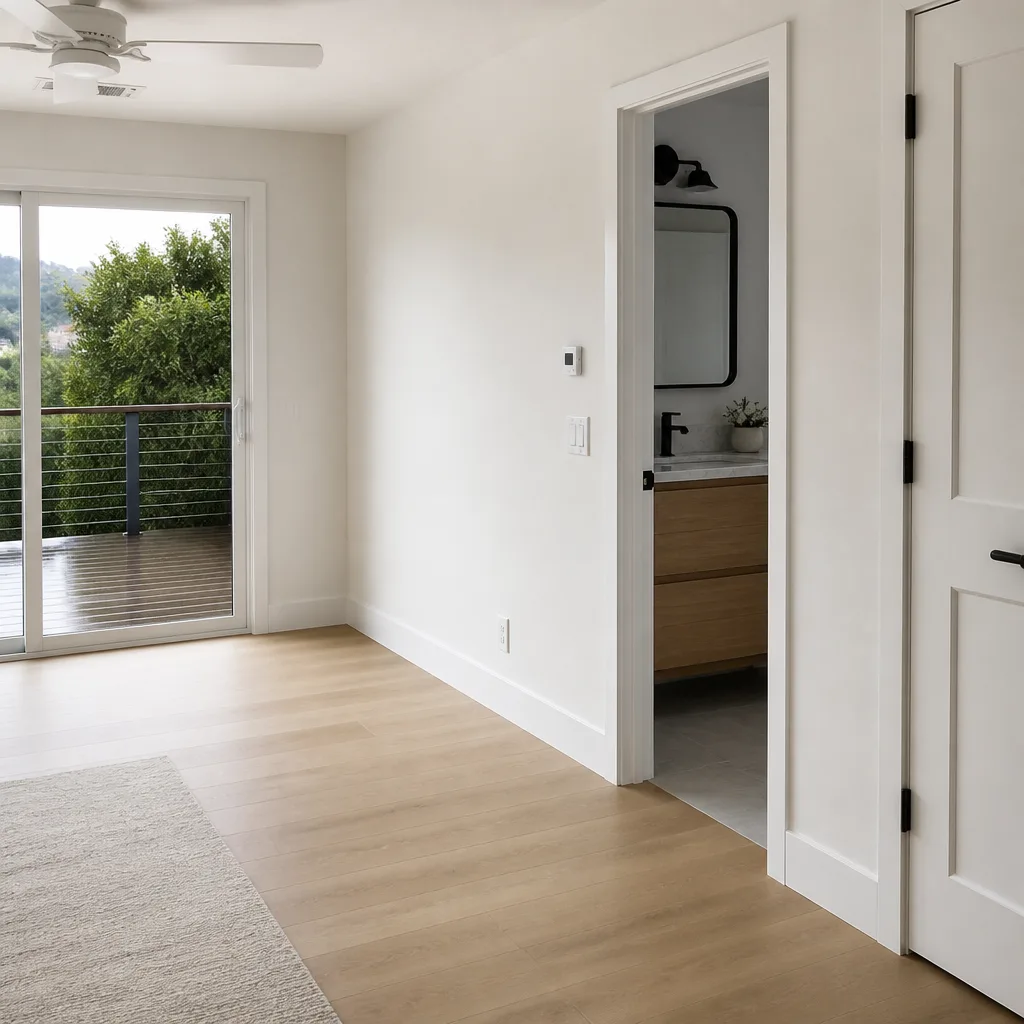 After
After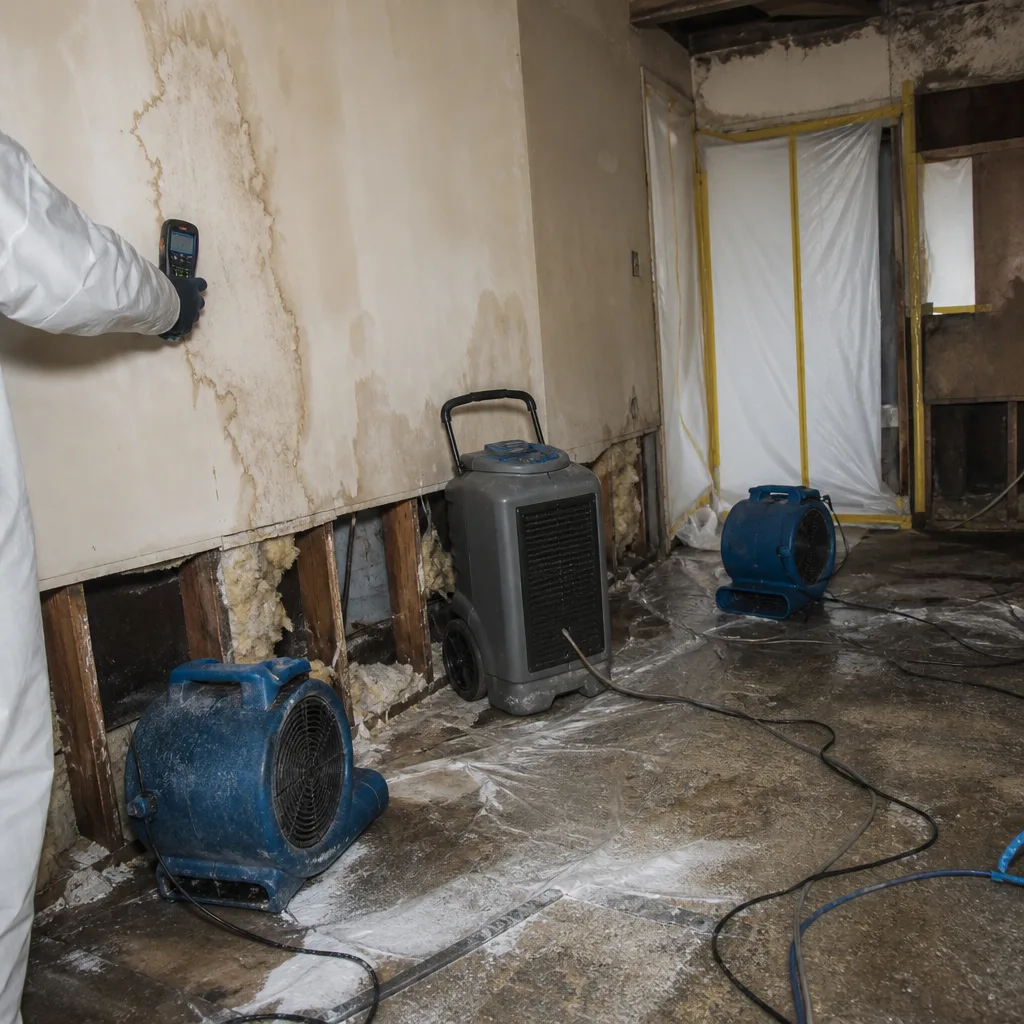 Before
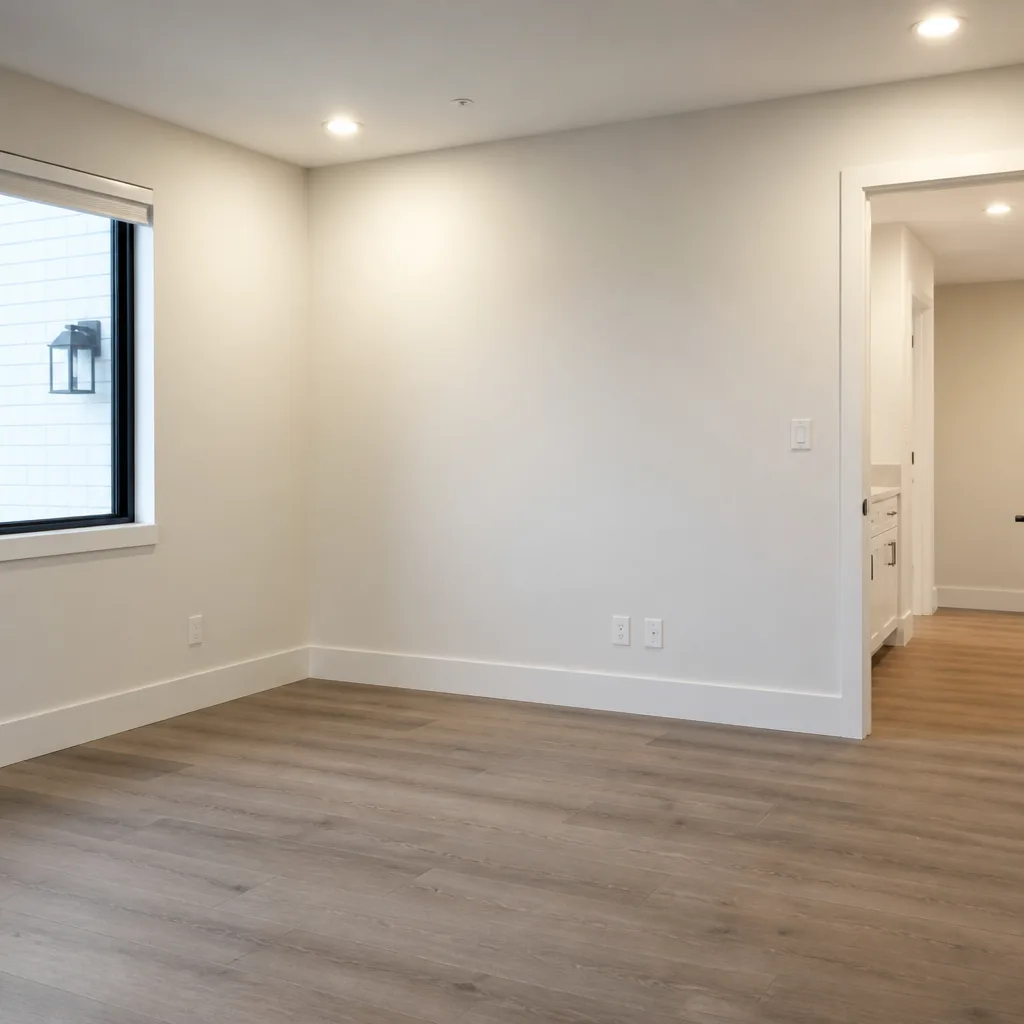 After
After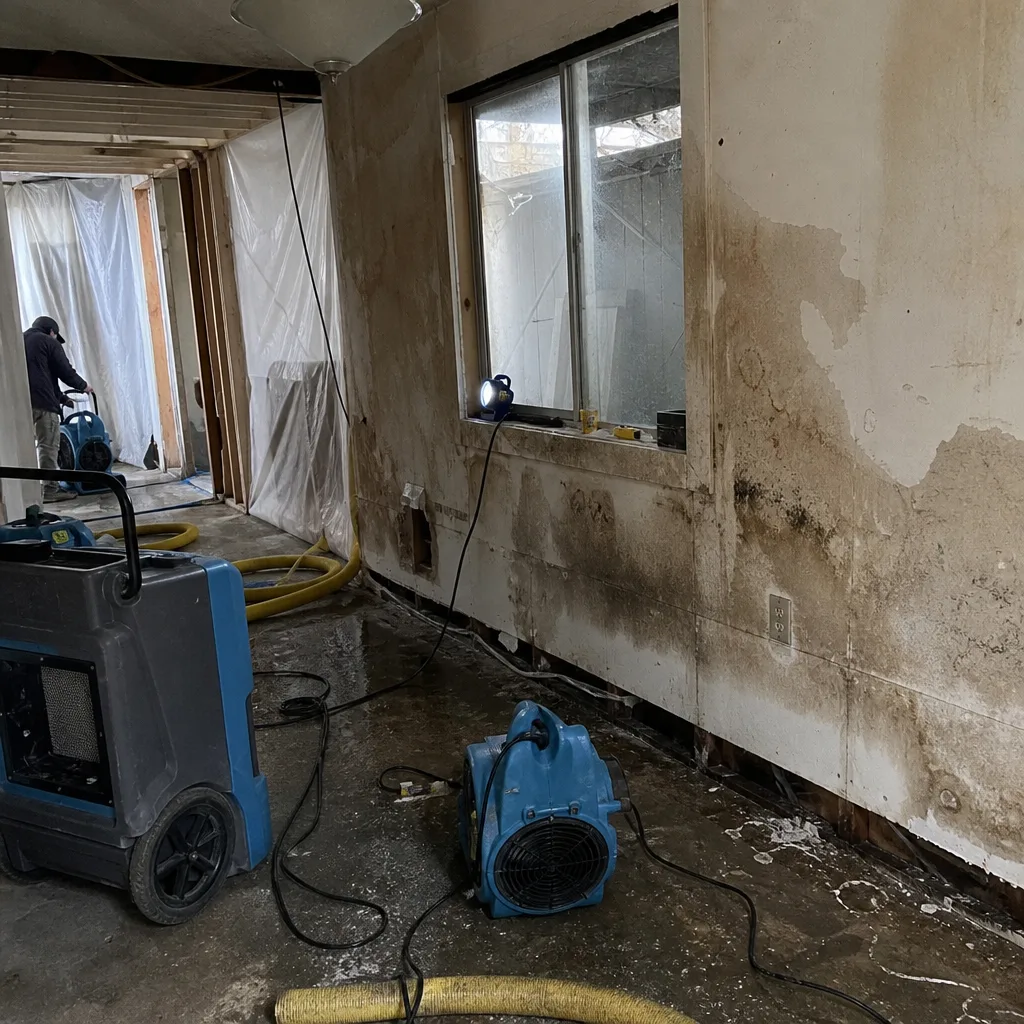 Before
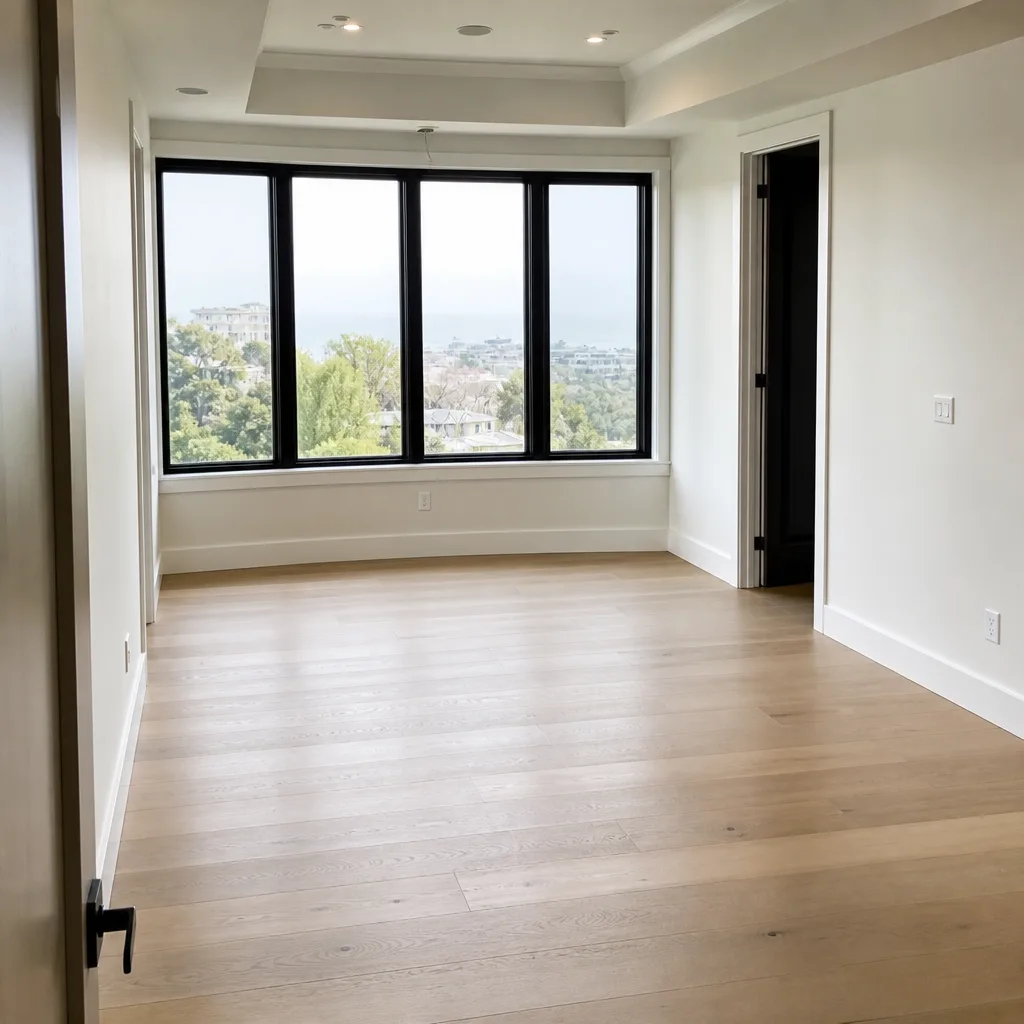 After
After24/7 Emergency Mold Remediation in Topanga
Mold remediation in Topanga typically costs between $1,800 and $6,500 depending on whether the growth is surface-level or hidden in wall cavities, and most inspections can be scheduled within 24 hours with same-day containment for active spread. Call (424) 365-9728 now - a live person answers every call, 24 hours a day, 7 days a week, with no voicemail trees while moisture is still moving.
Topanga’s canyon geography creates a unique mold risk profile. The same east-west orientation that channels Santa Ana winds through the Santa Monica Mountains also traps humidity in hillside homes after the first Pacific storm, especially where fire-damaged chaparral has been stripped from slopes above. When mold follows a compound fire-then-water damage cycle, the first hour determines whether containment limits the loss to one room or the whole structure. Our crews dispatch locally through Topanga Canyon Boulevard, and we bring portable containment, HEPA air scrubbers, and thermal imaging to every initial inspection. The written scope arrives before any work begins - Haven Standard, Clause 1.
Understanding Mold Remediation Severity in Topanga Properties
Mold severity in Topanga is graded by affected square footage, material classification, and whether the growth is accessible or trapped in closed assemblies. Category 1 contamination covers surface growth on non-porous materials like tile or sealed concrete, typically remediable without demolition. Category 2 involves porous materials - drywall, cavity insulation, unfinished wood - where hyphae penetrate the substrate and removal is required. Category 3 indicates extensive colonization in HVAC systems or structural framing, often following Category 3 water (black water) intrusion from compromised septic systems or debris-flow contamination.
Topanga’s 1950s-1970s wood-frame cabins complicate every classification. Many were built without vapor barriers, with non-standard additions that create thermal bridges where condensation collects. Wood shake roofs predating current fire codes leak differently than composite assemblies, and unpermitted crawl space enclosures often lack proper ventilation. Our moisture mapping uses thermal imaging and calibrated hygrometers to find what surface swabs miss: the humidity trapped behind ash-sealed sheathing where off-gassed particulates from wildfire smoke create a nutrient-rich environment for mold long after the flames are out.
Why Topanga Property Owners Choose DryMark Restoration Pacific Palisades
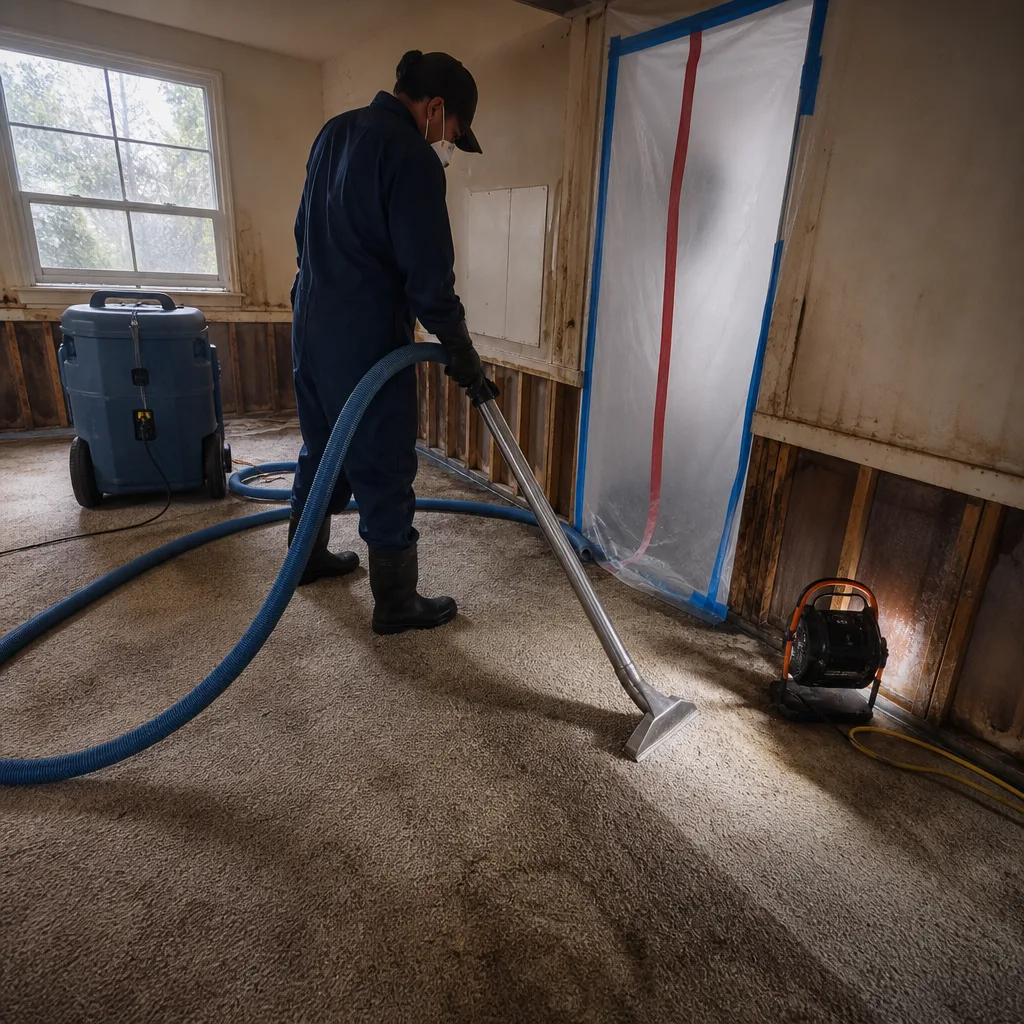
- 45-minute response commitment to the Topanga area, with crews staging from our Los Angeles office to reach canyon properties fast.
- 24/7 live answer - a real person, never an automated system or next-business-day callback while mold is actively sporulating.
- IICRC-certified crews holding AMRT (Applied Microbial Remediation Technician) and WRT (Water Damage Restoration Technician) credentials, with license numbers provided on request.
- Free visual inspection and moisture assessment, documented with photos from the first visit.
- Direct insurance billing and adjuster coordination, with our photo records and drying logs formatted for carrier submission.
- One team from containment through reconstruction - no handoffs between remediation and rebuild contractors that delay the pre-storm sealing window.
 Before
 After
AfterOur Mold Remediation Process
1. Inspection & Assessment
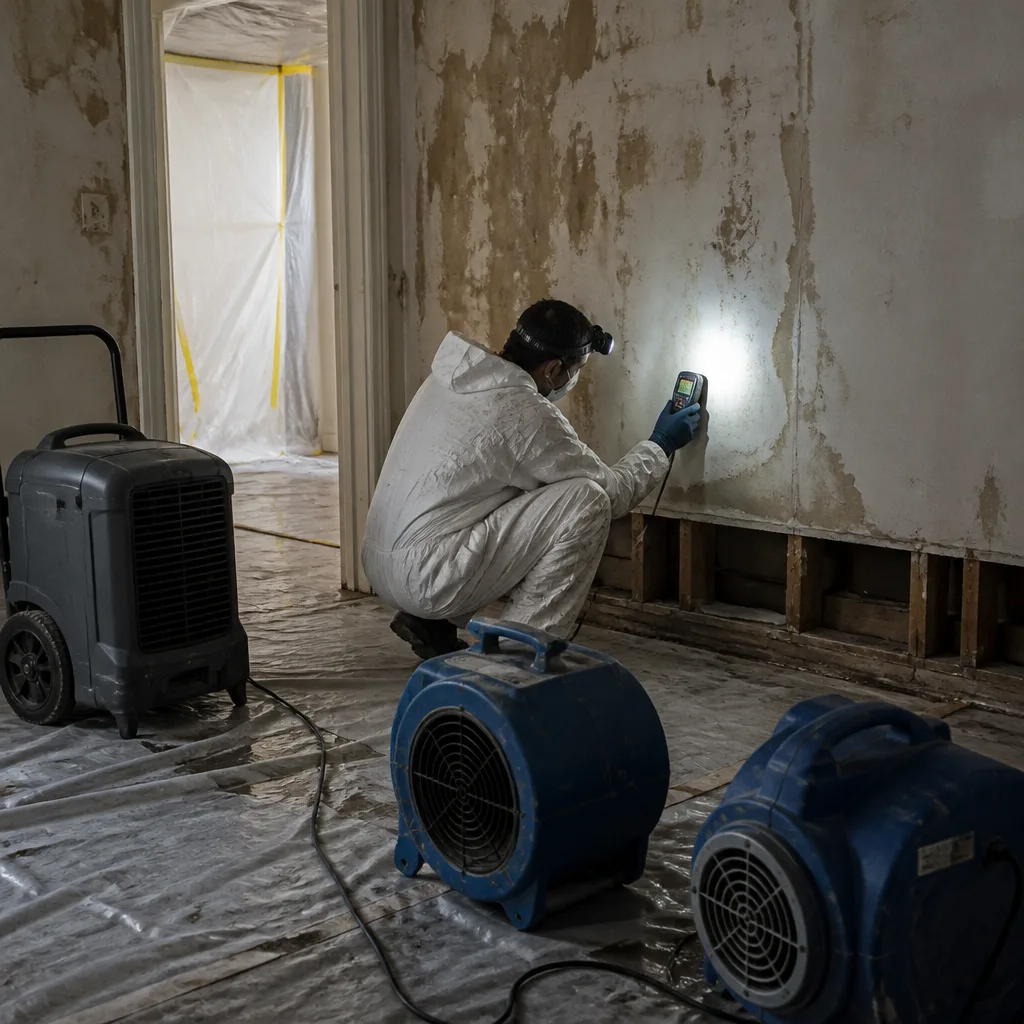
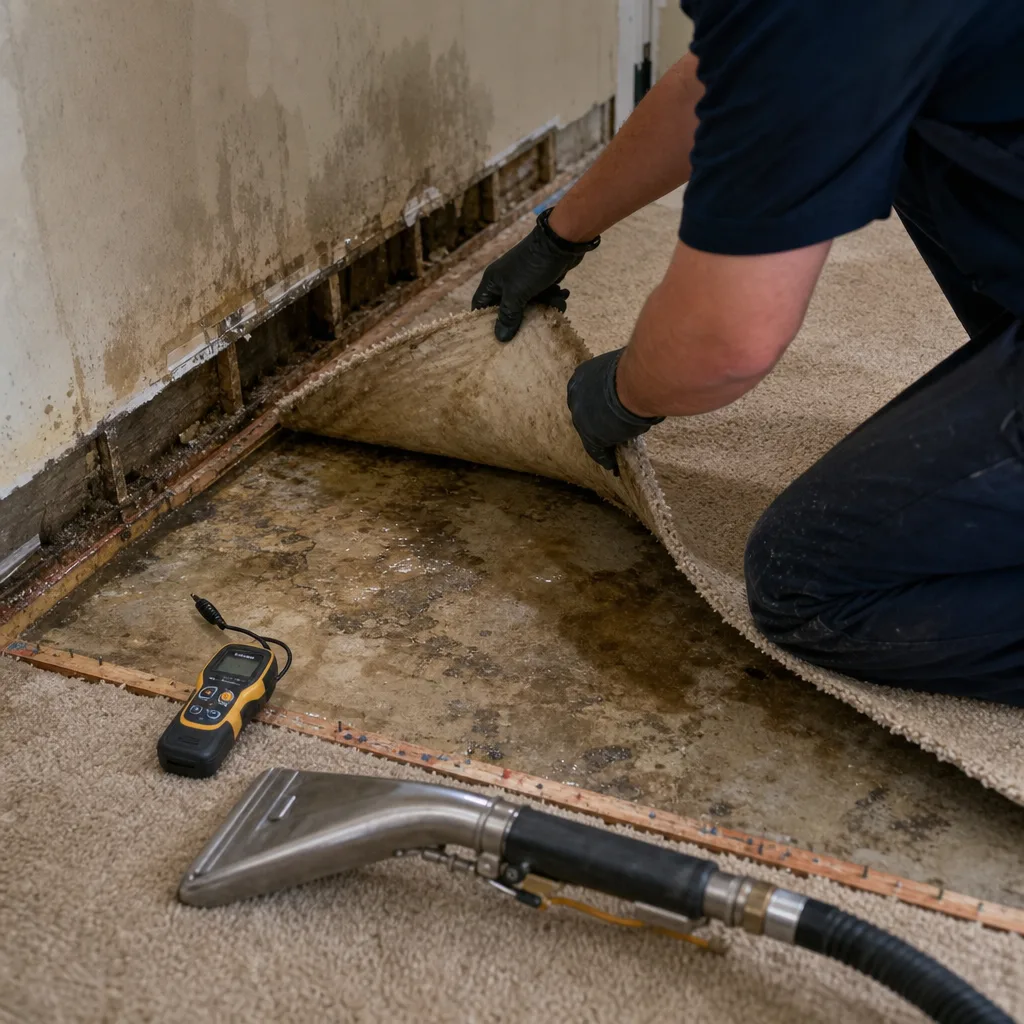
We start with thermal imaging and moisture mapping to locate hidden colonization in wall cavities, not just visible surface growth. Air sampling and cavity swabs identify species and spore counts, with results documented for your insurer. In Topanga, we specifically check for ash-coated framing behind sealed exteriors where post-fire humidity gets trapped.
2. Containment & Air Filtration
Polyethylene barriers isolate the work zone under negative air pressure, with HEPA air scrubbers capturing 99.97% of particles 0.3 microns and larger. This prevents cross-contamination to unaffected areas during demolition, critical in Topanga’s compact hillside homes where HVAC ducts often connect multiple levels.
3. Demolition & Material Removal
Contaminated drywall, insulation, and compromised framing are removed with controlled techniques that minimize aerosolization. We classify all water-damaged materials by Category 1, 2, or 3 standards - Topanga’s private septic systems and well infrastructure often elevate what would be Category 1 municipal water to Category 2 or 3, changing what must be removed rather than dried.
4. Cleaning & Antimicrobial Treatment
Exposed studs and subfloors receive HEPA vacuuming followed by EPA-registered antimicrobial application. Smoke- and ash-impacted framing gets additional treatment for off-gassed particulate residue that feeds mold recurrence. We document application rates and dwell times for your carrier file.
5. Structural Drying & Dehumidification
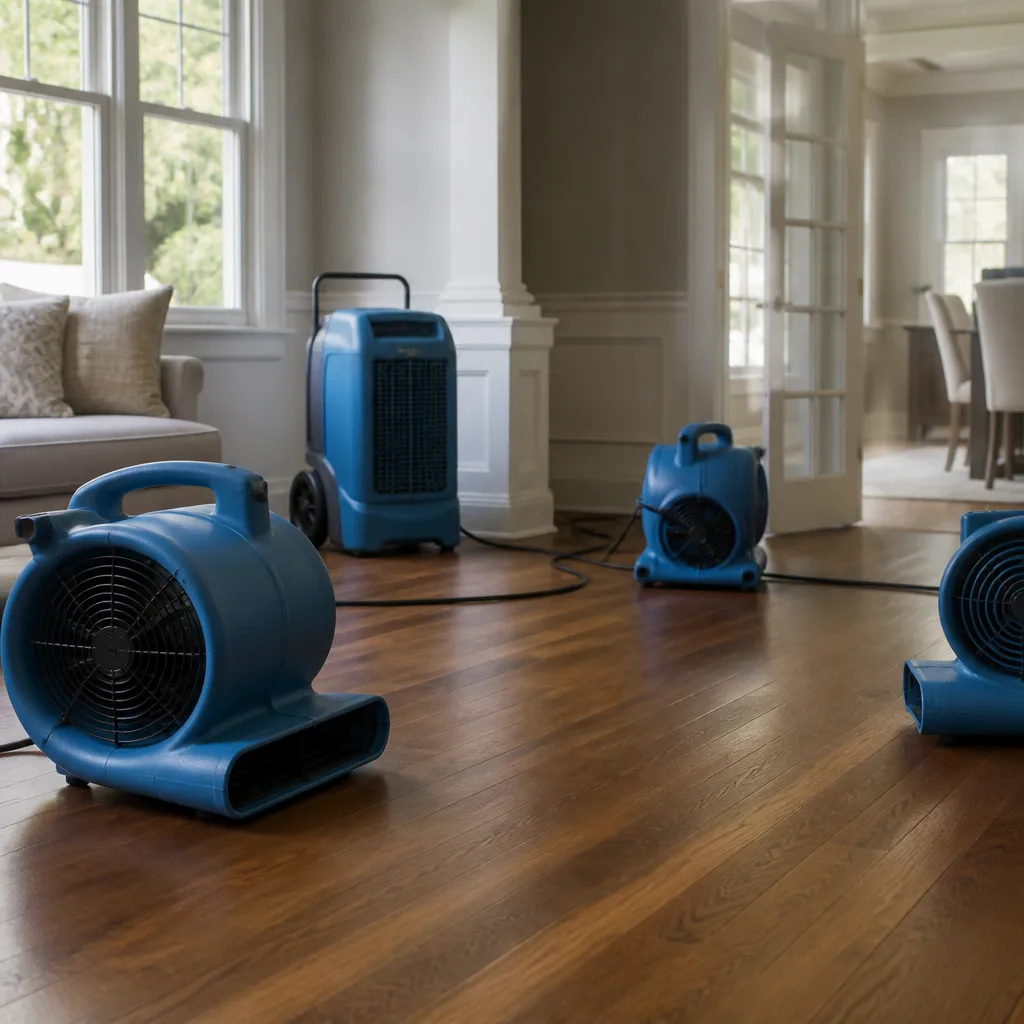
Injectidry cavity drying systems, Dri-Eaz and Phoenix desiccant dehumidifiers, and strategic air mover placement reduce moisture content to below 16% in wood framing. Daily psychrometric readings - temperature, relative humidity, vapor pressure differential - are logged until equilibrium is reached, producing the documentation that turns restoration invoices into payable claims.
6. Repairs, Sealing & Clearance Testing
Reconstruction replaces removed materials with moisture-resistant assemblies where code allows. Final air quality testing confirms spore counts at or below outdoor baseline before containment is removed. In Topanga, we prioritize envelope sealing before the first significant Pacific storm to prevent debris-flow re-wetting - a second-loss scenario routine in canyon communities but almost never seen in flatland LA.
Need Emergency Mold Remediation in Topanga Now?
Crews minutes away, answering live 24 hours a day. The sooner we start, the less it costs.
Working With Your Insurance Company
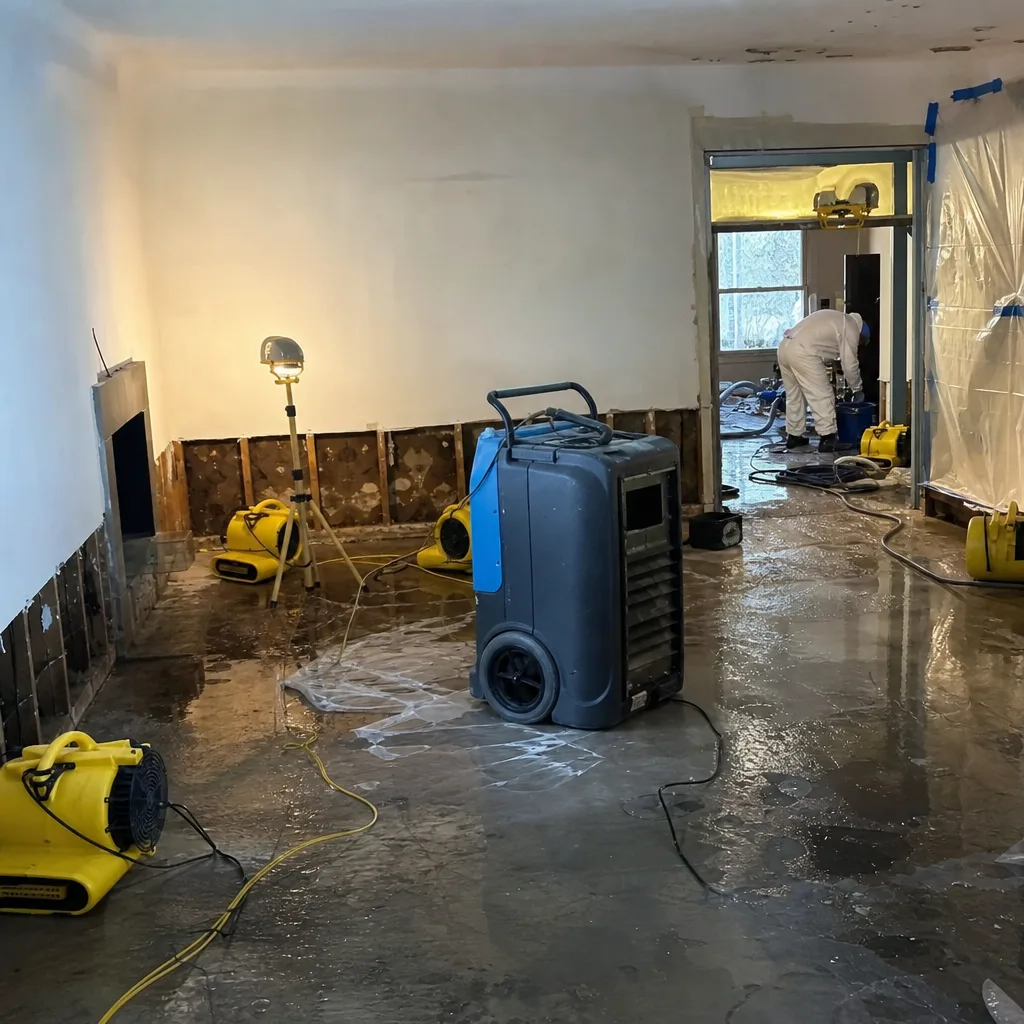
Insurance coverage for mold remediation hinges on documentation from the first hour. Carriers deny claims where the origin is unclear or where remediation was delayed, allowing secondary damage. Our process produces the file an adjuster needs: dated photos of all visible growth, moisture readings with equipment calibration certificates, a line-item scope tied to IICRC S520 standards, and daily drying logs showing progressive moisture reduction.
We coordinate directly with your carrier’s adjuster, providing the same documentation package we give you. Our estimates are formatted to industry-standard Xactimate pricing, and we do not begin work until the written scope is signed - Haven Standard, Clause 1. For disputed claims, our photo record and psychrometric data provide the evidence to support coverage. We also offer a Free Second Opinion on any competitor’s written estimate if your carrier questions the scope.
What We Provide Your Insurer
- Thorough documentation of the loss origin and extent
- Photos of all damage, room by room, with timestamps
- Moisture readings and daily drying logs with equipment serial numbers
- A detailed, line-item scope of work tied to IICRC S520
- Direct coordination with your carrier’s adjuster
Built for Topanga’s Loss Calendar
Topanga’s mold season runs counter to intuition. The highest risk arrives not in summer but in the months following wildfire season, typically October through March. Santa Ana wind events between August and November drive fire through chaparral slopes, coating structures in ash and off-gassed particulates that penetrate wall cavities through soffits, eaves, and compromised roofing. Then the Pacific storm season begins.
First rains on burned hillsides create debris flows that Topanga Creek cannot contain, sending mud and ash slurry through properties at elevations that never flooded before the fire. Homes that suffered smoke damage now take water intrusion in the same wall assemblies. The mold doesn’t appear immediately - it incubates through winter as humidity trapped behind sealed exterior sheathing meets nutrient-rich ash residue. By February, we’re fielding calls for musty odors and elevated humidity readings in homes where visible mold is still minimal. This compound fire-then-wet-season cycle is the defining pattern of our Mold Remediation work in canyon communities.
Mold Remediation Across Topanga’s Neighborhoods
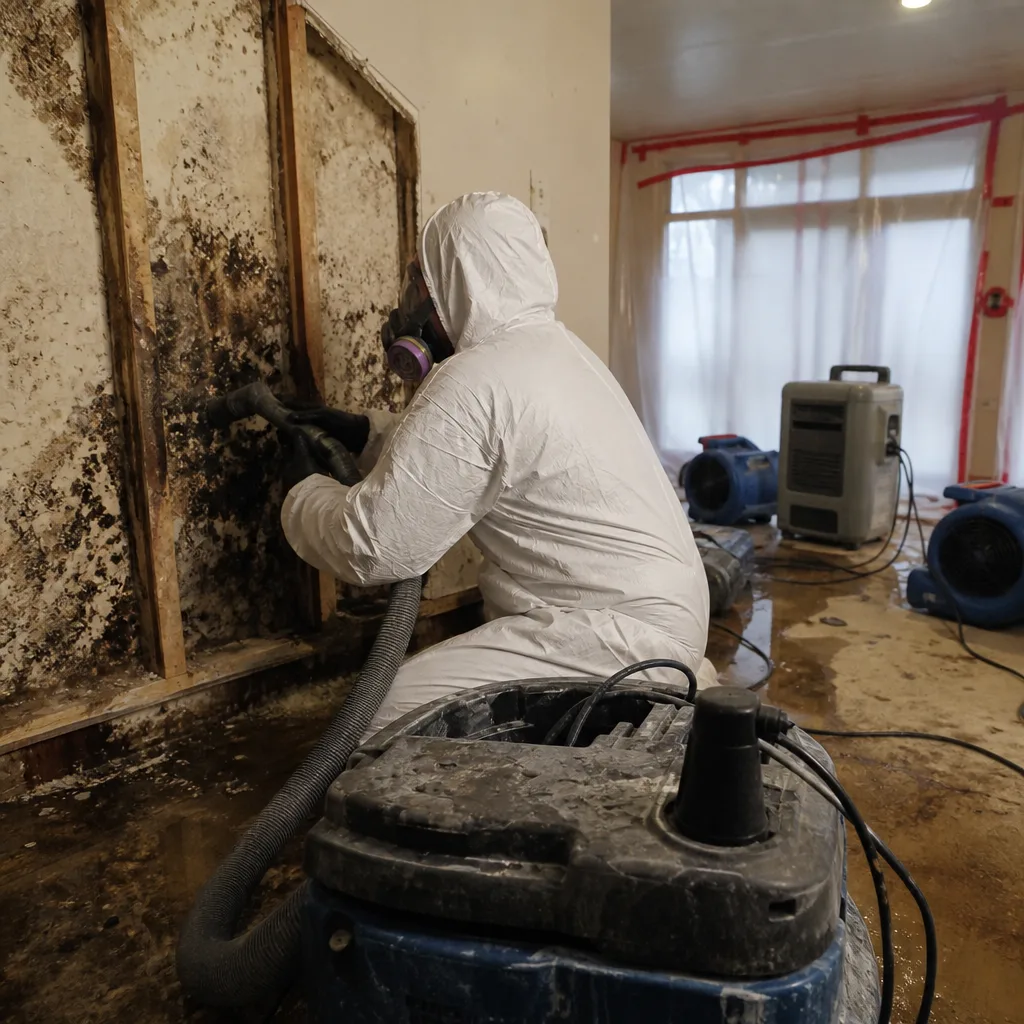
Topanga’s settlement pattern follows three main corridors, each with distinct mold risk profiles. The Topanga Canyon Boulevard corridor from the Pacific Coast Highway junction to the summit sees the highest traffic and the most mixed housing stock - 1960s cabins alongside newer construction, many with additions that create thermal bridges where condensation collects. Our crews know which driveways accommodate our desiccant trailers and which require equipment staging at the road.
Old Topanga Canyon Road, the original route before the boulevard was cut, holds some of the oldest and most idiosyncratic construction - properties where unpermitted guest units share HVAC with main structures, spreading spore loads across what owners assumed were separate systems. We ran a mold inspection on a 1960s wood-frame cabin off Old Topanga Canyon Road after a canyon fire, and our moisture mapping found wet framing behind freshly ash-sealed exterior walls on the downslope side. The crew set containment, pulled the affected sheathing and cavity insulation, applied antimicrobial treatment to the studs, and ran Injectidry and Dri-Eaz desiccant dehumidification with air movers to finish structural drying - then sealed the envelope before the first Pacific storm so debris-flow slurry wouldn’t re-wet what we’d just dried.
The Fernwood and Sylvia Park areas, tucked in side canyons above the main road, present access challenges that determine response logistics. Narrow private drives, limited turnaround space, and steep grades mean our containment equipment and negative air machines must be sized for manual transport if needed. Properties here also show the highest incidence of private well and septic systems, which changes water damage classification and remediation protocols when systems fail or backflow during storm events.
Specialized Mold Remediation Services We Offer in Topanga
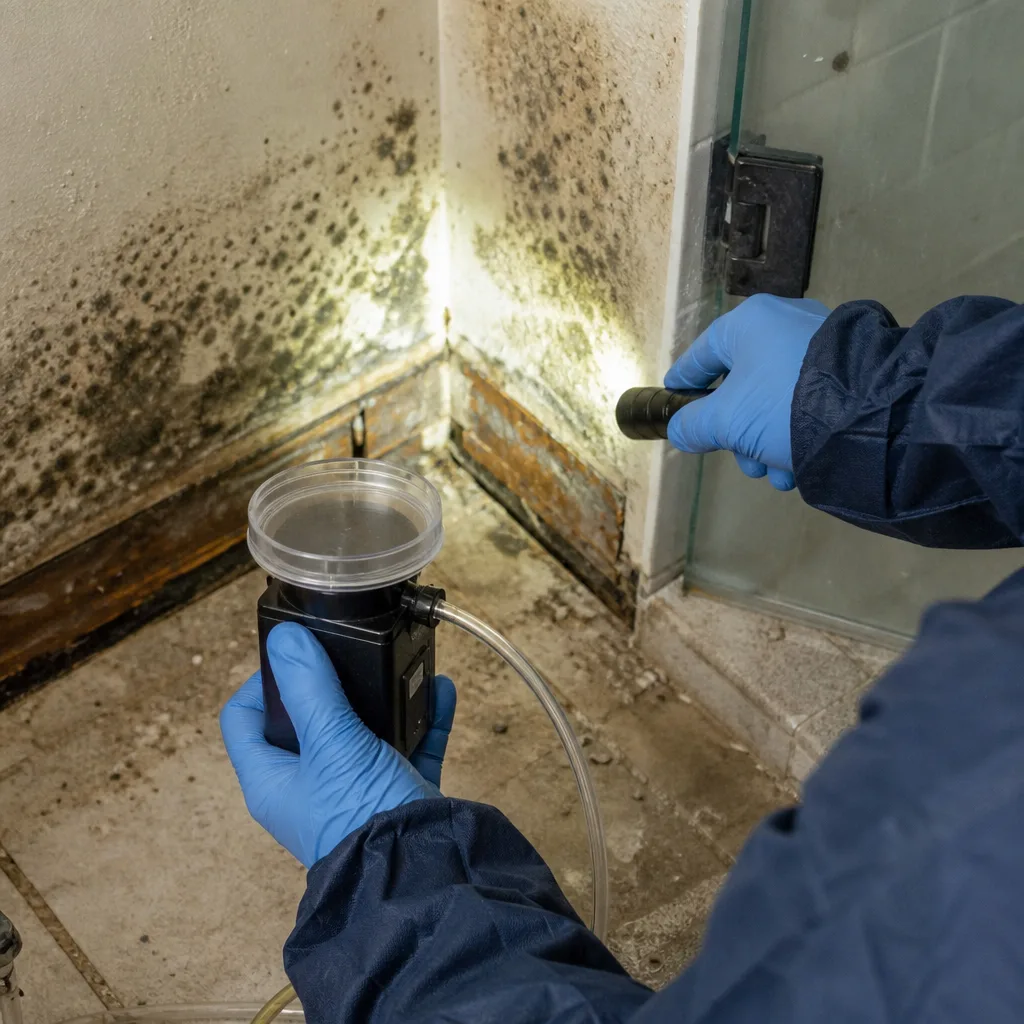
Mold Inspection & Testing
Our inspections go beyond visible assessment to locate hidden colonization in Topanga’s typical closed assemblies. Thermal imaging identifies temperature differentials behind ash-sealed sheathing; cavity air sampling captures spore counts in wall voids where surface swabs read clean. We document every reading with photos and equipment calibration data for your carrier file.
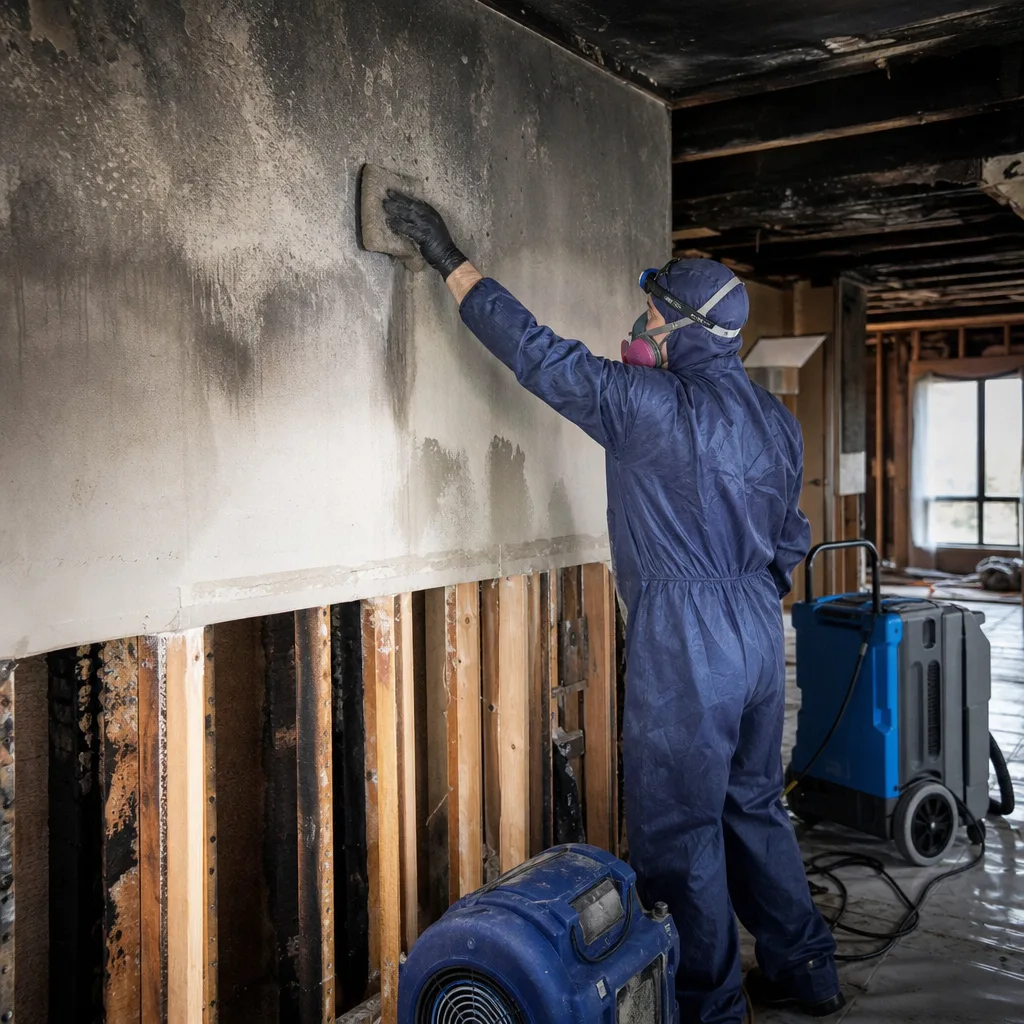
Mold Removal
Removal protocols follow IICRC S520 standards for containment, negative air pressure, and controlled demolition. In Topanga’s hillside homes, we often encounter non-standard framing and unpermitted additions that require adaptive containment designs - our crews are trained to build effective isolation without damaging structurally compromised assemblies.
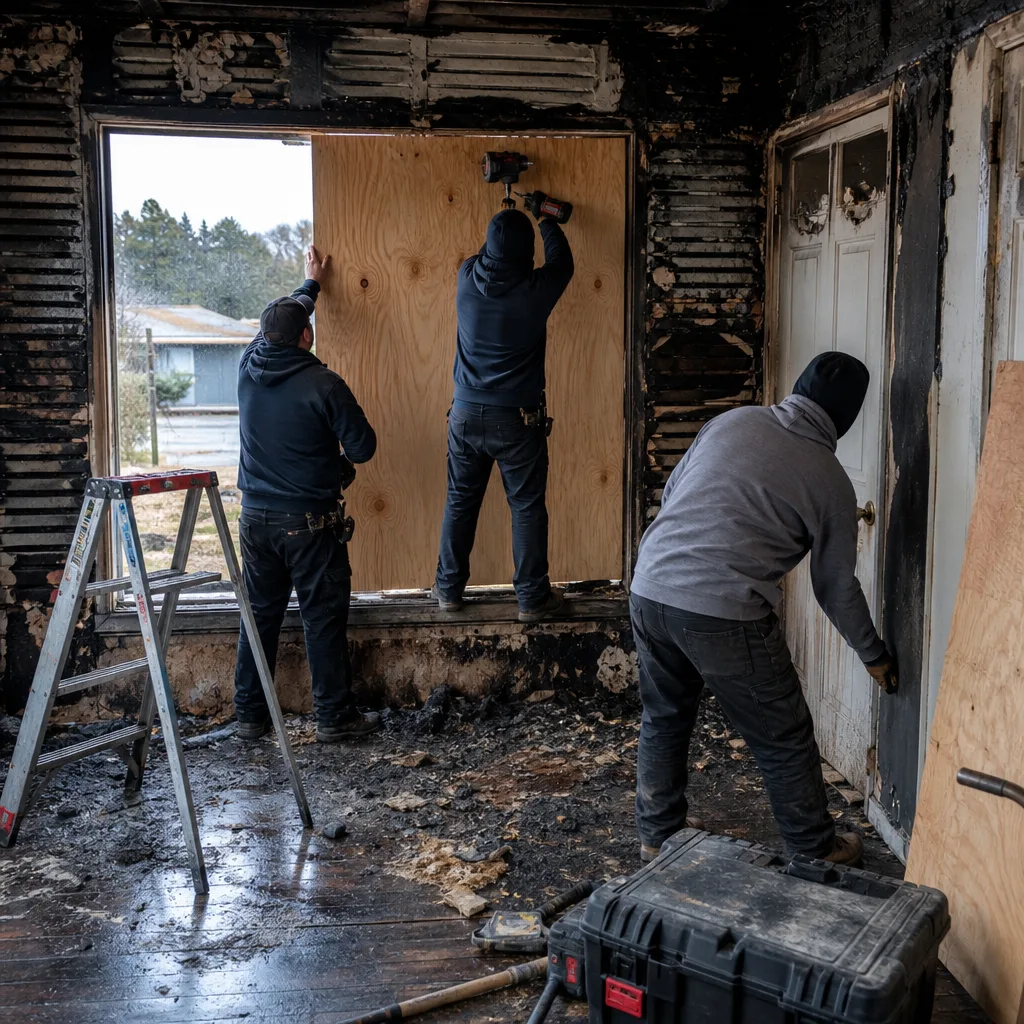
Black Mold Remediation
Stachybotrys chartarum and other toxigenic species require enhanced PPE and extended containment periods. We identify species through laboratory analysis before establishing remediation protocols, ensuring crew safety and proper documentation for health-related insurance claims.
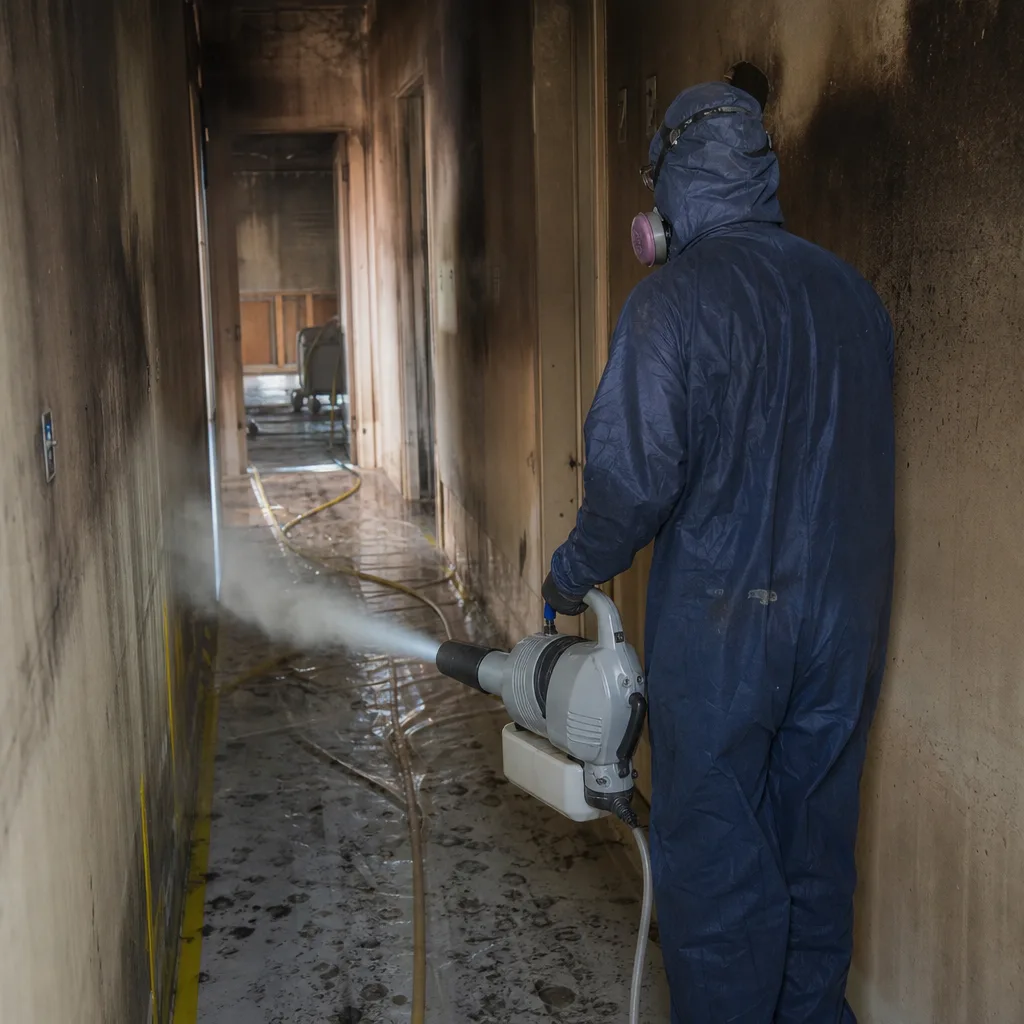
Air Quality Restoration
Post-remediation air scrubbing uses HEPA filtration and activated carbon media to remove residual spores and volatile organic compounds from fire-impacted materials. Final clearance testing compares indoor spore counts to outdoor baseline, with results delivered in writing before containment removal.
Crawl Space Treatment
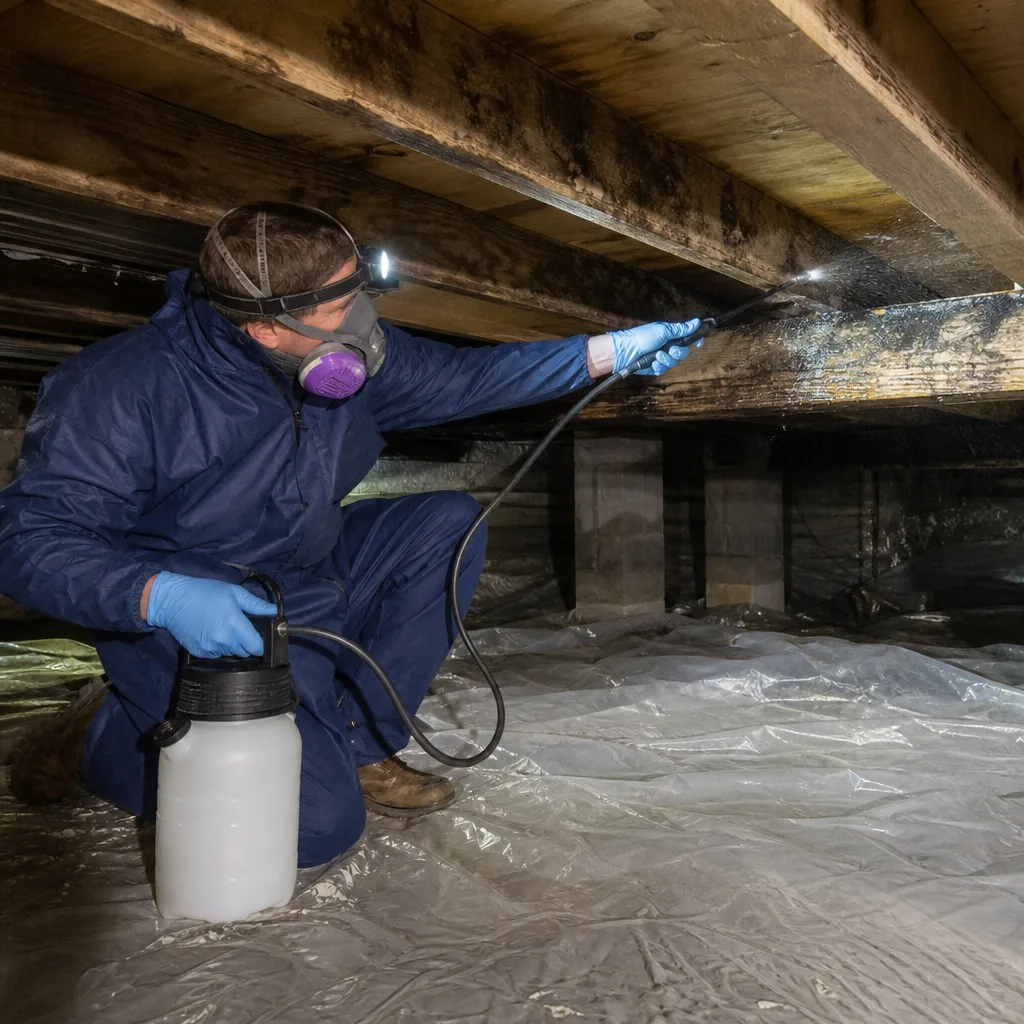
Topanga’s many hillside homes have crawl spaces with inadequate ventilation, often enclosed in unpermitted retrofits that trap ground moisture against framing. We install vapor barriers, mechanical ventilation, and dehumidification where structural conditions allow, documenting moisture reduction for ongoing monitoring.
What happens when you call
- 1
A real person answersNo phone trees - you reach a local pro.
- 2
You get an upfront price rangeHonest numbers before anyone is dispatched.
- 3
A background-checked tech heads outLicensed & insured, dispatched right away.
- 4
You approve before work beginsNothing starts until you say go.
Mold Remediation Costs in Topanga, CA
A typical mold inspection and limited surface remediation in Topanga runs $1,800-$3,200. Moderate remediation involving drywall removal, cavity drying, and reconstruction of one to two rooms ranges $3,500-$6,500. Extensive whole-structure remediation following compound fire-and-water damage, with multiple containment zones and extended drying, can reach $8,000-$15,000 or more depending on square footage and material classification.
What moves the price: hidden colonization in closed assemblies requiring thermal imaging and cavity demolition; Category 2 or 3 water classification from private septic or well system compromise; expedited scheduling to meet pre-storm sealing windows; and reconstruction of non-standard or unpermitted construction that lacks original plans. Insurance typically covers mold remediation when it results from a covered water loss, but carriers increasingly limit mold coverage to specific dollar caps - we document the water origin thoroughly to support your claim. Our written scope, delivered before work begins, breaks every line item so you know exactly what you’re paying for. Call (424) 365-9728 for a free inspection and firm scope - estimates are free.
We Also Serve Cities Near Topanga
Our crews respond throughout the western San Fernando Valley and Santa Monica Mountains, including Mold Remediation in Topanga and surrounding communities: Tarzana to the east, Pacific Palisades to the south along the coast, Sherman Oaks across the mountain ridge, and Santa Monica to the southwest. Each area shares some of Topanga’s canyon geography but presents its own access and construction challenges - we adjust equipment and staffing accordingly.
Serving Topanga, CA - Our Local Coverage Area
We’re based in the Topanga area and know this community well. Use the map below to see our service coverage - if you’re nearby, we can almost certainly help.
Topanga Mold Remediation Questions, Answered
How fast does mold grow after water damage in a Topanga cabin?
Mold can begin sporulating within 24-48 hours of water intrusion, but in Topanga’s post-fire conditions the timeline compresses. Ash and off-gassed particulates in wall cavities provide nutrients that accelerate colonization, and the canyon’s humidity-trapping topography keeps materials wet longer than flatland LA. Call (424) 365-9728 for same-day moisture assessment - the sooner we map the damage, the smaller the containment zone.
Why do we see mold in Topanga a season after a fire, not right away?
The fire itself dries structures severely, but the following wet season reintroduces moisture into ash-coated cavities where smoke particulates have created a nutrient layer. Mold incubates through winter in these hidden assemblies, becoming detectable as odor or humidity spikes by February or March. Surface cleaning after fire damage misses this delayed colonization - cavity moisture mapping is essential. Call (424) 365-9728 for post-fire inspection before the first Pacific storm.
Does a private well or septic system change mold remediation in Topanga?
Yes. Water from compromised private wells or septic backflow is classified as Category 2 or 3 under IICRC standards, not Category 1 municipal water. This changes what materials must be removed rather than dried, increases antimicrobial treatment requirements, and may trigger county health department notification. We identify your service type during initial inspection and adjust scope accordingly. Call (424) 365-9728 to discuss your property’s specific systems.
What does a mold remediation job actually involve in a Topanga hillside home?
Containment under negative air pressure, controlled demolition of affected materials, HEPA vacuuming and antimicrobial treatment of exposed framing, structural drying with documented daily moisture readings, and reconstruction with moisture-resistant assemblies. In Topanga, we prioritize envelope sealing before storm season to prevent debris-flow re-wetting. Every step is photo-documented for your insurance file. Call (424) 365-9728 for a written scope specific to your property.
Can you pack out belongings instead of treating them on-site?
Yes. Contents with porous surfaces - upholstered furniture, textiles, paper - often require off-site cleaning at our facility with specialized deodorization and antimicrobial treatment. Non-porous items can frequently be cleaned on-site within containment. We inventory every item with photo documentation for your insurance claim, and our written scope specifies which approach applies to each category of contents. Call (424) 365-9728 to discuss pack-out options.
How fast can someone actually get to Topanga?
Our 45-minute response commitment applies to the Topanga area, with crews staging from our Los Angeles office. Topanga Canyon Boulevard closures during fire evacuation or winter storm events are the main variable - we monitor CHP road status in real time and can route via alternate canyon roads when available. Live dispatch updates you if access is delayed. Call (424) 365-9728 for current response time.
Will insurance cover mold remediation in Topanga?
Coverage depends on the water origin and your policy’s mold provisions. Sudden and accidental water losses - burst pipes, storm intrusion through fire-damaged roofing - are typically covered, with mold remediation as a secondary component. Long-term leaks and maintenance-related moisture are usually excluded. Our documentation package establishes the loss origin for your adjuster, and we offer direct carrier coordination. Call (424) 365-9728 for a free inspection and coverage assessment.
Do I need to leave my home during mold remediation?
Not always. Limited containment in one or two rooms often allows occupants to remain in unaffected areas with HVAC isolation. Whole-structure remediation, or toxigenic species identification, may require temporary relocation. We specify occupancy status in our written scope before work begins, with no change orders once containment is established. Call (424) 365-9728 to discuss your property’s specific conditions.
Written by Alicia Brennan, Owner at Back to Dry Restoration, serving Topanga since 2011 under The Haven Standard.
Mold Remediation in Nearby Areas