
Last updated September 23, 2026
Free visual inspection and a written scope of work before any mitigation begins - photos, moisture readings, and drying logs go in your claim file
The scope we write is the scope we bill. Anything new gets shown to you, in writing, before we touch it.
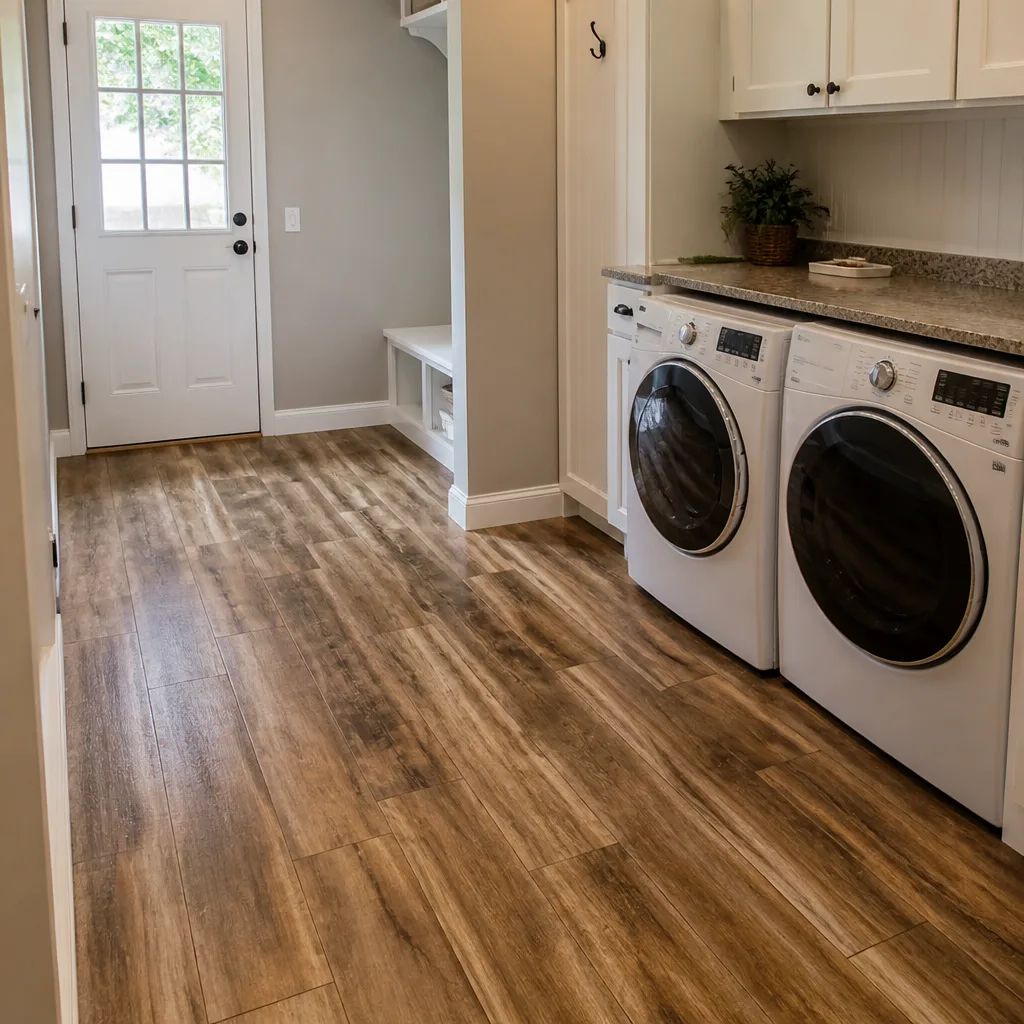
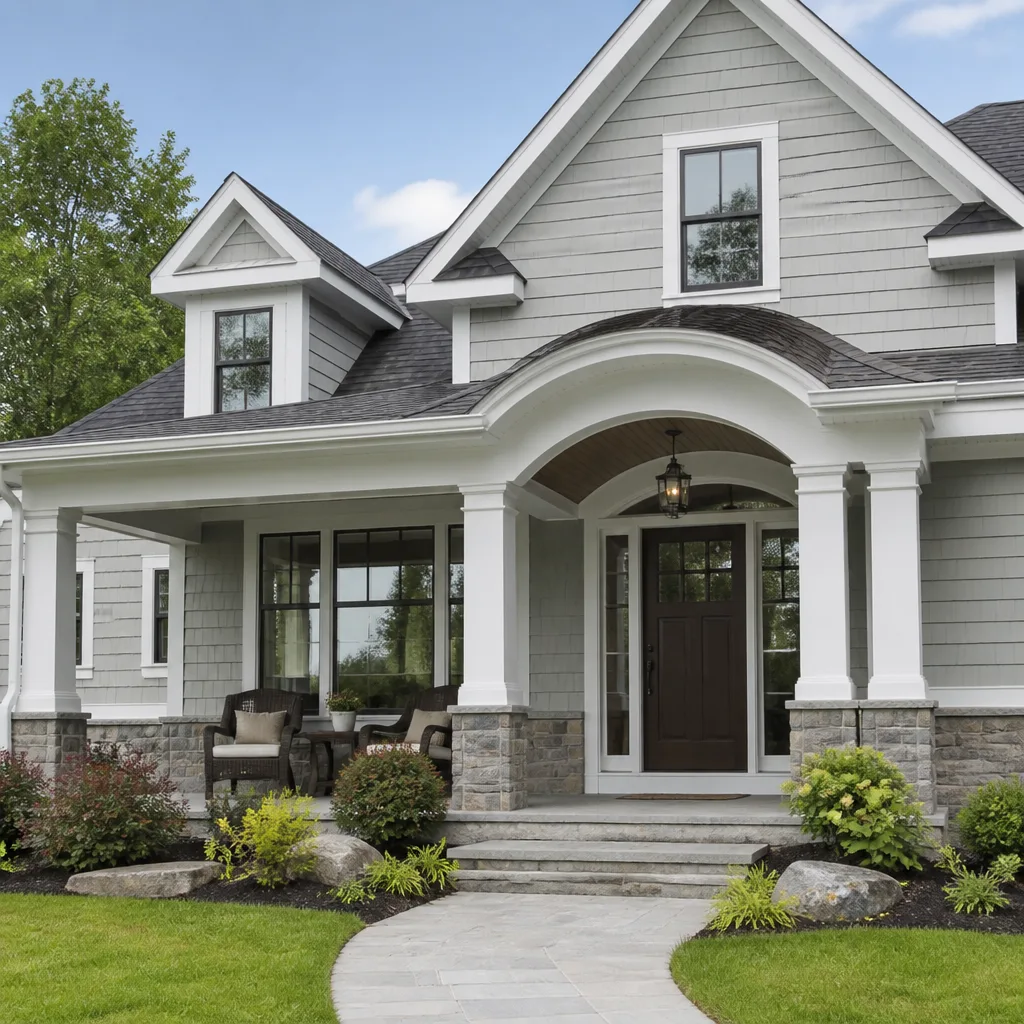
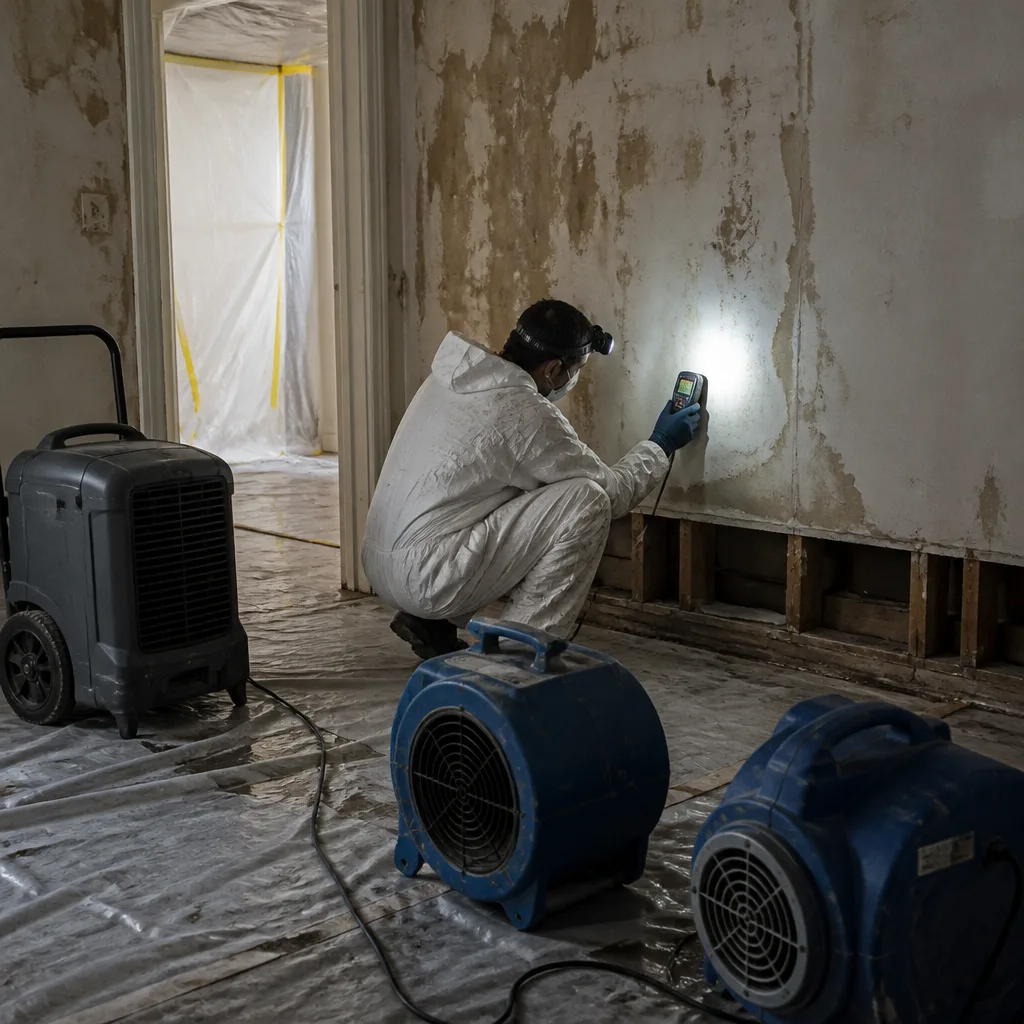 Before
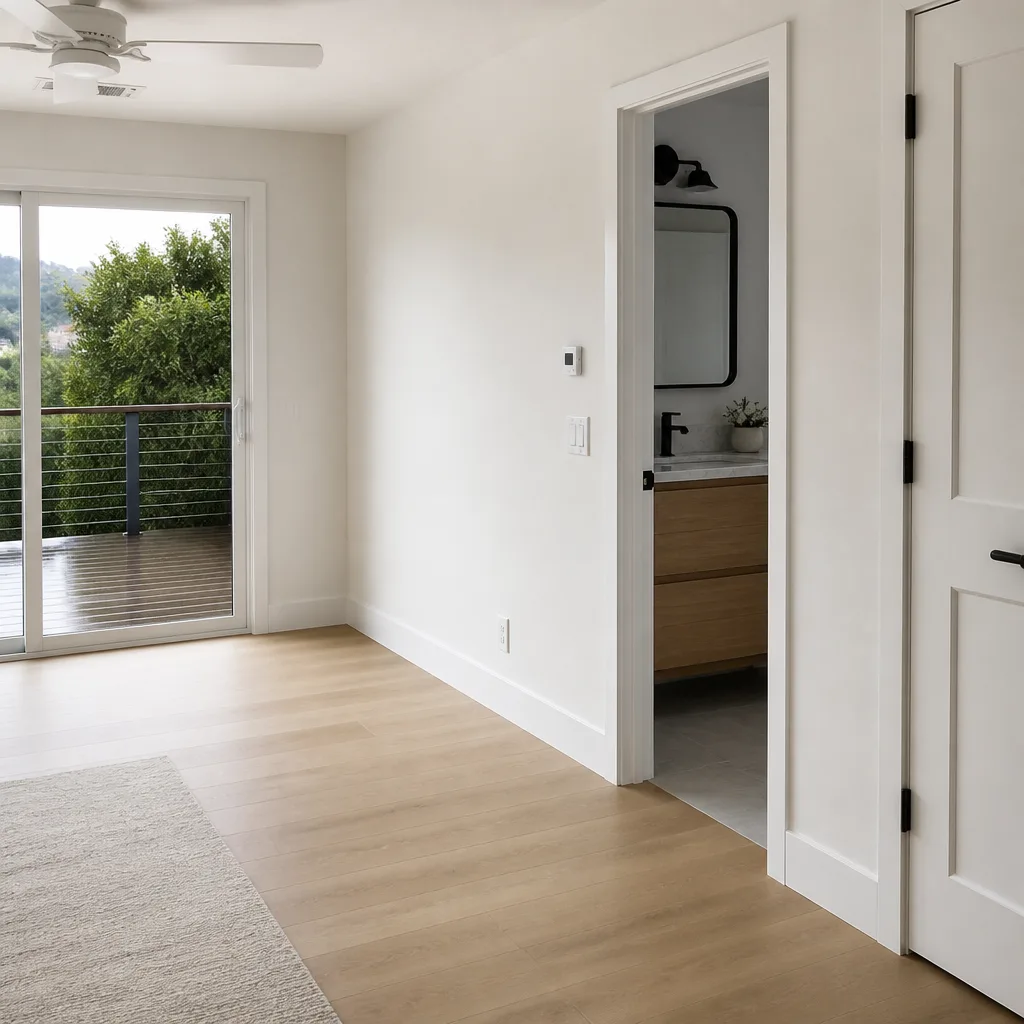 After
After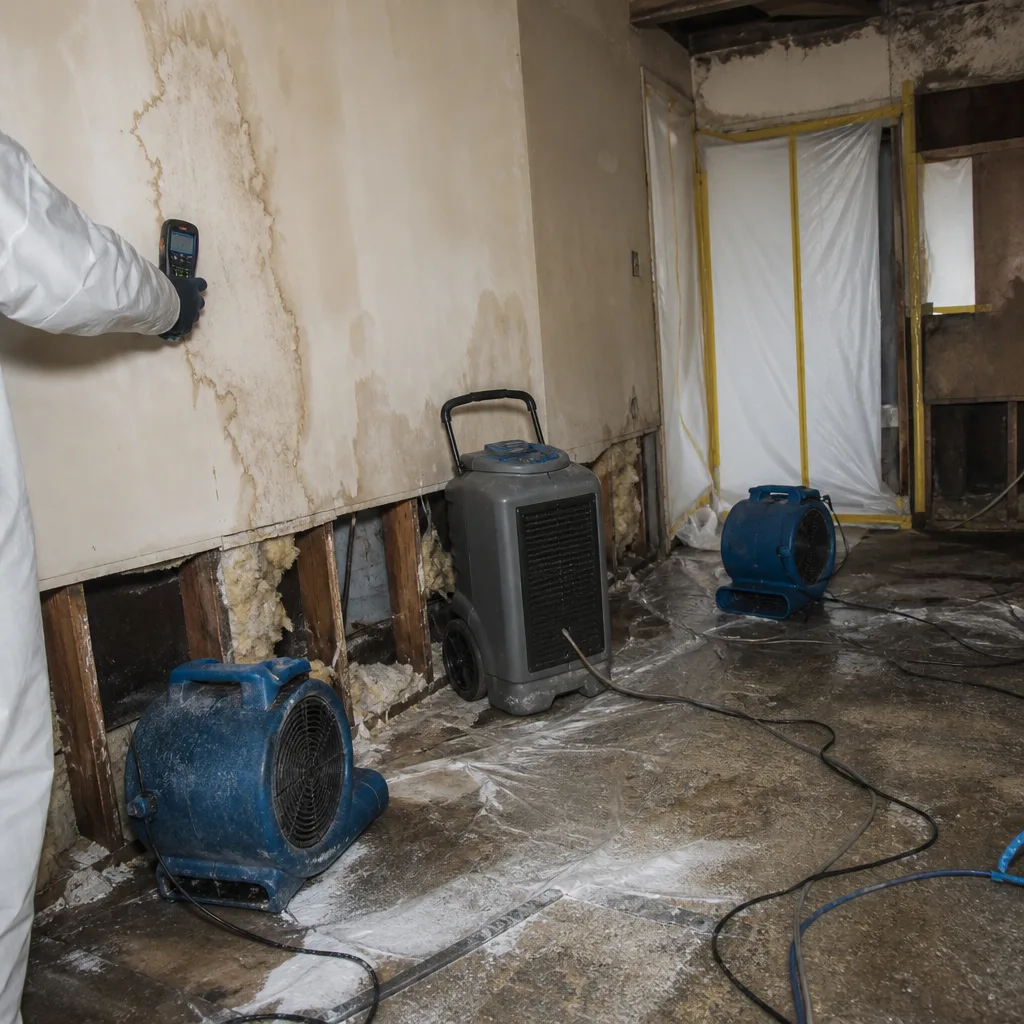 Before
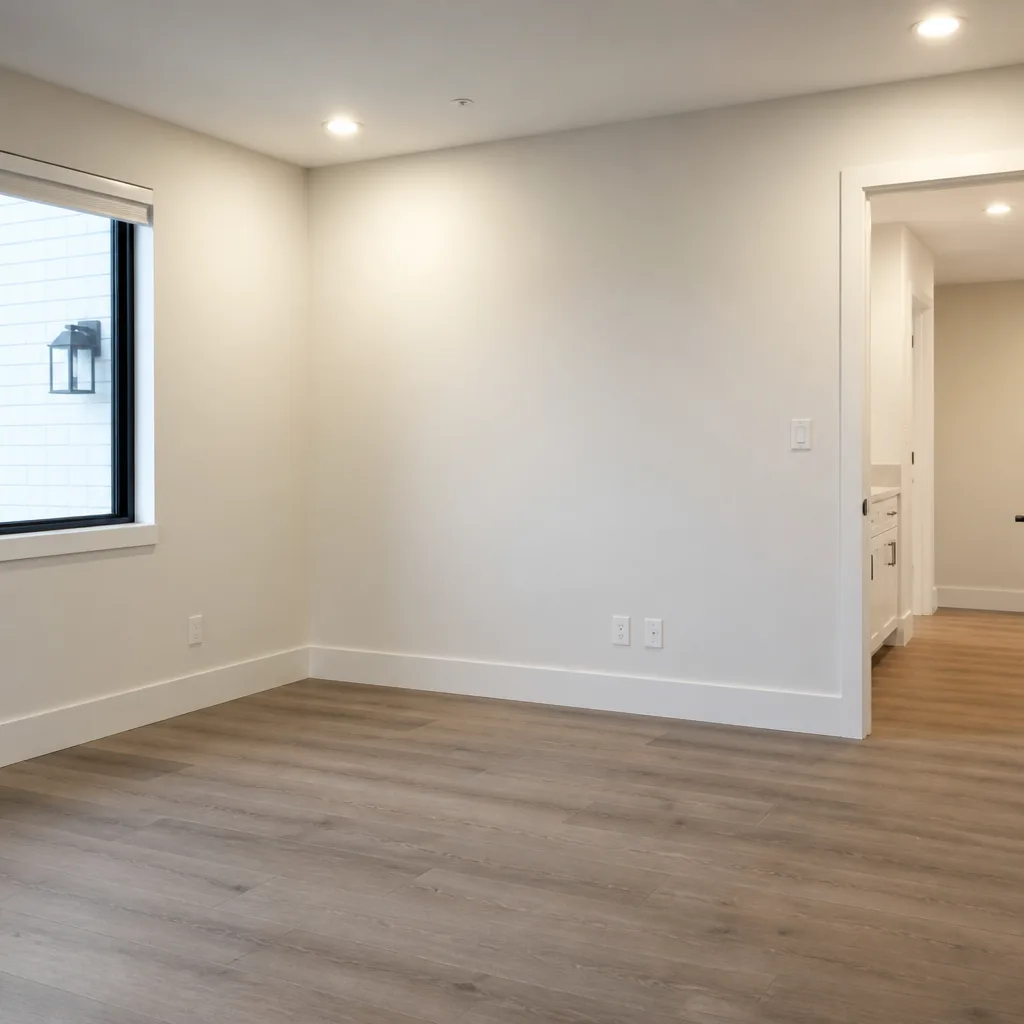 After
After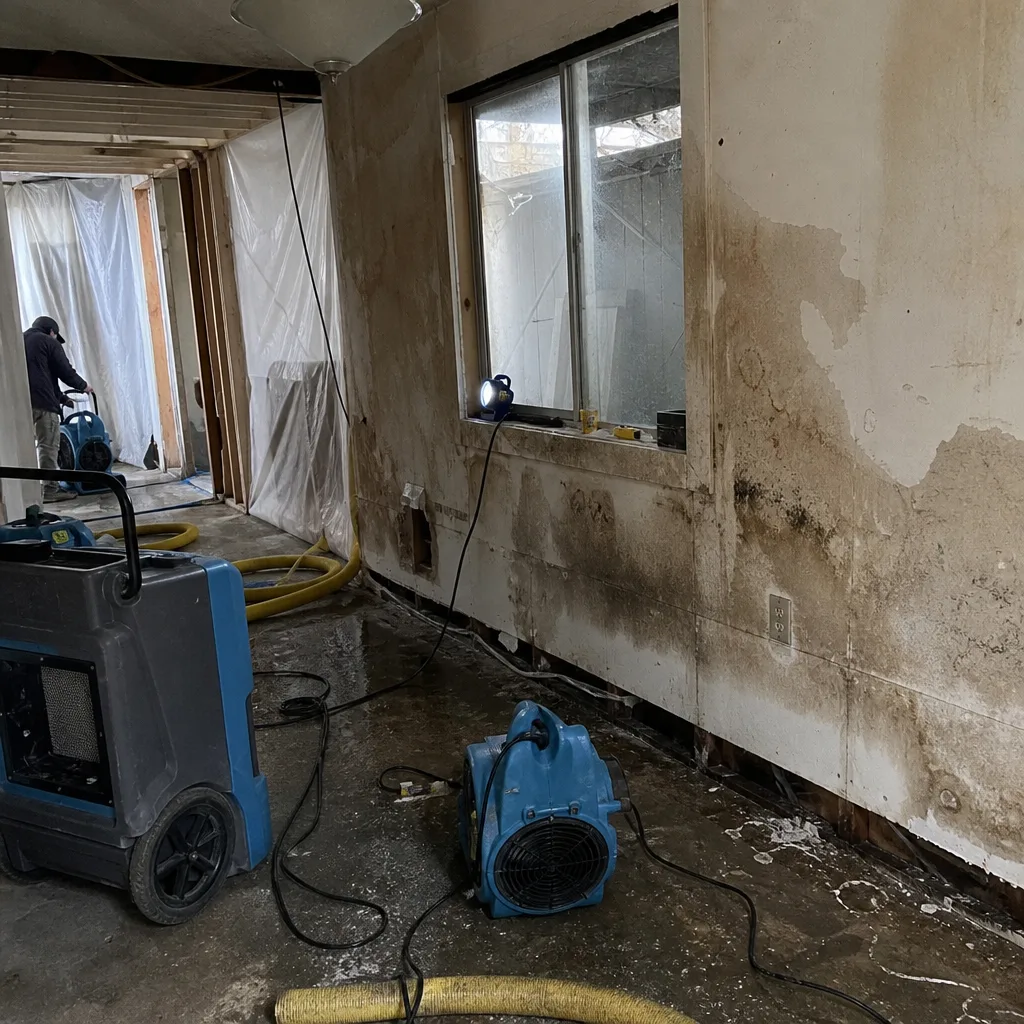 Before
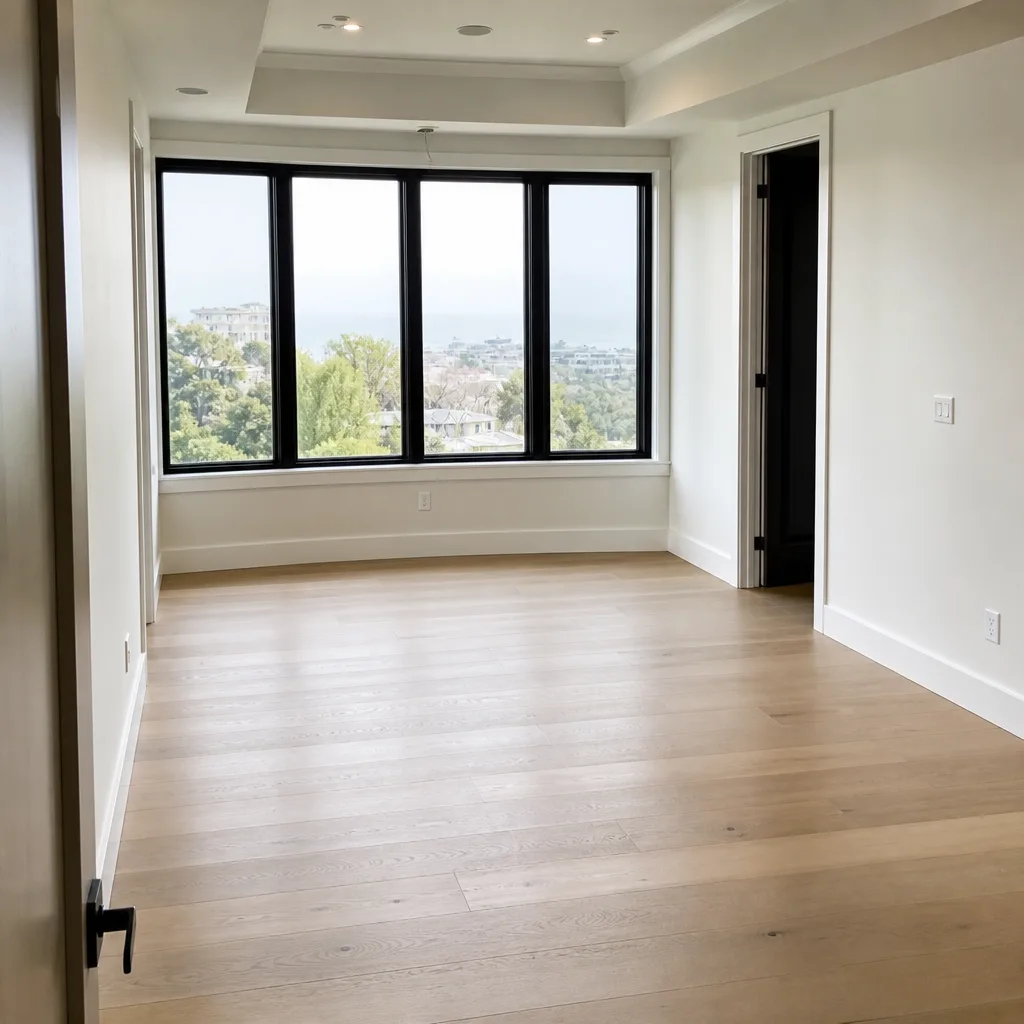 After
AfterDamage Restoration Permits, Codes & Inspections in CA: What You Need to Know
An unpermitted drywall replacement after a water loss doesn’t just risk a building department citation. It creates a documented gap in your home’s repair history that an insurer can use to argue the next leak was caused by substandard prior work. In Pacific Palisades, where hillside construction and strict Los Angeles County amendments add layers of complexity, we’ve seen homeowners discover unpermitted restoration work years later - usually when selling, refinancing, or filing a new claim. This guide maps which restoration scopes trigger mandatory permits under the California Residential Code, how local amendments affect properties in Pacific Palisades, and why the inspection record belongs in the same file as your insurance documentation. For related reading, see our Damage Restoration Warning Signs: A Pacific Palisades Homeowner’s Reference Guide.
Quick Answer
Most structural drying and content cleaning in California requires no permit, but replacing drywall, electrical fixtures, load-bearing framing, or plumbing triggers mandatory permits under the California Residential Code. Los Angeles County amendments add requirements for hillside-zone properties common in Pacific Palisades, including geotechnical review for foundation or retaining wall work. The permit type - repair, alteration, or addition - determines your inspection sequence and whether a Certificate of Occupancy or final inspection record is issued.
Table of Contents
- When Permits Are Required for Restoration Work
- How the California Residential Code Interacts with LA County Amendments
- The Inspection Sequence for Water and Fire Restoration
- IICRC Standards and Code Compliance: Why Both Matter
- How Unpermitted Work Becomes a Pre-Existing Condition
- Building Your Documentation File: Permits, Photos, and Claim Records
- Common Mistakes to Avoid
- When to Call a Professional
- Frequently Asked Questions
 Before
 After
AfterWhen Permits Are Required for Restoration Work
Not every water extraction or soot cleanup needs a building permit. The California Residential Code draws a line between mitigation - the emergency work that stops damage from spreading - and reconstruction, which restores the building to its pre-loss condition. Understanding where that line sits protects you from both code violations and insurance disputes.
Mitigation work typically permit-exempt:
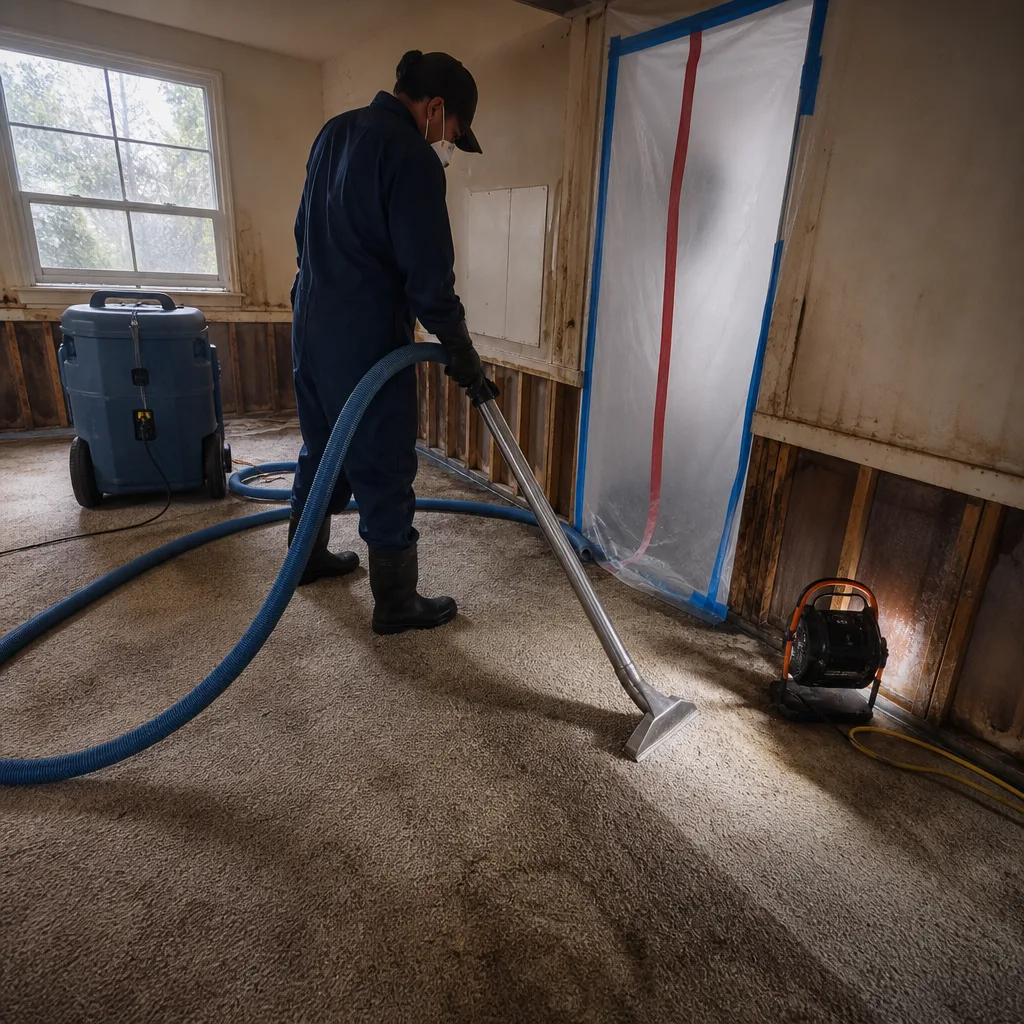
- Water extraction and structural drying using portable or truck-mounted extraction equipment
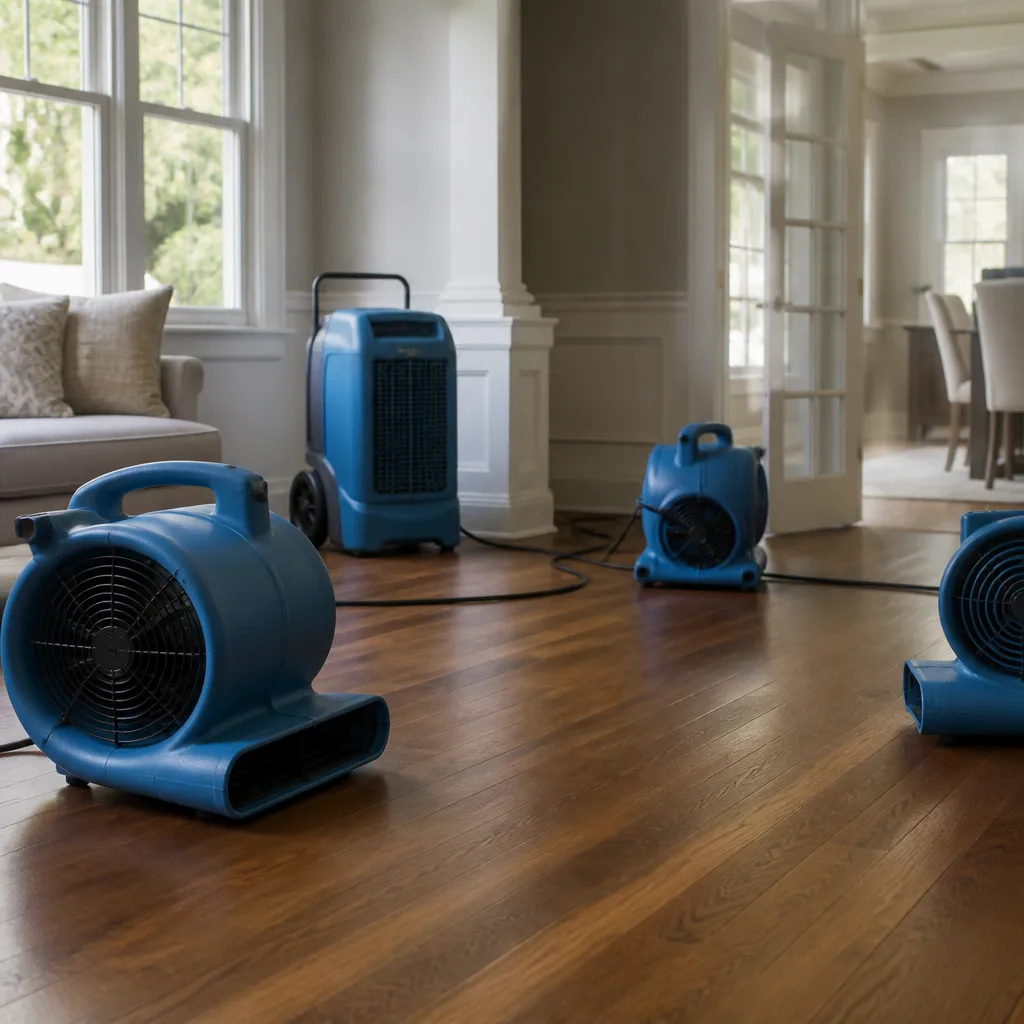
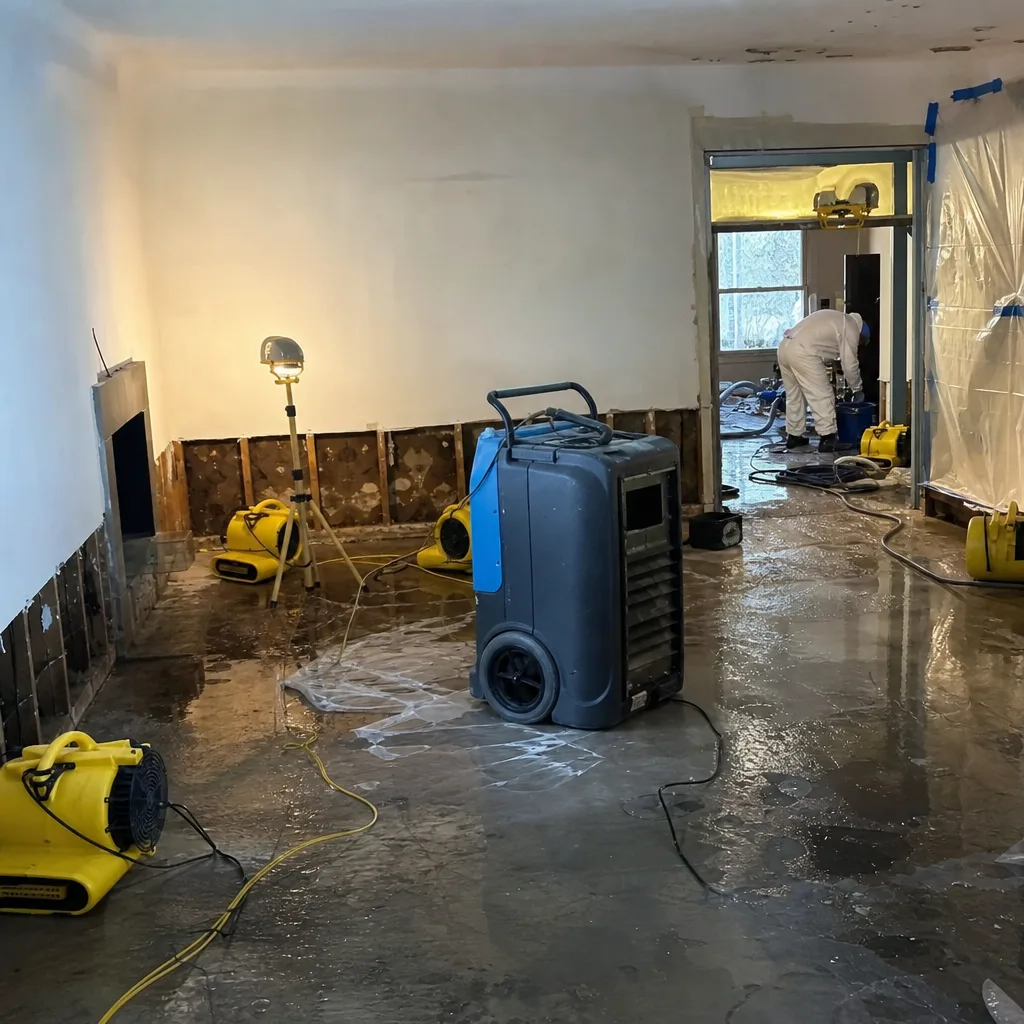
- Dehumidification with commercial units from Dri-Eaz, Phoenix, or XPOWER
- Content cleaning and pack-out services
- Application of antimicrobial treatments to prevent mold growth (non-structural)
- Installation of temporary power for drying equipment
- Removal of wet carpet, pad, or non-structural materials
Reconstruction work requiring permits:
- Drywall replacement exceeding 10 square feet in any room
- Electrical fixture replacement, rewiring, or panel work exposed by water or fire damage
- Plumbing repairs or replacement of supply lines, drains, or fixtures
- Framing repairs, including load-bearing walls, headers, or floor joists
- HVAC ductwork replacement or modification
- Roofing repairs exceeding 100 square feet or involving structural decking
- Foundation or retaining wall work, common in Pacific Palisades hillside properties
The 10-square-foot drywall threshold catches many homeowners off guard. A water line break in a Pacific Palisades kitchen might saturate drywall behind cabinets. The mitigation crew removes the wet material. Once that removal crosses 10 square feet, replacement requires a repair permit and inspection. A contractor who skips this step saves a few days but leaves you with no documentation that the work met code.
Electrical exposure triggers permits more often than people expect. Water finds its way into outlet boxes, light fixtures, and switch locations. Any replacement of electrical components requires an electrical permit. In fire restoration, smoke and heat damage frequently compromise wiring insulation. The visible damage might be limited to a single room, but heat can travel through wall cavities and affect wiring runs far from the flame source. A proper scope documents which circuits were tested, which were replaced, and which permits were pulled.
Load-bearing framing work requires a structural permit and often engineering review. In Pacific Palisades, where many homes are built into hillsides with post-and-beam construction or retaining wall systems, even modest framing repairs can trigger geotechnical requirements. We’ve seen projects where a simple beam replacement escalated to require soils engineering because the foundation system was integrated with hillside stabilization.
How the California Residential Code Interacts with LA County Amendments
The California Residential Code provides the baseline, but Los Angeles County amendments modify or add requirements that directly affect restoration work in Pacific Palisades. These amendments aren’t footnotes. They change what permits you need, who can sign off on inspections, and how documentation must be maintained.
Key LA County amendments affecting restoration:
Hillside construction requirements. Pacific Palisades sits on terrain that ranges from coastal flats to steep canyons. LA County Chapter 16 amendments require geotechnical review for any work affecting retaining walls, foundation systems, or slope stability. A water loss that undermines a hillside foundation doesn’t just need a standard repair permit. It needs soils engineering, a grading plan if excavation exceeds certain volumes, and potentially a Hillside Ordinance review if the property is in a designated zone. We’ve documented jobs where the restoration scope tripled in complexity once the hillside amendment was applied.
Fire-resistant construction in Wildland-Urban Interface zones. Portions of Pacific Palisades fall within State Responsibility Areas and Local Responsibility Areas with enhanced fire-resistant construction requirements. After fire or smoke damage, replacement materials must meet Chapter 7A of the California Building Code, as amended by LA County. This affects siding, decking, eave vents, and window assemblies. A contractor who replaces a burned deck with standard composite material may pass a casual inspection but fail the WUI compliance review that should have been part of the permit.
Energy Code compliance for replacement assemblies. LA County enforces Title 24 energy standards strictly on replacement work. New windows, insulation, and roofing must meet current efficiency standards, not the standards in place when the home was built. A fire restoration that replaces windows in a 1970s Pacific Palisades home must use Title 24-compliant units. The permit inspection will check U-factor and SHGC ratings. Without the permit, no one checks, and the homeowner inherits the non-compliance.
Seismic bracing and anchorage. LA County amendments require seismic upgrades when certain structural elements are exposed during repair. Water damage that requires removal of cripple walls or foundation access can trigger mandatory seismic bracing under amended Section R403.1. This isn’t optional. An inspector who finds unbraced cripple walls during a water damage repair inspection will fail the job.
The interaction between state code and county amendments means your restoration contractor needs to specify which code cycle applies, which amendments are in force, and how the inspection sequence accounts for both. A scope that references only “California Residential Code” without specifying the LA County amendment package is incomplete.
The Inspection Sequence for Water and Fire Restoration
Permits trigger inspections, and inspections follow a sequence that can either support or disrupt your insurance claim timeline. Understanding the sequence lets you coordinate with your adjuster and avoid the common trap of closing a claim before final inspection passes.
Standard inspection sequence for water damage reconstruction:
- Permit issuance and rough framing inspection. If structural members were removed or modified, the framing must be inspected before enclosure. The inspector verifies species, grade, and fastening schedule. In Pacific Palisades hillside construction, they also verify hold-downs and anchor bolts per the approved structural plan.
- Plumbing rough-in inspection. Any supply lines, drains, or fixtures replaced after water damage must be pressure-tested and inspected before wall closure. This is where we’ve found the most failures: improper pipe support, missing hammer arrestors, or incorrect slope on drain lines.
- Electrical rough-in inspection. Circuits exposed by water or fire damage must be inspected for proper gauge, grounding, and GFCI/AFCI protection as required by current code. LA County amendments may require arc-fault protection where the original installation did not.
- Insulation inspection. Replacement insulation must meet current R-value and installation standards. In fire restoration, smoke-damaged insulation must be fully removed; partial removal fails inspection. Vapor barrier placement is checked, critical in Pacific Palisades coastal climate where moisture management affects long-term building performance.
- Wallboard inspection. Drywall must be hung but not taped when inspected. The inspector checks fire-rated assemblies, type X where required, and proper fastening. In garage-to-living-space walls and certain Pacific Palisades hillside configurations, fire-rated drywall is mandatory and must be documented.
- Final inspection and Certificate of Completion or Occupancy. All finishes in place, all systems operational. The inspector verifies code compliance across all prior trades. A passed final inspection generates documentation that should be filed with your insurance claim records.
What a failed inspection means for your claim:
A failed inspection stops work until corrections are made and re-inspection occurs. If your insurance claim has already been closed, you may be paying re-inspection fees and correction costs out of pocket. We’ve seen claims where the adjuster issued final payment based on contractor completion certificates, only to have the homeowner discover months later that the final inspection never passed. The insurer’s position: the contractor’s failure to obtain proper permits and inspections is not the insurer’s responsibility.
The re-inspection process in Los Angeles County typically requires scheduling through the Department of Building and Safety, with fees ranging from $150 to $400 depending on trade and complexity. Failed inspections also extend the timeline for Certificate of Occupancy issuance, which can delay property sales or refinancing.
For fire restoration, the sequence adds smoke damage assessment and air quality testing. LA County may require third-party clearance testing after structural cleaning and before enclosure, particularly for synthetic materials that produce complex combustion products. This testing should be specified in the restoration scope and documented in the permit file.
IICRC Standards and Code Compliance: Why Both Matter
Building codes tell you what minimum construction standard is legally required. IICRC standards tell you how restoration work should be performed to return a structure to pre-loss condition without creating secondary damage. A restoration scope that references both protects the homeowner in ways that code compliance alone does not.
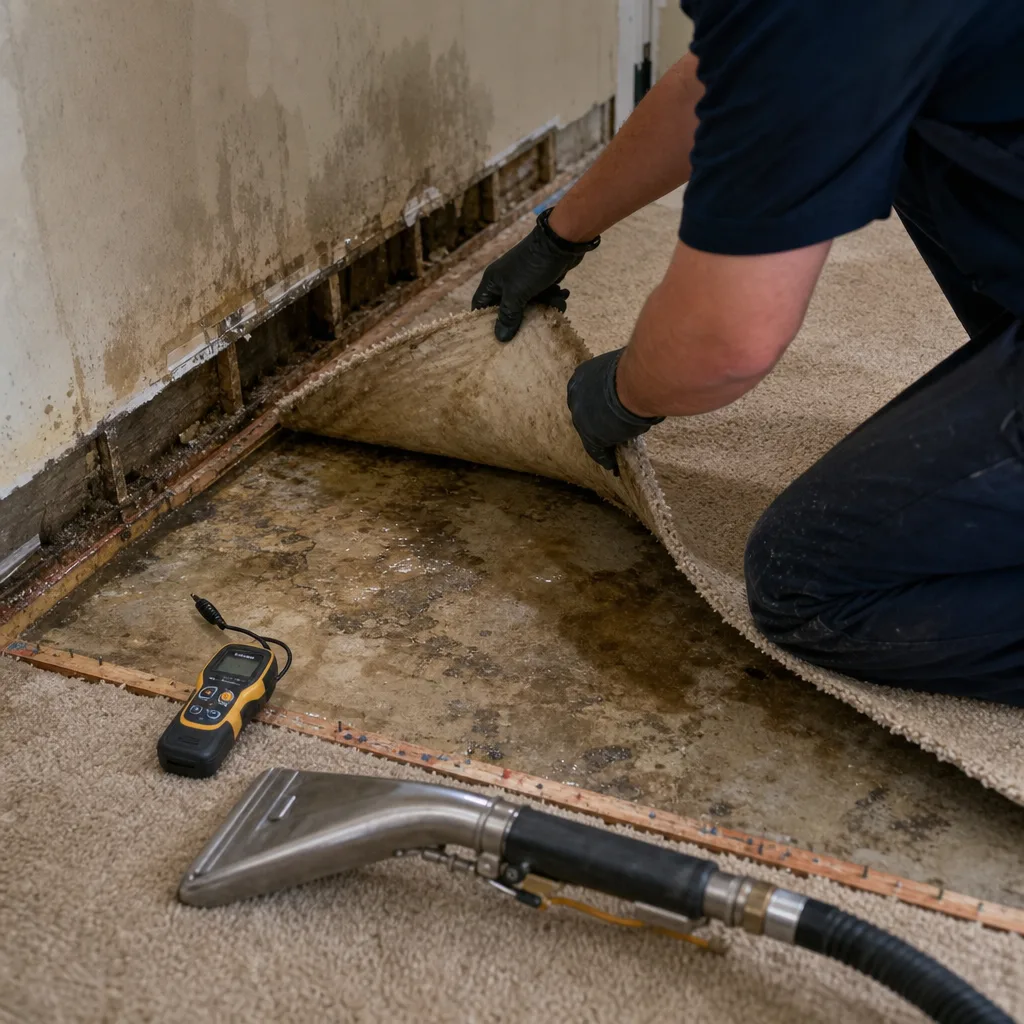
IICRC S500: Standard and Reference Guide for Professional Water Damage Restoration. This standard establishes the procedural framework for water damage mitigation: inspection, emergency services, monitoring, and completion. Key provisions include psychrometric documentation - the daily moisture readings, temperature, and relative humidity logs that demonstrate drying progress. In our work, we produce these logs using equipment from B-Air, Dri-Eaz, and Phoenix, documenting vapor pressure differential (the force that drives moisture from wet materials into the air) and grain depression (the measurable difference between indoor and outdoor air moisture content).
S500 doesn’t replace building code. It complements it. A drying plan that follows S500 ensures that structural materials reach equilibrium moisture content before reconstruction begins. Rebuilding over wet framing violates S500 and creates conditions that building inspectors may not catch - moisture trapped in wall cavities doesn’t show in a visual inspection. Six months later, mold appears. The insurer denies the mold claim, citing pre-existing moisture conditions from the original loss.
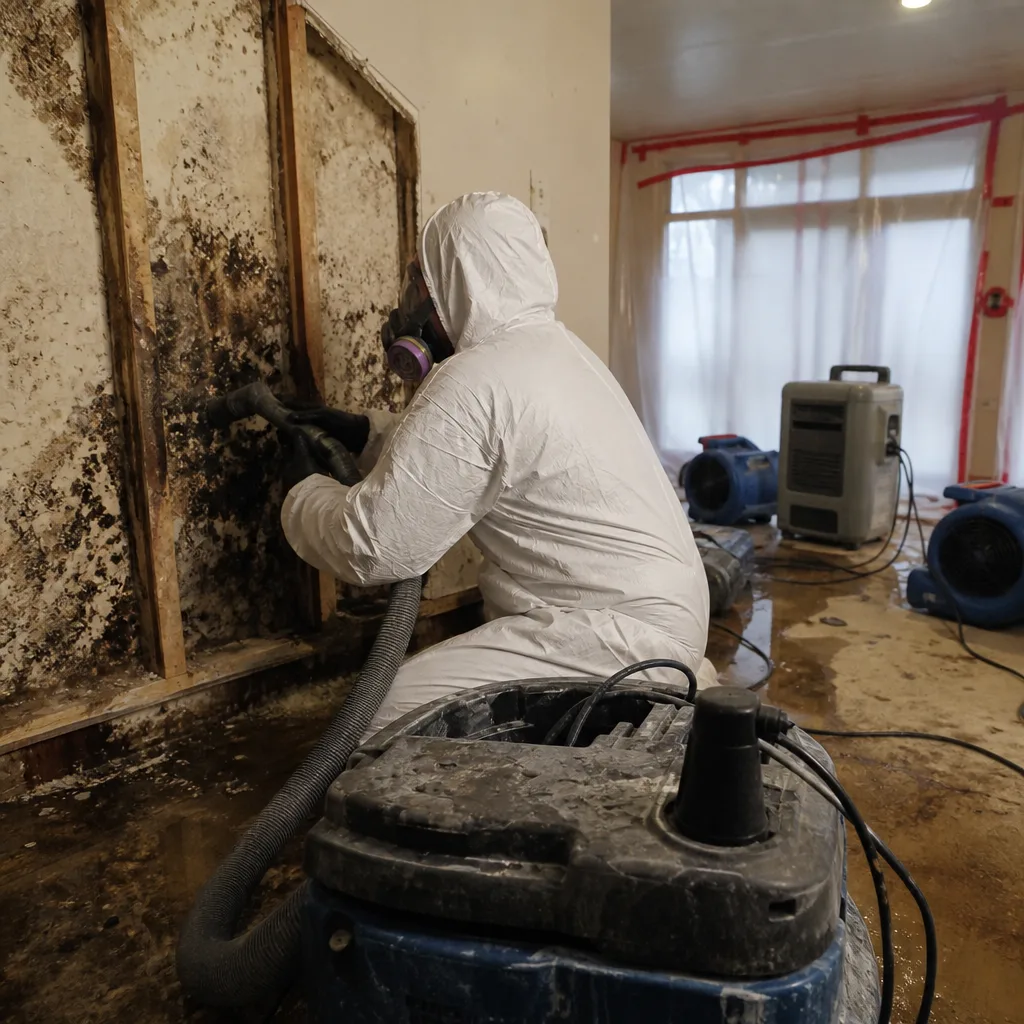
IICRC S520: Standard and Reference Guide for Professional Mold Remediation. S520 establishes containment, negative air pressure, and clearance criteria for mold work. LA County and Pacific Palisades properties with prior water damage frequently require mold remediation as a secondary scope. S520 requires post-remediation verification by an independent party - not the remediation contractor - using air sampling or surface sampling. This verification should be referenced in the permit documentation if the mold work required a permit, and filed with the insurance claim regardless.
When a restoration scope explicitly references IICRC standards, it creates a documented benchmark for work quality. If the insurer later disputes whether work was performed properly, the standard provides an objective reference. “We followed IICRC S500” is a stronger position than “we did what seemed right.” When the scope also notes code compliance and permit numbers, the documentation becomes difficult to challenge.
The intersection matters for equipment documentation too. S500 specifies drying equipment capacity based on affected cubic footage and class of water loss. A contractor using underpowered equipment or insufficient dehumidification may technically dry the structure but extend the timeline beyond what the standard permits. Extended drying increases secondary damage risk and insurance dispute potential. Our drying logs specify equipment by model - Dri-Eaz Revolution LGR, Phoenix 200 HT, XPOWER X-3400A - and document placement, airflow calculations, and daily psychrometric readings. This granularity serves both S500 compliance and insurance documentation requirements.
How Unpermitted Work Becomes a Pre-Existing Condition
The mechanism is straightforward once you see it. Insurers maintain property history databases. When you file a claim, the adjuster searches prior claims, permits, and sometimes even building department records. Unpermitted restoration work appears as a gap - work was done, but no permit or inspection record exists.
The three pathways to claim denial:
- Substandard work causation. A second water loss occurs. The insurer’s expert inspects and finds that prior drywall replacement was performed without permit, likely without proper vapor barrier or insulation, creating a condensation condition that contributed to the new loss. The insurer denies or reduces the new claim, attributing damage to the unpermitted prior work.
- Undisclosed property condition. You sell the property. The buyer’s inspection reveals unpermitted work. The sale stalls or the price drops. You file a claim against your prior contractor’s insurance, which denies coverage because the unpermitted work violated the contractor’s policy requirements. You’re left with no recourse.
- Code compliance exclusion. Many policies contain exclusions for damage resulting from failure to maintain the property to code. Unpermitted electrical work that later causes a fire may fall under this exclusion. The insurer investigates, finds no permit, and denies based on the code compliance clause.
In Pacific Palisades, where property values are significant and buyers conduct thorough due diligence, unpermitted work discovered during sale can trigger renegotiation or cancellation. The cost of retroactive permitting - which requires opening walls, exposing work for inspection, and potentially redoing work that doesn’t meet current code - far exceeds the cost of proper permitting during restoration.
We’ve reviewed competitor estimates where the scope explicitly excluded permits to present a lower price. Haven Standard, Clause 1 requires a written price before work begins, but that price must include all costs necessary to complete the work properly. A price that excludes required permits isn’t a complete price. It’s a liability transfer. Our written scopes specify permit costs, inspection scheduling, and documentation delivery as line items.
The pre-existing condition argument is particularly potent in mold claims. Mold requires moisture, time, and a food source. An insurer facing a mold claim will investigate prior water losses and the quality of restoration. Unpermitted work with no drying logs, no inspection records, and no moisture documentation becomes the perfect foundation for a denial: the mold resulted from incomplete prior restoration, not a new covered peril.
Building Your Documentation File: Permits, Photos, and Claim Records
Your insurance claim file and your property documentation file should converge. Separating them creates the gaps that insurers exploit and buyers discover.
What belongs in the unified file:
- Original loss documentation: Photos of damage before any work begins, the adjuster’s estimate, your proof of loss, and all correspondence with the insurer.
- Restoration scope and contract: The written price before work begins, with Haven Standard Clause 1 acknowledgment. Equipment specifications, drying plan with psychrometric targets, and timeline.
- Permit applications and approvals: Copies of all permit applications, approved plans, and fee receipts. Note the permit number format: Los Angeles County uses a specific numbering system that should be recorded.
- Inspection records: Passed inspection cards or electronic confirmations for each trade inspection. Failed inspections with correction documentation and re-inspection passes.
- Final inspection and Certificate of Occupancy or Completion: The document that closes the permit. In some cases, a Certificate of Occupancy is not issued for repair work; a Certificate of Completion serves the same documentation function.
- Daily moisture logs and photo records: Our standard deliverable includes dated photos of each affected area and daily psychrometric readings. These should be filed with the permit and claim documentation.
- IICRC standard compliance notes: Any scope language referencing S500, S520, or other applicable standards.
- Warranty documentation: The 365-Day Done Right Promise under The Haven Standard, with specific coverage terms and claim procedure.
How to request inspection records:
Los Angeles County Building and Safety maintains permit and inspection records online through the LADBS website and in person at district offices. For Pacific Palisades properties, the West Los Angeles District Office handles most residential permits. You’ll need the property address and approximate permit date. Records older than several years may require an in-person request or written application.
If your contractor obtained the permits, request copies directly. A contractor who cannot or will not provide permit copies is a red flag. Under California Business and Professions Code Section 7159, contractors must provide copies of all documents signed by the homeowner, which includes permit applications.
For insurance purposes, the final inspection record serves as evidence that restoration work met code at completion. This is distinct from the contractor’s warranty or completion certificate. An insurer reviewing a subsequent claim will weight official inspection records far more heavily than contractor self-certification.
Photo documentation from restoration work should include permit-visible images: photos of open walls showing framing, plumbing, and electrical before enclosure; photos of insulation installation; photos of equipment placement with model numbers visible. These images, combined with drying logs, create a record that permits alone cannot provide.
Common Mistakes to Avoid
- Assuming mitigation and reconstruction are the same permit category. Water extraction doesn’t need a permit, but the drywall replacement that follows does. Contractors who bundle both under “restoration services” sometimes fail to separate the permit-triggering work, leaving you with no inspection record for the reconstruction phase.
- Accepting “we’ll pull permits later” from a contractor. Permits must be obtained before work begins. Post-work permitting, sometimes called “after-the-fact” permitting, requires exposing completed work for inspection and often triggers additional scrutiny. In Pacific Palisades hillside zones, after-the-fact permits may require engineering review that wasn’t necessary with original permitting.
- Not verifying that your contractor’s license covers the permit type. A C-61/D-49 license for structural drying doesn’t authorize electrical or plumbing permit work. We’ve reviewed scopes where a mitigation contractor attempted to self-perform electrical reconstruction without proper licensing, invalidating the permit and insurance coverage.
- Ignoring LA County hillside amendments on seemingly minor repairs. A retaining wall damaged by water saturation or slope failure requires geotechnical review under county amendments, not just a standard repair permit. Skipping this step can result in stop-work orders and engineered remediation that costs multiples of the original scope.
- Closing the insurance claim before final inspection passes. Once the claim is closed, the insurer’s obligation ends. If final inspection fails and requires rework, you may be negotiating reopening a closed claim or paying out of pocket. Structure your claim timeline to hold final payment until permit finalization.
- Failing to reference IICRC standards in the restoration scope. Without this reference, you have no objective benchmark for work quality if disputes arise. The scope should specify which standard applies and how compliance will be documented.
- Not requesting the Certificate of Completion. Some contractors consider work complete when the last crew leaves. Permit closure requires a final inspection pass and certificate issuance. Request this document explicitly and file it with your claim records.
When to Call a Professional
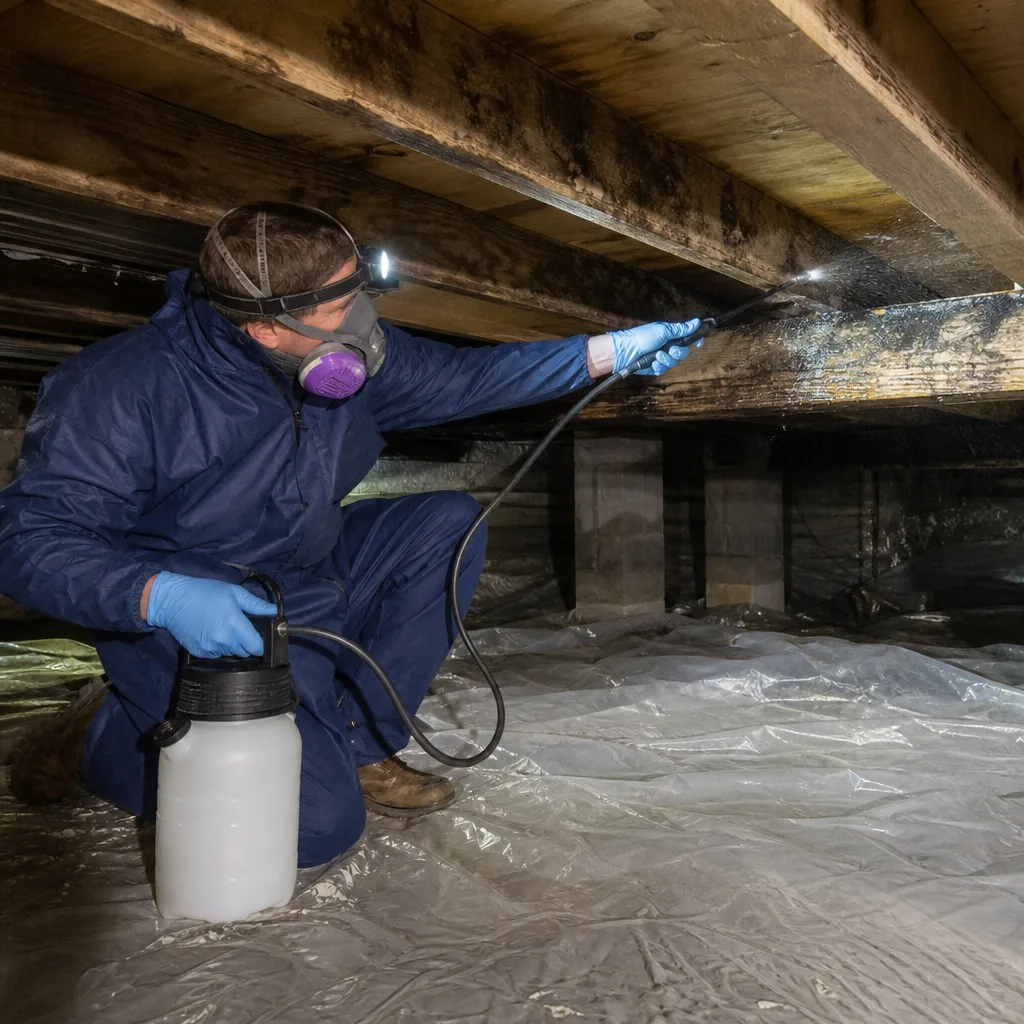
Call a professional when any restoration scope involves structural, electrical, plumbing, or HVAC work; when your property is in a Pacific Palisades hillside zone with potential geotechnical considerations; or when your insurer has already issued an estimate that doesn’t clearly specify permit and inspection responsibilities. Our How to Hire a Damage Restoration Contractor in Pacific Palisades: A Step-by-Step Guide explains what to look for. The documentation gap that costs homeowners their claims is almost always invisible until it’s too late to correct.
DryMark Restoration Pacific Palisades provides free estimates in Pacific Palisades and surrounding areas. Every estimate includes a written scope that specifies permit requirements, inspection sequencing, and IICRC standard references. Call (424) 365-9728 to schedule.
Frequently Asked Questions
No. Structural drying, water extraction, and content cleaning typically do not require permits. Permits become mandatory when restoration crosses into reconstruction: drywall replacement exceeding 10 square feet, electrical or plumbing repair, framing modification, or roofing work. In Pacific Palisades, hillside-zone properties may have additional requirements for foundation or retaining wall work even when the scope seems minor.
Simple repair permits for drywall or electrical work typically issue within 2-5 business days with online application. Inspection scheduling adds 3-7 business days per trade. Complex projects involving structural review or hillside amendments in Pacific Palisades may require 2-4 weeks for plan check before permit issuance. Your restoration timeline should account for these durations, particularly if the insurer is paying for temporary housing.
Standard homeowners policies typically cover reasonable costs to repair covered damage, which includes permit and inspection fees necessary to complete that repair. However, the adjuster must be informed that permits are required; fees aren’t automatically included. Document the requirement in your scope and request explicit line-item inclusion. If the insurer disputes, the California Department of Insurance has issued guidance that code compliance costs are part of the repair obligation.
You have several options, none ideal. You can request the contractor obtain after-the-fact permits, which requires exposing work and may trigger additional requirements. You can hire another contractor to permit the work, which may require redoing portions that don’t meet current code. Or you can accept the unpermitted status and disclose it on future property transactions. In our experience, after-the-fact permitting in Pacific Palisades costs 2-3 times the original permit fee and frequently requires engineering review that wasn’t needed initially.
Los Angeles County maintains hillside zone maps through the Department of Regional Planning. Properties in these zones are subject to Chapter 16 amendments requiring geotechnical review for foundation, retaining wall, or significant grading work. Your property’s zone designation appears on the assessor’s map and should be verified before any restoration scope involving structural or earthwork is finalized. A restoration contractor familiar with Pacific Palisades should flag this requirement during initial assessment.
Code compliance is legally mandatory and enforced by building inspectors. IICRC compliance is industry-standard best practice for restoration quality and is not legally enforced, though it may be contractually required. Code compliance ensures the rebuilt structure meets minimum safety standards. IICRC compliance ensures the restoration process doesn’t create secondary damage and is documented to support insurance claims. Both matter, for different reasons. Our scopes reference both, with documentation for each.
The Bottom Line
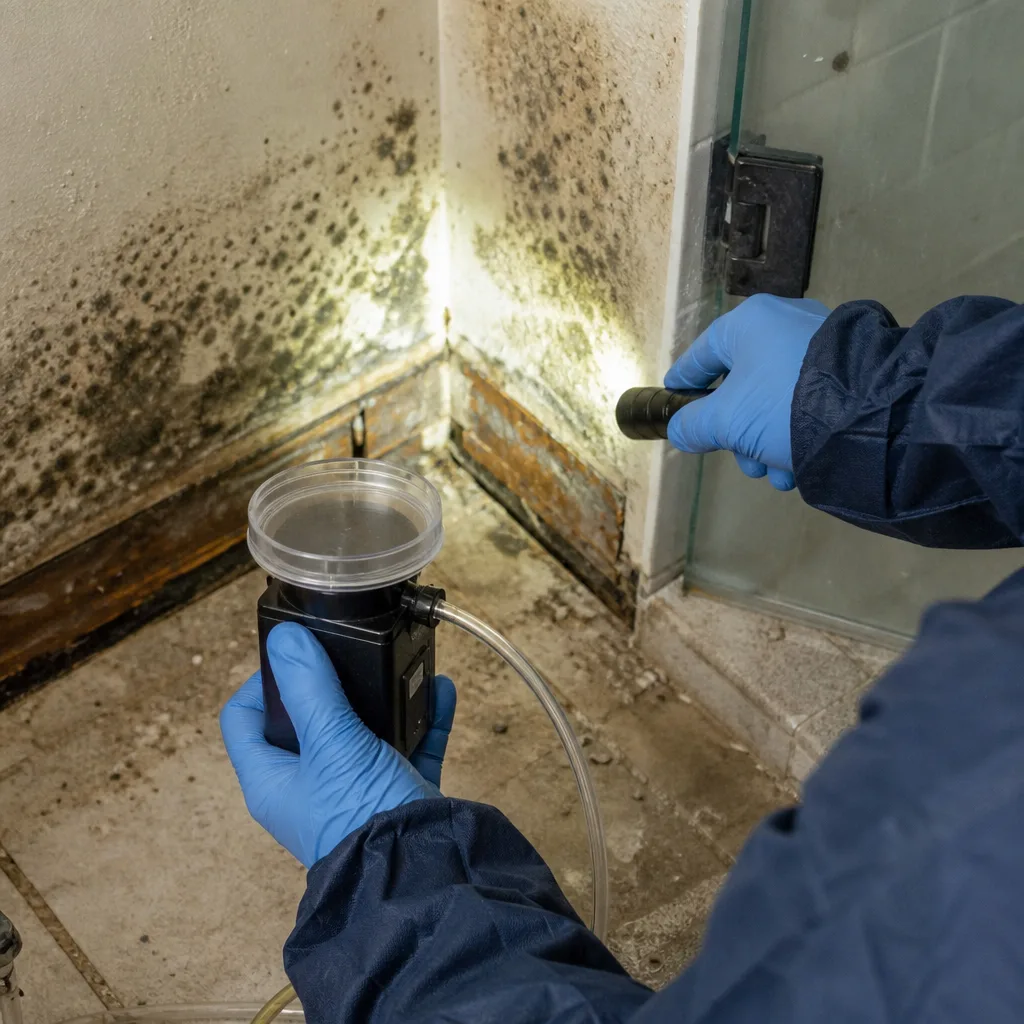
Permits and inspections aren’t bureaucratic obstacles. They’re the documentation infrastructure that connects your restoration work to your property record and your insurance claim. Unpermitted work creates a liability that may not surface for years, but when it does - during a sale, a refinance, or a new claim - the cost of correction far exceeds the cost of doing it properly. In Pacific Palisades, where hillside construction and strict county amendments add complexity, the margin for error is narrow. Every restoration scope should specify which permits apply, which standards govern the work, and what documentation you’ll receive. Browse our more guides & resources for additional Pacific Palisades homeowner information. Anything less is a price that doesn’t include its true cost.
Written by Alicia Brennan, Owner at DryMark Restoration Pacific Palisades, serving Pacific Palisades since 2011.